
Participants call for investor protection agency at National Assembly forum
Participants at a National Assembly forum discussing the Stock Price Suppression Prevention Act called for a public protection agency to assist retail investors in exercising their rights and responding to unfair trading.
At a forum held at the National Assembly on the 28th, participants proposed creating an organization similar to a consumer protection agency to help minority shareholders exercise their rights and seek damage relief. The discussion addressed the need for rapid responses to unfair trading and industry-specific valuation standards to prevent stock price suppression.
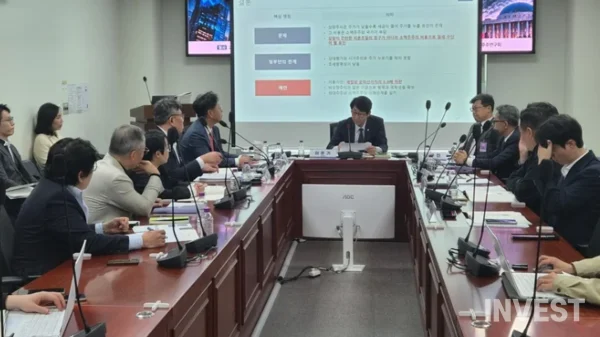
At a National Assembly forum discussing the Stock Price Suppression Prevention Act, calls were made for a public protection agency to support the exercise of rights by minority shareholders. Participants pointed out the current reality where even inspecting shareholder lists requires litigation, and requested rapid responses to unfair trading along with stock valuation standards that reflect industry-specific characteristics. The government stated that it is hearing criticism regarding the effectiveness of the bill and will discuss supplementary measures during the National Assembly review process.
The forum, titled 'The Cries of Korean Retail Investors: A Law Against Stock Price Suppression Offers Hope,' was held on the 28th at the National Assembly Members' Office Building's 3rd Conference Room. Co-hosted by Democratic Party of Korea lawmaker Lee Hoon-gi, the Korea Corporate Governance Forum, and the Korea Minority Shareholders Research Association, the event centered on ways to substantially guarantee the rights of general shareholders beyond the reform of inheritance and gift tax systems.
"How can general shareholders respond to everything?"... Proposal for an investor protection agency
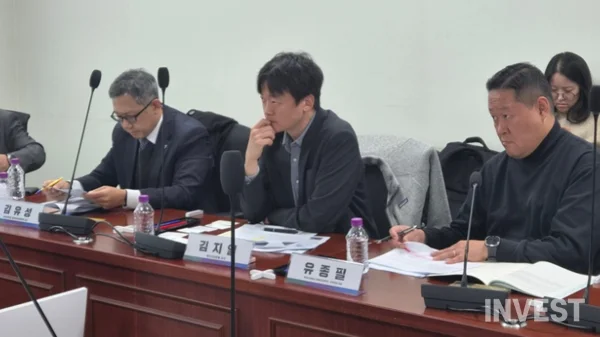
One participant, introducing themselves as a representative of minority shareholders, explained that when they requested to inspect a shareholder list from a company, they were told they must file a lawsuit. The point was made that even if a right is legally guaranteed, exercising it becomes difficult if individuals must bear the costs and time of litigation.
The participant compared this to a situation where a company tells a consumer who requests ingredient information that they will only provide it if a lawsuit is filed. They continued, "How can general shareholders respond to all such unfair actions?" and proposed, "We need an organization that supports the exercise of investor rights and damage relief, similar to a consumer protection agency."
Kim Woo-jin, a professor at Seoul National University who served as the moderator, cited the Investor Protection Center in Taiwan as a reference case. He noted that there is a system that performs functions such as representing the lawsuits of general shareholders and suggested it is worth researching in Korea.
Demands were also made to increase enforcement power against unfair trading. Another participant noted that damages can increase the longer it takes to reach punishment, calling for rapid responses and strict sanctions. The intent was to establish mechanisms to control illegal acts in a timely manner alongside tax reforms that reduce the incentives for stock price suppression.
Questions regarding valuation standards... Government: "Market price is the principle"

Questions and answers were exchanged between participants and government officials regarding the stock valuation standards in the government proposal.
Kim Mi-jin, policy director of the Korea Minority Shareholders Research Association, argued that since everyone wants to pay less tax, clear standards must be established for the valuation of inherited and gifted stocks. She suggested that the structure, where the tax burden varies depending on the stock price level, should be adjusted so that general shareholders do not suffer damages.
Kim Man-ki, Deputy Director of the Property Tax Division at the Ministry of Finance and Economy, explained that the principle is to base property valuation on market prices. He explained that while listed stocks have prices continuously formed in the market, unlisted stocks can be difficult to value via market price due to infrequent trading, so a supplementary valuation method is applied under tax law.
The Deputy Director responded that while there may be criticism that the government proposal is insufficient, it does not mean there is a contradiction in the valuation system itself or a lack of standards. However, he stated that the government is aware of the points that the scope of application for the government proposal is narrow and the additional taxation effect is not large.
He added that during the preparation of the government proposal, legal stability, the possibility of unconstitutionality, and enforceability were all reviewed, and that supplementary measures are being examined by referring to various opinions and cases.
The position was also presented that the revision of the Inheritance Tax and Gift Tax Act and the supplementation of capital market regulations must occur together. Kim stated that it must be examined whether the problem can be solved through the Inheritance Tax and Gift Tax Act alone, and added that the government will actively participate in preparing the final plan, such as proposing alternatives if necessary during the discussions at the National Assembly Tax Subcommittee.
"Bio industry must reflect sector characteristics"... Demands for bill supplementation

Questions were also raised regarding whether the net asset value standard alone can address the undervaluation issues across various industries.
One participant argued that since bio and pharmaceutical companies have different valuation methods compared to manufacturing industries, supplementary measures tailored to industry characteristics are necessary. The point was that even if stock prices exceed a certain level relative to net asset value, there may be companies that are undervalued compared to their technology and growth potential. Professor Kim summarized this as a proposal to reflect industry-specific characteristics.
The 'Stock Price Suppression Prevention Act,' which is the center of the day's discussion, is an amendment to the Inheritance Tax and Gift Tax Act. It aims to prevent incentives to reduce inheritance and gift taxes by keeping stock prices low; it applies the unlisted stock valuation method if the valuation of listed stocks held by major shareholders, etc., falls below 80% of the net asset value per share under tax law, ensuring the valuation does not fall below this threshold.
Participants demanded measures to support the exercise of shareholder rights, respond to unfair trading, and supplement valuation differences by industry, alongside such tax reforms. Closing the discussion, Professor Kim expressed hope that the opinions and legislative proposals presented that day would be reflected in the National Assembly review process.
Covers National Assembly for INVEST NEWS GLOBAL, and also writes about Startup Is and News.
Comments 0
Comments are currently disabled.