
[Field Report] BATTERY KOREA 2026: Diagnosing Manufacturing Process Innovation and Circular Economy Value Chains to Overcome the Chasm
BATTERY KOREA 2026 was held at COEX in Samseong-dong, Seoul, focusing on solutions for the entire battery value chain, including next-generation R&D…
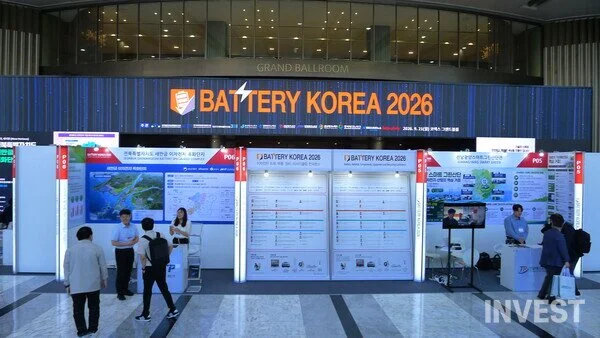
On September 21, 'BATTERY KOREA 2026' was held at the Grand Ballroom on the 1st floor of COEX in Samseong-dong, Seoul. BATTERY KOREA is a specialized conference and business-to-business (B2B) exhibition held annually in the second half of the year, where engineers and supply chain managers in the battery materials, manufacturing equipment, and recycling sectors gather.
This event was designed to cover solutions across the entire value chain, from next-generation battery research and development (R&D) strategies to the advancement of materials, components, and equipment (MCE) manufacturing processes, AI-based quality control, and technologies for the reuse and recycling of used batteries.
In particular, the organizers aimed to promote technical exchange and procurement consultations between demand companies and supply companies amid the downturn in front-end industries, and to support the technological independence of national strategic industries. Currently, the secondary battery market faces challenges such as the electric vehicle chasm (a temporary slowdown in demand before mass adoption), global supply chain regulations, and price offensives from Chinese companies, necessitating the reduction of manufacturing costs and the securing of safety.
Participating companies explored the feasibility of applying their solutions to mass production and met with potential customers, while attendees examined data necessary for making on-site implementation decisions, such as process cost reduction figures and recycling yields, through presentations and exhibitions.
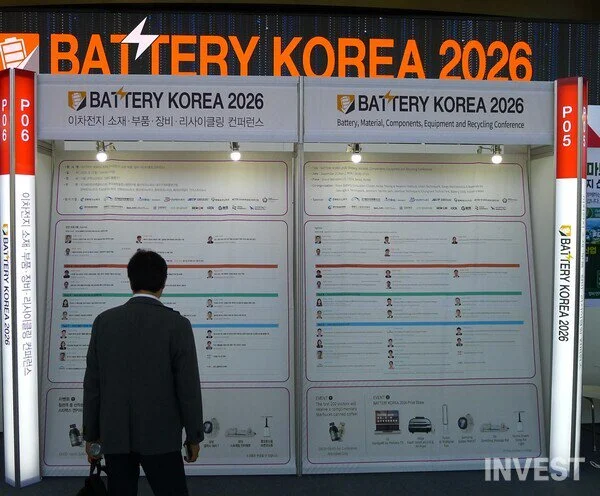
The event was conducted over one day, divided into three tracks (A, B, and C), with more than 22 lectures continuing from the morning keynote speeches to the afternoon specialized sessions.
Tracks A and B covered trends in next-generation all-solid-state battery development, electrode process automation, and AI-based battery cell quality inspection techniques. As engineers and researchers filled the conference rooms, presenters explained methods to reduce scrap occurring in actual cell processes and degradation diagnosis algorithms using slides. During the Q&A sessions following the presentations, a series of questions were asked regarding detailed figures such as material mixing ratios and defect detection rates of process equipment.
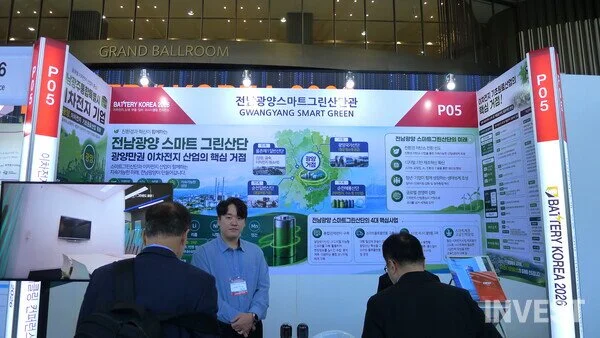
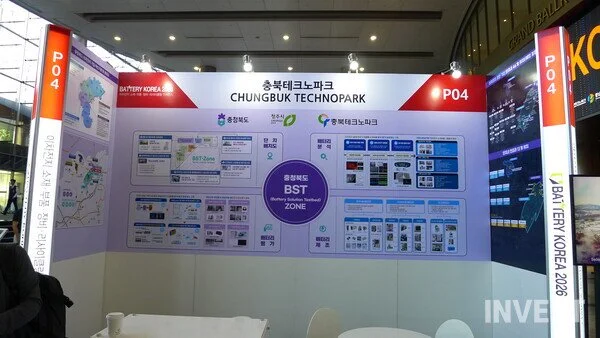
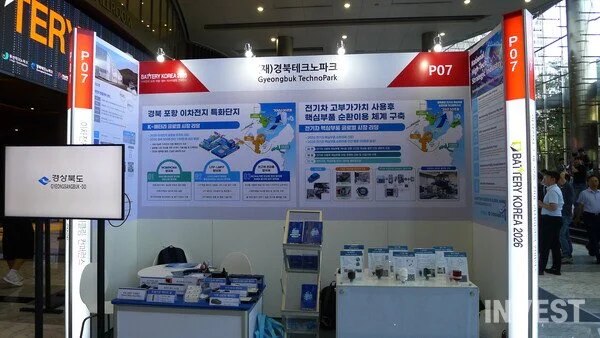
On one side of the exhibition hall, promotional booths for secondary battery specialized complexes and smart green industrial complexes operated by local governments and regional technoparks were arranged. Gyeongbuk Technopark, Ulsan Technopark, and Chungnam/Chungbuk Technopark introduced the battery material clusters and infrastructure support benefits of their respective regions. The booths also presented attraction plans for small and medium-sized enterprises (SMEs) and middle-market enterprises considering the expansion of factories or research institutes, such as R&D demonstration facilities, support for shared analytical equipment, and tax benefits. At the consultation tables, inquiries and administrative practical consultations took place regarding regulatory requirements for factory sites, fulfillment of power and water infrastructure, and supply chain linkage plans between resident companies.
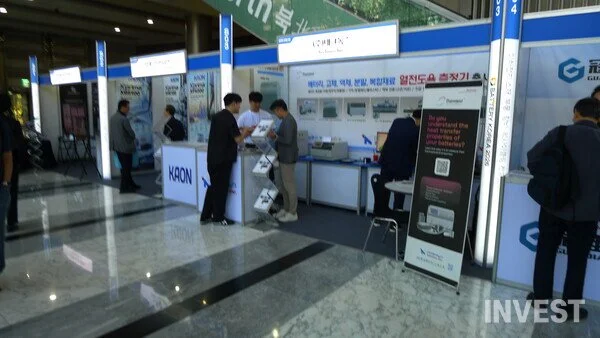
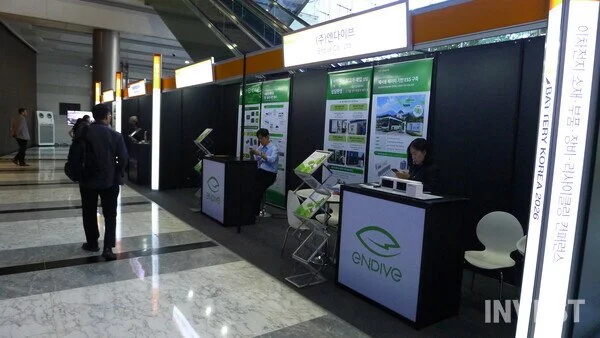
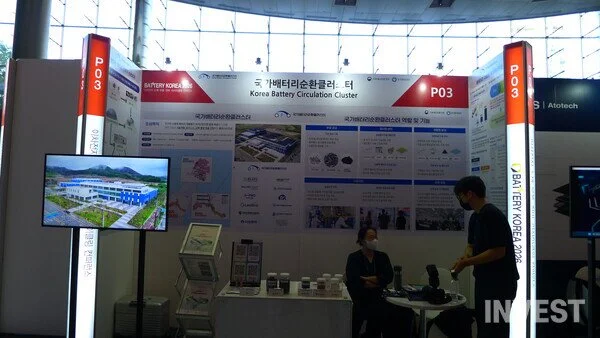
Other booths showcased circular economy technologies ranging from used battery diagnosis and pre-treatment to material extraction. KTR announced its BaaS (Battery as a Service) verification system and AI-based integrated support solutions for reused batteries. Specialized companies such as Endive exhibited technologies for diagnosing the State of Health (SOH) and disassembly of used batteries, as well as solutions for configuring pack-level reused Energy Storage Systems (ESS), along with physical modules and measurement data.
Visitors examined engineers' measurement data demonstrations to gauge the difficulty of disassembly and the possibility of process cost reduction. Equipment targeting both environmental regulations and cost reduction, such as safety diagnosis sensors, graphite separation technology, and dry black mass processing systems, drew the attention of industry officials.
[Field Diagnosis] Challenges in Applying Battery Technology to Mass Production
What stood out at the BATTERY KOREA 2026 site was the movement to review technical performance in alignment with mass production costs and safety/quality standards. Amid the slowdown in electric vehicle demand growth and raw material price volatility, participating companies and researchers presented solutions for yield improvement using sensor data, module designs that are easy to disassemble, and responses to the institutionalization of the battery circular economy. In the three technical tracks and B2B consultations, the process conditions and costs required when applying laboratory technology to mass production plants and recycling sites were major topics of interest.
For early-stage startups and technology-based ventures, it was also an opportunity to identify the requirements for connecting Lab scale technology to Mass scale mass production processes. The secondary battery industry has high entry barriers and strict safety and quality certification standards, making it difficult for early-stage companies to enter the market independently. Startup teams could identify process defects that large corporations and Tier 1 suppliers are trying to solve during on-site lectures, and could explore ways to utilize expensive analytical equipment and demonstration support projects at the booths of regional technoparks and public testing institutes. Listening to the yield and unit price standards required by finished car manufacturers and cell manufacturers during on-site meetings and reflecting them in the process roadmap of business plans is also a necessary process for commercialization.
Lee Jae-hyeok, CEO of Endive, an exhibitor in the battery diagnosis and reuse field met at the site, said, "It is difficult to judge the business feasibility of reuse based solely on the simple State of Health (SOH) value of the battery; economic feasibility comes from comprehensively evaluating the difficulty of disassembly, conversion costs, and the possibility of linkage with pack-level control." He added, "Beyond simply possessing technology, only companies that can prove a cost structure capable of responding to the falling prices of new batteries will be able to survive in the market."
Covers Careers & Events for INVEST NEWS GLOBAL, and also writes about Education & Events.
![[Field Report] EdTech Korea Fair 2026: AI Becomes the Standard in EdTech... Competitiveness Depends…](/storage/investnews-global/2026/09/b6ad5271-b528-4ecd-bf04-d282fd3e4aac-4b0f178f-thumb.webp)
![[Field Report] KOEFA 2026: A Void in 'Selection' Amid the Spread of Mass Sourcing and AI Automation](/storage/investnews-global/2026/09/baf89435-3f54-4db8-a621-609076b82076-b995379f-thumb.webp)
![[Field Report] KOEFA 2026: A Void in 'Selection' Amid the Spread of Mass Sourcing and AI Automation](/storage/investnews-global/2026/09/a8452ee3-9396-4685-b5a7-8d06f4a3775b-b995379f-thumb.webp)
Comments 0
Comments are currently disabled.