
AI Music Trust Standards Withdrawn After 22 Days... Need for 'Creation History' Management Highlighted
Following the withdrawal of the Korea Music Copyright Association's new trust standards for AI-generated music…

As the Korea Music Copyright Association (KMCA) withdrew its trust standards for music utilizing artificial intelligence (AI) just 22 days after implementation, the core task for the new standards has been presented as a method to record where AI was used and which parts were directly created by humans.
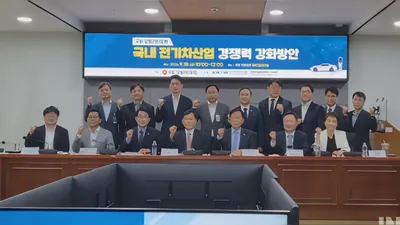
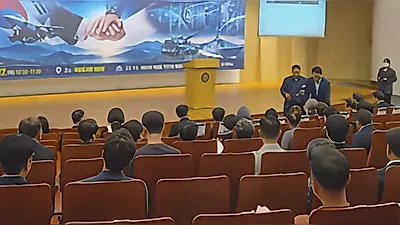
At the 'Discussion on Establishing Music Trust Criteria for the Use of AI' held at the large conference room of the National Assembly Members' Office Building on the 22nd, the contents of the KMCA amendment withdrawn last month and the tasks for supplementation were discussed. The forum was hosted by National Assembly member Kim Jaewon of the Rebuilding Korea Party and organized by the K-Music Rights Organizations Mutual Growth Committee.
On the 3rd of last month, the KMCA implemented an amendment that allowed the trust registration of AI-utilized music in which humans substantially contributed to lyrics, composition, arrangement, etc. However, following pointed remarks from the National Assembly and the Ministry of Culture, Sports and Tourism that a private trust organization setting standards first without social consensus and legal criteria could set a wrong precedent, the KMCA withdrew the amendment on the 25th of the same month.
Judgment by lyrics, composition, and arrangement instead of '51%'

The withdrawn amendment contained provisions to allow trust registration only for the parts actually created by humans, even for music made using AI. Music completed by AI simply by inputting prompts was excluded from the registration target.
For example, if a person writes the lyrics directly and AI generates the melody and arrangement, the method would involve individual judgments on whether humans substantially participated in lyrics, composition, and arrangement, such as allowing only the lyrics where human creative contribution is confirmed to be registered.
The method of calculating the degree of contribution between humans and AI as a single ratio was not adopted. This is because music is a result of combining various creative elements such as lyrics, melody, harmony, and arrangement, making it difficult to calculate numerically how much a person participated in the song production process.
Seol Ji-hye, partner attorney at Yoon & Yang, said, "Initially, there was an option that the human creative contribution must be 51% or more, but we believed that setting a specific number would make disputes inevitable." She added, "The opinion that it is appropriate to qualitatively evaluate the creative process was reflected."
However, to judge whether to register by part, it must be possible to verify who made each part. Accordingly, the amendment required applicants to report the AI tools used, the parts used, and the content directly created by humans. If the reported content is suspicious, the KMCA was to request additional work files or modification records and provide the applicant with an opportunity to explain.
Reported content and production records must be verified together

To establish copyright management standards for music made using AI, how to verify the use of AI is cited as a core task. It is difficult to identify all instances of AI use through the creator's report alone, and if relying solely on detection technology, there is a possibility of misidentifying music made by humans as AI-generated content. Accordingly, experts suggested a method that comprehensively reviews the creator's reported content, the records of the production process, and AI detection results.
Lee Jong-pil, CEO of Newtune, said, "The detection result itself does not determine the copyrightability of the music or the degree of contribution of the human creator." He stated, "Technology should play the role of providing the information and basis necessary for judgment." In other words, the detection result should be viewed as auxiliary material to be used in the process of reviewing the creator's reported content and production records.
The reason such procedures are necessary is that they affect not only the registration but also the settlement of copyright royalties. If the parts made by AI and the parts made by humans are not distinguished, it is also difficult for platforms to judge to whom they should pay copyright royalties.
Shin Ji-young, CR Leader of Kakao Entertainment, pointed out that due to the lack of clear standards, inquiries regarding the settlement and rights infringement of AI music are concentrated on platforms. Shin said, "The extent to which the rights of the parts directly made by humans are recognized must be determined so that platforms can settle copyright royalties clearly and fairly."
Park Tae-yong, professor of the Department of Culture and Arts at Seokyeong University, suggested a plan to leave the creative process itself as a record. This involves storing the commands entered into the AI, subsequent modifications, and work files for each instrument and vocal to allow for the verification of parts directly made by humans.
Professor Park said, "Production history can serve as material to protect creators in rights disputes." He added, "The rights to AI music should be determined not by the fact that the generate button was pressed, but by whether it can be proven which parts the human directly made."

Comments 0
Comments are currently disabled.