
Chinese EVs Hold 35% Domestic Market Share... Threatening the Korean Automotive Ecosystem
At a seminar held at the National Assembly, experts warned that Chinese electric vehicles are rapidly encroaching on the domestic market…
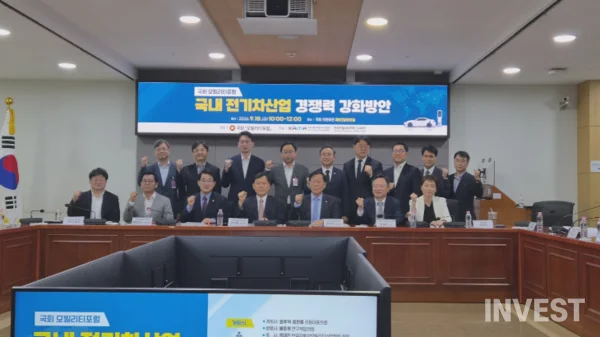
As Chinese electric vehicles account for approximately 35% of the domestic electric vehicle market, arguments have emerged that countermeasures are needed to protect the production base of the automotive industry. As production volumes that cannot be absorbed in the Chinese domestic market head overseas, analysis shows that the market share of Chinese electric vehicles is rising rapidly in markets that lack specific response measures.
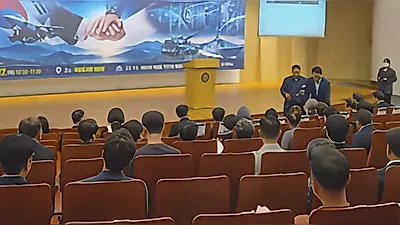
Park Jeong-gyu, a professor at the KAIST Graduate School of Management of Technology, stated at the 'Seminar on Measures to Strengthen the Competitiveness of the Domestic Electric Vehicle Industry' held at the National Assembly Members' Office Building's 8th Conference Room on the 18th, "In open markets without defense mechanisms, Chinese electric vehicles are rapidly encroaching on the market within one to two years."
This seminar was hosted by the National Assembly Mobility Forum and jointly organized by the Korea Automobile & Mobility Association and the Korean Society of Mobility. Along with National Assembly members Yoon Hu-duk and Yoon Han-hong, who are co-representatives of the National Assembly Mobility Forum, officials from the government, industry, and academia attended to discuss the overseas expansion strategies of Chinese electric vehicles and response measures for the domestic industry.
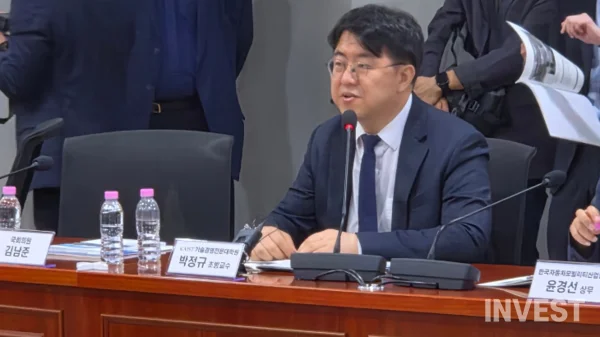
Professor Park diagnosed that Chinese automobile companies are seeking breakthroughs in overseas markets as it has become difficult to generate profits due to intense domestic price competition. He noted that they are maintaining their total production scale by diverting production volumes that cannot be absorbed domestically to exports.
The market share of Chinese brands in the Chinese automobile market has continuously risen to approximately 70%. New energy vehicles, which combine electric vehicles and plug-in hybrid vehicles, account for about 60% of total sales. On the other hand, the sales of global completed car manufacturers, such as those from Germany and Japan, that have entered the Chinese market are on a downward trend.
Professor Park cited support from the central and local governments as the background for the growth of the Chinese automobile industry. It is a structure where the central government presents the direction for industrial fostering, local governments inject subsidies, and based on this, numerous companies enter the market and repeat imitation and learning.
He said, "Chinese companies are unable to make money domestically due to fierce competition and price reduction pressure in the domestic market," and "A structure has been formed where they make profits by expanding overseas and exporting."
The overseas expansion of Chinese companies has led to an increase in market share. According to Professor Park, the market share of Chinese automobile brands in the European market rose from the 4.5–5% level to 10–11% within one year. As of 2025, the market share of Chinese vehicles in the Chilean electric vehicle market reached 74.8%, and in Brazil, it reached 95.1%.
In the future, as the entry of Chinese brands such as BYD into the domestic market expands, competition among completed car manufacturers is expected to become even more intense. Professor Park pointed out that if domestic completed car production shrinks due to the rising market share of Chinese electric vehicles, the workload of component manufacturers will decrease, and it could even affect industries that manufacture related facilities and machinery.
He cited Italy as an example. Italy's passenger car production decreased from 1.97 million units in 1989 to less than 300,000 units in 2025. Professor Park said, "If completed car production collapses, the component ecosystem collapses, and if the automotive component ecosystem is shaken, problems can arise in the entire related machinery industry as well."
Japan was mentioned as a response model. Japan supports initial facility investment for batteries and electric vehicle factories and provides long-term tax benefits based on domestic production performance. Purchase subsidies are also linked to strengthening the domestic industrial ecosystem by evaluating battery supply stability and cybersecurity.
Professor Park suggested that, like Japan, the support system should be shifted to focus on domestic production and investment, while companies should also analyze the Chinese supply chain to secure cost competitiveness.
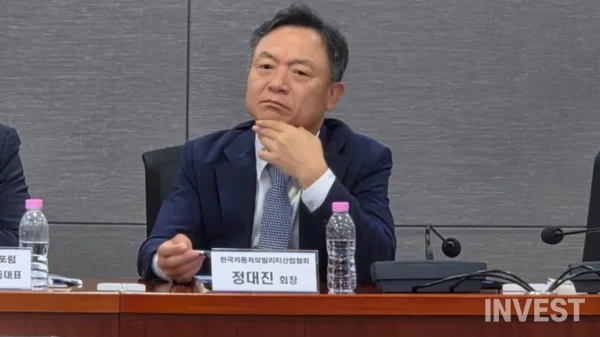
The industry also cautioned against the impact that China's overproduction could have on the domestic automotive industry. Jeong Dae-jin, Chairman of the Korea Automobile & Mobility Association, said, "Shipbuilding, displays, steel, petrochemicals, and solar power have experienced their industrial ecosystems being shaken as China's overproduction volumes entered the global market," and "Electric vehicles must not follow in those footsteps."
Chairman Jeong stated, "The automotive industry is an industry involving approximately 1.5 million jobs," and "The government should include electric vehicles in the domestic production tax credit it introduced to support companies' domestic production and investment."
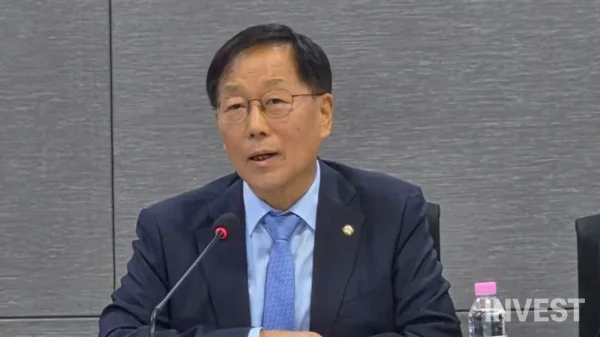
Yoon Hu-duk, co-representative member of the National Assembly Mobility Forum, said, "Although the government introduced the domestic production tax credit, future vehicles including electric vehicles were not included in the target," and "As a member of the National Assembly Finance and Economy Committee Tax Subcommittee, I will strive so that electric vehicles can be included in the deduction target."
Comments 0
Comments are currently disabled.