
[MLCC] Shortage of MLCC due to overlapping demand from ESS and AI servers... Prices double and Murata announces discontinuations
The expansion of Energy Storage Systems (ESS) and increased investment in AI servers are intensifying the supply shortage of Multi-Layer Ceramic Capacitors…
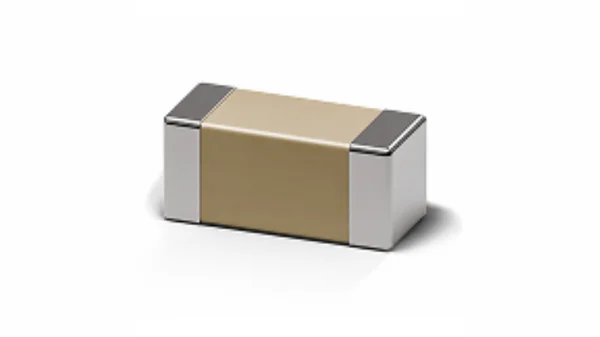
The expansion of Energy Storage Systems (ESS) and the increase in investment for Artificial Intelligence (AI) servers are intensifying the supply shortage of Multi-Layer Ceramic Capacitors (MLCC). It has been reported that some domestic ESS companies have accepted MLCC supply prices nearly twice as high as before to prevent production disruptions, and Murata Manufacturing has notified customers of plans to discontinue certain items in nine MLCC series to stabilize the MLCC supply.
#Multi-Layer Ceramic Capacitor (MLCC)
An MLCC is a component made by stacking dozens to hundreds of thin ceramic dielectrics and metal electrodes alternately. When voltage is applied, it stores electrical energy between the layers and releases it when needed; in a circuit, it plays the role of stabilizing the power voltage and reducing signal interference by immediately supplying the necessary charge when power consumption changes abruptly.
The more layers there are and the thinner they are, the higher the capacitance that can be produced in a small area, so they are used in various products that require power control or signal processing, such as battery systems, servers, communication equipment, and automotive electronics. Automotive MLCCs must pass automotive component reliability standards such as AEC-Q200, and these high-specification products require more resources in the production process than general-purpose products because they must stack more ceramic layers.
LG Energy Solution and Samsung SDI accelerate US ESS expansion... ESS companies "willing to accept double the price"
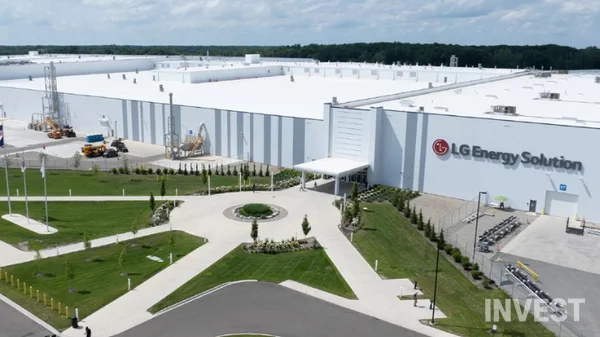
Domestic battery companies are increasing their ESS production capacity in the United States. LG Energy Solution is expanding its ESS battery business by strategically utilizing five production bases in North America, and has announced a plan to secure more than 50GWh of North American ESS battery production capacity by the end of the year.
The production bases consist of three owned factories (Holland, Michigan; Lansing, Michigan; and NextStar Energy in Windsor, Ontario) and two joint venture facilities (LH Battery Company in Jeffersonville, Ohio, and Ultium Cells 2 in Spring Hill, Tennessee). Through this, 80% of LG Energy Solution's global ESS production capacity is expected to be concentrated in the North American region by the end of this year.
Samsung SDI is producing NCA (Nickel, Cobalt, Aluminum) batteries for ESS at its StarPlus Energy plant in Indiana, United States. Samsung SDI plans to install an LFP (Lithium Iron Phosphate) battery production line for ESS at this plant and begin mass production in the fourth quarter of 2026, and expects its annual US ESS battery production capacity to reach 30GWh around the end of 2027. Samsung SDI's US subsidiary signed an ESS battery supply contract worth approximately 1.5 trillion won with a US energy company from 2026 to 2029. Last December, it also signed an LFP ESS cell supply contract worth 2 trillion won with a US energy infrastructure company.
The expansion of US ESS production by domestic battery companies is increasing the demand for MLCC procurement, leading to price increases. The Korea Economic Daily reported that some ESS companies were requested by MLCC suppliers to pay prices nearly twice as high as before, and are accepting the increases to avoid production disruptions.
The reason battery companies accept price increase requests is that the loss due to system production delays can be greater than the price of a single component. An ESS consists of battery cells as well as a Battery Management System (BMS), Power Conversion System (PCS), control boards, and communication devices, and MLCCs play the role of stabilizing current and reducing signal noise in various parts of these circuits. While it is known that the proportion of MLCCs in the total cost of a finished ESS is typically less than 1%, if these components are not secured in time, the production and assembly schedules for power control devices and control boards may be delayed. It is difficult to secure the components needed for the increased ESS orders at the same pace.
The expansion of investment in AI servers is also broadening the demand sources for MLCCs. Servers must supply stable power to the Central Processing Unit (CPU), Graphics Processing Unit (GPU), memory, and network equipment, but servers dedicated to AI computations are densely packed with high-performance GPUs and High Bandwidth Memory (HBM), consuming much larger amounts of power in a short time and generating more heat than general servers. For this reason, small, high-capacity, and high-heat-resistant MLCCs must be densely arranged in the power supply unit to suppress power fluctuations and stabilize voltage. According to the industry, the number of MLCCs mounted on a single AI server is more than 10 times that of a general server, and this gap tends to grow larger for the latest high-performance AI servers.
In fact, TrendForce predicted that as new AI platforms from NVIDIA, Google, and AMD enter mass production in the third quarter of 2026, AI-related MLCC orders will drive up the capacity utilization of manufacturers' production facilities. It analyzed that if the demand for securing advance inventory by customers is added, the lead time for high-specification MLCCs may lengthen and prices may rise, and predicted that the fourth quarter will be the point to check the supply and demand situation for high-specification MLCCs.
Market stirred by Murata MLCC discontinuations... Attention focused on supply volume and price impact
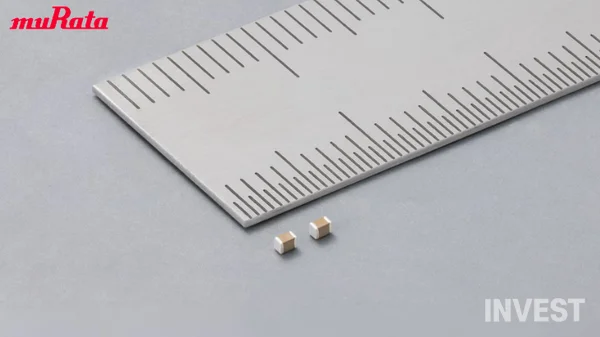
Murata Manufacturing has notified customers that it will end the production of certain items in nine MLCC series (GRM, GRJ, GRT, GXM, GXT, GCM, GCJ, GCG, ZRA) following a review of its FY2026 product lineup. The official notice sent by Murata states that the final order deadline is March 31, 2028, and the final shipment date is March 31, 2029. Customers must submit a written response to the notice by December 31, 2027, and must either switch to replacement products for items required for continued use or place final orders within the deadline for the quantities needed during the product life cycle.
This notice includes not only general-purpose products but also some automotive series. GRM and GRJ are used in general consumer electronics and industrial equipment, GRT is for automotive infotainment, convenience devices, and industrial equipment, while GCM, GCJ, and GCG are classified as product groups for automotive powertrains and safety devices.
Murata cited a review of the product lineup to stabilize MLCC supply and improve the support system, as well as expanding the production capacity of other products, as the reasons for the discontinuation. The company explained, "We are reviewing the MLCC product lineup to stabilize MLCC supply and improve the customer support system. Accordingly, we plan to terminate the production of these part numbers to expand the production capacity of other products."
◆ Impact of Murata's discontinuation: High-value goes to Samsung Electro-Mechanics, general-purpose goes to China and Taiwan
Murata's discontinuation notice serves to guide customers on replacement transitions or advance purchase schedules, while simultaneously signaling Murata's intention to divert the production capacity previously used for discontinued items to other MLCC products. Consequently, the market is paying attention to the impact this will have on the supply volume and price of each product.
DB Securities analyzed that Murata's production halt could work in favor of suppliers of high-value products. Jo Hyeon-ji, a researcher at DB Securities, evaluated this move as a "reallocation of CAPA centered on high-value products," stating, "It will strengthen the price negotiation power and profitability improvement of leading high-value manufacturers." The analysis suggests that since products requiring high capacity and high reliability necessitate customer quality certification and mass production verification procedures, making it difficult to change suppliers in the short term, the negotiating power of companies that stably supply such specifications could increase. Samsung Electro-Mechanics was named as a domestic beneficiary.
However, DB Securities judged that the benefits from Murata's production capacity adjustment will not be distributed equally among all MLCC companies. The analysis suggests that in the general-purpose and low-to-mid-range product market, volumes are highly likely to shift to Chinese and Taiwanese companies. In fact, a TrendForce survey showed that Chinese companies such as CCTC are filling the supply gap created as Samsung Electro-Mechanics and Murata transition their production of IT-use X5R products to high-specification products for AI. It is reported that PC manufacturers such as HP, ASUS, and Acer, as well as EMS companies such as Quanta Computer and Pegatron, are conducting supplier certifications and factory inspections for Chinese companies, including CCTC.
Taiwanese company Yageo is also mentioned as a beneficiary of the volume shift, as it holds an existing customer base in the general-purpose MLCC sector. Yageo announced that its April sales increased by 22% compared to the same month last year, recording its highest monthly revenue, driven by AI-related demand and customer inventory securing demand.
Samsung Electro-Mechanics signs 1.07 trillion won 'AI server MLCC contract'

Samsung Electro-Mechanics signed an MLCC supply contract for AI servers worth approximately 1.0722 trillion won with a large global corporation on September 1. The supply period is from January 1, 2027, to December 31, 2027, and it is the largest among the long-term supply agreements (LTA) signed by Samsung Electro-Mechanics.
In addition to this contract, Samsung Electro-Mechanics has signed long-term supply agreements for MLCCs with about 10 global companies. If the silicon capacitor and AI server MLCC contracts signed since May are combined, they reach a total of 3.32 trillion won. As contracts continue, Samsung Electro-Mechanics' product composition is also shifting from general-purpose to high-value products.
According to Goldman Sachs, the AI server MLCC market is expected to grow at an average annual rate of about 34%, from 1.4 billion dollars in 2025 to 5.8 billion dollars in 2030. The amount of MLCCs installed in a single AI server is more than 10 times higher than in a general server, so the required component volume increases in proportion to market growth. Samsung Electro-Mechanics holds a market share of more than 40% in the MLCC market.
Samsung Electro-Mechanics stated, "This contract is a result of global customers recognizing Samsung Electro-Mechanics' technological prowess and supply stability. We will expand the supply of high-reliability MLCCs for AI servers to secure firm leadership in the AI market."
◆ Samsung Electro-Mechanics' third MLCC contract is 43% larger than the previous two combined
iM Securities analyzed that the procurement entity itself has changed regarding Samsung Electro-Mechanics' MLCC supply contract. Ko Eui-young, a researcher at iM Securities, identified the final end-user of this contract as a semiconductor platform company. This is the third MLCC long-term supply agreement (LTA), following 454 billion won on June 30 and 295.1 billion won on July 23, and the scale of this single contract is 43% larger than the sum of the previous two.
The difference between the previous two contracts and this contract lies in the position of the contracting party. According to iM Securities, the June contract was finalized when an Electronic Manufacturing Service (ODM) company informed the end customer of the possibility of MLCC supply disruptions during the server order process, and the July contract partner was a global server assembly company. This time, a semiconductor company that designs server platforms stepped forward to secure the volume directly. iM Securities evaluated this as the beginning of MLCC supply stability becoming a variable intertwined with platform roadmaps.
The nature of the contracted items has also changed. While the previous two were high-capacity MLCCs for a single model, this contract is understood to encompass the entire high-value lineup centered on ultra-small and high-capacity products. The pricing conditions have also improved for the third consecutive time. iM Securities estimated that this contract was concluded under more favorable terms than the previous two and that profitability is expected to be at least 30% or more.
iM Securities pointed out that this strengthening of price negotiation power also affects the allocation of production lines. Assuming the price of a server-grade MLCC is 18 won per unit and that producing one server-grade unit requires the production resources equivalent to three general-purpose products, the volume of this contract is estimated to be approximately 60 billion units. This is equivalent to the effect of shifting production capacity that could have produced approximately 180 billion general-purpose MLCCs over to server-grade products. If all three contracts signed so far (approximately 100 billion units) are converted based on general-purpose standards, they reach approximately 300 billion units, which accounts for 23% of the total ceramic production capacity (1.3 trillion units) that Samsung Electro-Mechanics is expected to secure by 2027.
Comments 0
Comments are currently disabled.