Global construction robot investment triples to $1.6 billion
Global investment in construction robot startups has reached approximately $1.6 billion as of October 29, more than tripling the previous record set in 2021.
Global investment in construction robot startups reached approximately $1.6 billion by October 29, more than four times the $389 million recorded last year. The surge was driven by three companies—Bedrock Robotics, Gravis Robotics, and ICON—which secured a combined $1.335 billion.
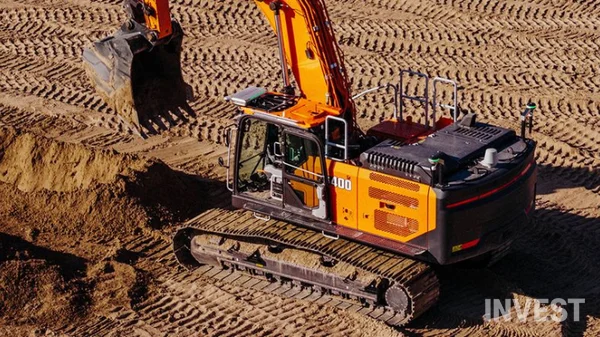
Global investment in construction robot startups has surged to more than three times its previous record. According to Crunchbase, investment flowing into companies in the construction robot sector reached approximately $1.6 billion as of October 29, significantly surpassing the previous peak of $506 million in 2021. This figure is more than four times the total annual investment of $389 million recorded last year. While the number of investment rounds increased from 28 last year to 30 by the end of October this year, the scale of capital raised by individual companies has grown substantially.
Overseas, companies developing autonomous heavy equipment and robot-based construction systems secured large-scale funding. In South Korea, investments were attracted by companies adding automation features to existing construction equipment or automating material processing through robotics. Software companies supporting construction cost estimation and site management also secured investment.
$1.6 billion in construction robot investment... 83% concentrated in top 3 companies
The growth in global construction robot investment was driven by large-scale funding rounds for a small number of companies. Bedrock Robotics, Gravis Robotics, and ICON secured a combined $1.335 billion, accounting for approximately 83% of the total. Bedrock Robotics alone raised $870 million, which represents more than half of the total amount.
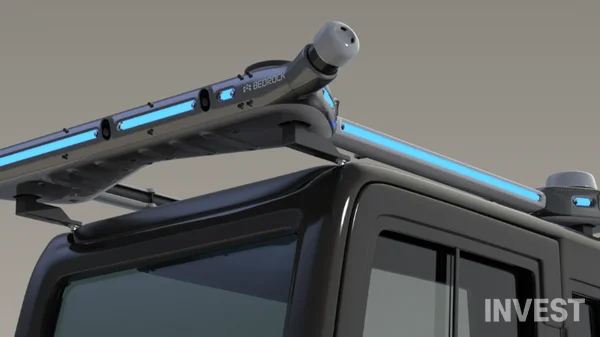
The top funder, Bedrock Robotics, is a company that adds autonomous driving systems to excavators owned by construction firms. Rather than requiring the purchase of new machinery, the company installs sensors and software on existing heavy equipment to automate tasks. Following a Series B round in February that raised more than $270 million, co-led by CapitalG and Valor Atreides AI Fund, the company secured $600 million in a Series C round in October co-led by CapitalG and Emergence Capital. Following the Series C investment, the company's valuation was assessed at $4.1 billion.
In August, the company successfully completed paid operations using a fully autonomous excavator at an actual commercial construction site. It plans to use the investment to expand the field deployment of fully autonomous excavators and strengthen its operational and sales foundations.
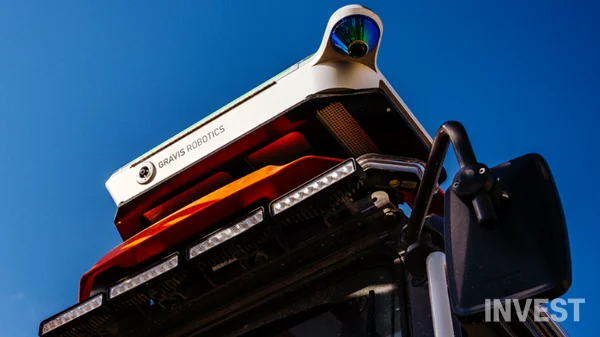
The excavator automation company Gravis Robotics secured a $200 million Series A investment from SoftBank in August. Its core product, 'Gravis Rack', is an autonomous control device mounted on excavators that combines sensors and control software to identify surrounding terrain and perform digging tasks. According to the company, sites using the Gravis Rack saw productivity up to 30% higher than peak manual productivity, while overall safety was also improved.
Additionally, Gravis Robotics supports assistant functions to help operators and unmanned autonomous operations. When an operator is in the machine, 'Gravis Copilot' provides 3D task guidance and hazard detection; when switched to autonomous mode, the operator can supervise multiple machines from outside the equipment. The company has installed control devices on equipment from various manufacturers, including Caterpillar, DEVELON, Hitachi, and Volvo, and plans to use the investment to expand the global distribution of autonomous heavy equipment at construction sites.
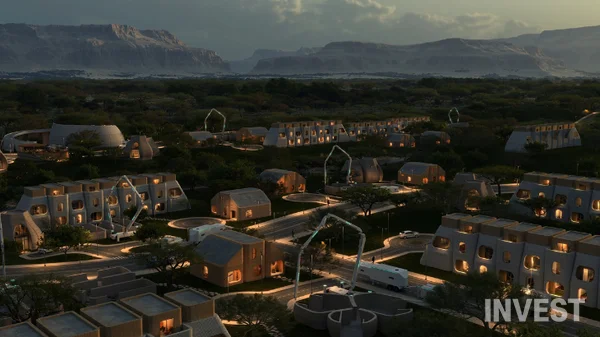
ICON raised $200 million in a Series D round in October led by Baillie Gifford and BlackRock. Combined with the $65 million Series C investment raised in March, the company's cumulative investment for this year totals $265 million.
Unlike Bedrock Robotics and Gravis Robotics, which retrofit existing heavy equipment, ICON develops a construction system that 3D prints buildings by combining robotic equipment, software, and specialized construction materials. The business is divided into: 'Build', which directly constructs residential, commercial, and hotel buildings; 'Tech', which supplies a construction platform integrating robots, software, and materials to construction companies; and 'Prime', which handles defense and space projects. According to the company, it has constructed more than 270 houses and buildings across five states in the United States and two other countries, with notable examples including the 'Wolf Ranch' 3D-printed housing community in Georgetown, Texas, built with the residential developer Lennar.
8 domestic construction robot and AI investments this year... Spanner raises 25.6 billion won
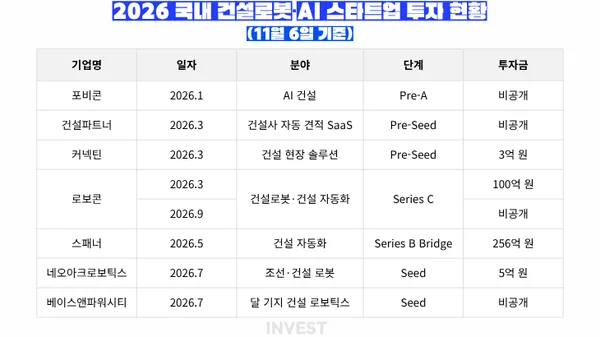
As a result of this publication's investigation into investment attraction cases of domestic construction robot and AI-related startups revealed this year, it was tallied that 7 companies received 8 investments as of November 6. The total amount for the 4 investments where the amount was disclosed is 36.4 billion won. The investment targets include companies that automate construction equipment and material processing, as well as companies that develop software for blueprint analysis, estimation, and site management.
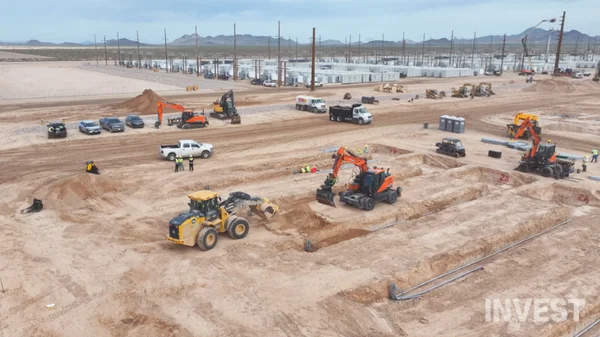
Among the disclosed investments, the company that raised the largest amount is the construction equipment automation company Spanner. In May, it attracted 25.6 billion won in a Series B bridge investment involving Korea Investment Partners and KB Investment. Spanner's 'X1 Kit' is a product that automates specific tasks by attaching a Physical AI module to existing construction equipment, allowing automation functions to be added without replacing the equipment.
Spanner is applying its automation technology to solar power plant construction sites in Arizona, Texas, Colorado, and Missouri in the United States, as well as in Australia, and its performance is growing alongside overseas market expansion. According to the company, overseas business centered on the United States accounts for more than 90% of total revenue, and cumulative revenue has exceeded 65 billion won. The annual revenue target for this year is more than 63 billion won, which is more than double the 30 billion won recorded last year. Profitability has also improved; following reaching the break-even point in the second half of last year, the company recorded 12 billion won in revenue and 1.5 billion won in operating profit in the first quarter of this year.
Robocon attracted 10 billion won in a Series C in March, which included participation from Q Capital Partners, SGC Partners, and Korea Investment & Securities. In September, a venture investment association invested by having GS Engineering & Construction and Hoban Construction acquire Robocon's convertible bonds (CB), and the amount is undisclosed.
Robocon is a company that automates rebar processing and pre-assembly processes using robots and image recognition technology. It supports 'off-site construction,' which moves rebar processing and assembly work performed on-site to a factory for pre-fabrication, and provides the rebar processing automation system and the pre-assembly automation system as its main solutions. 'Aron' automates rebar transport, cutting, and processing, while 'Anton' pre-assembles rebar used in structures by utilizing rebar transport, stacking, and robot welding technology.
The shipbuilding and construction material processing automation company NeoArc Robotics attracted 500 million won in a seed investment led by FuturePlay in July. Its core technology is to enable robots to respond even in sites where working conditions are inconsistent by identifying the shape, position, and deformation of materials using vision AI.
Its flagship product, the section steel cutting system, automatically handles everything from the stage of inputting structural steel such as H-beams to discharge after cutting. The company is expanding its automation scope not only through plasma and laser cutting but also through welding using collaborative robots and material transport using autonomous mobile robots, and its major customers are HD Hyundai Heavy Industries and Hanwha Ocean.
Construction software companies that support blueprint analysis, estimation, and site management also attracted investment. Pobicon attracted Pre-A investment from Xplo Investment and Magellan Technology Investment in January. Its main product, 'Auto Quantity Takeoff,' is a solution that supports construction cost estimation by analyzing construction data such as blueprints, quantities, and bills of quantities using AI. The company plans to use the investment funds to improve blueprint recognition accuracy, enhance collaboration functions for large-scale projects, and advance construction cost prediction and risk analysis functions based on estimation history.
Construction Partner (undisclosed) and Connectin (300 million won) each attracted Pre-Seed investment from Antler Korea in March. Construction Partner is a construction task automation software company that provides blueprint analysis, quantity takeoff, and estimation services. When a user uploads a blueprint, the quantity takeoff results can be checked in the form of a blueprint, 3D model, or Excel file.
Connectin is a construction site operation software company that provides 'Iryongi,' a solution that manages workers' identity, qualifications, and attendance, work, and safety information. It features GPS-based attendance management, electronic signatures, and multilingual safety training support, and supports the site and headquarters sharing the same data through a worker app and a manager web/app.
Initial investment was also executed in the space construction robot field. Base and Power City attracted seed investment in July through the 'Daejeon–Nova Space Technology No. 1 Fund' jointly established by the Daejeon Center for Creative Economy & Innovation and Nova Ventures. The investment amount is undisclosed. Base and Power City is developing robot systems required for lunar base and infrastructure construction, and at 'ZER01NE DAY 2025' hosted by Hyundai Motor Group last year, it unveiled a comprehensive plan for lunar base construction and a prototype of a lunar construction robot system.
[Issue+] Construction AI SLZ advances to Startup World Cup Global Semifinals
Separate from attracting investment, some construction AI companies have also entered international competitions. SLZ announced on the 4th that it won the Korean finals of the 'Startup World Cup 2026' held on October 8, securing a spot in the global semifinals to be held in San Francisco, USA. The Startup World Cup is a competition hosted by the American venture capital firm Pegasus Tech Ventures.
SLZ develops AI that automates mechanical, electrical, and plumbing design for industrial facilities, as well as augmented reality-based construction support technology. Its main products are the design automation solution 'Probee' and the spatial augmentation solution 'Build AR' which utilizes Building Information Modeling (BIM). The company explained that it introduced spatial AI solutions that reduce bottlenecks in the equipment design and construction processes of industrial facilities during this competition.
Covers Post-IPO for INVEST NEWS GLOBAL.
Comments 0
Comments are currently disabled.