
33.1 Months for Energy New Technology Commercialization… Proposal for 'Demonstration Zone' to Reduce Repeated Inspections
A proposal was made to introduce a 'Demonstration Zone' that pre-inspects common safety requirements to accelerate the commercialization of new energy…
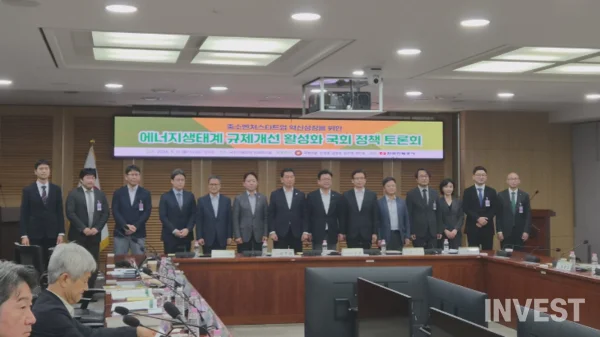
To accelerate the commercialization of new technologies developed by SMEs, an opinion emerged that a 'Demonstration Zone' should be introduced, which pre-inspects demonstration spaces that meet common safety requirements. The proposal suggests reducing repetitive safety reviews that occur every time a company changes, allowing resident companies to focus on the inspections required for their developed technologies and devices.
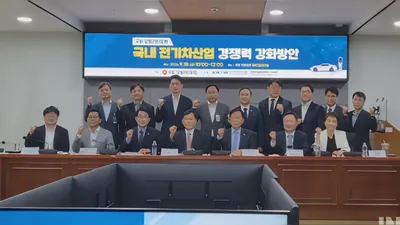
Kim Dong-young, a team leader at KDI, said at the 'National Assembly Policy Forum on Promoting Regulatory Reform in the Energy Ecosystem' held at Seminar Room 2, National Assembly Members' Office Building on the 21st, "It is not a request to abolish regulations. It is a request for a place to demonstrate and procedures that do not involve waiting."
At the forum, discussions were held on how to improve various regulations faced by energy SMEs during the demonstration and commercialization stages following technology development. Jeong Byeong-gyu, head of the SME Ombudsman support team, Kim Dong-young, KDI team leader, and Professor Song Seung-ho from Kwangwoon University, each gave presentations on the topics of 'SME Regulatory Improvement', 'Energy New Industry Demonstration Testbed', and 'Measures to Foster the Domestic Solar Inverter Industry', respectively.
Up to 10 months to establish safety standards
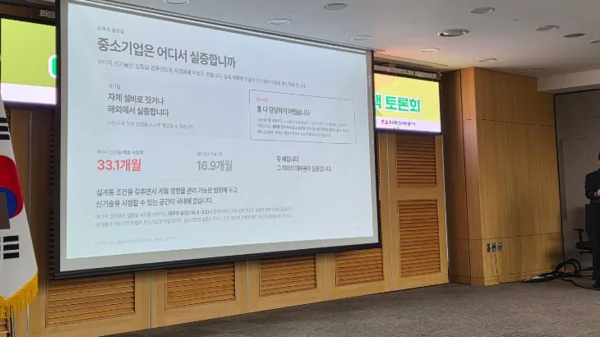
According to Kim, while it takes about 16 months for a general SME's new technology to be commercialized, it takes 33.1 months in the energy sector. This is because even after technical verification is completed in a laboratory, performance and safety must be confirmed in an environment connected to the actual power system, and the necessary standards and licensing procedures must be undergone.
The two companies presented in the briefing took 2 years and 3 years 10 months, respectively, to complete demonstration licensing. In this process, the demonstration approval for the Regulatory Sandbox and the Regulation-Free Special Zone took 6 months and 12 months, respectively, but the actual inspection period was 2 months in both cases. The remaining 4 months and 10 months were spent establishing safety standards to be applied to the new technologies.
Furthermore, waiting times accumulated as the procedures of about five related agencies followed one after another. Even if each agency completes its work within the set deadline, the timing of moving to the next agency is not managed separately, which lengthened the total licensing period.
Kim pointed out, "Agencies work hard to meet their own deadlines, but there is no separate time set for waiting between agencies. If we only blame the person in charge, no answer will be found."
As an alternative to reduce these problems, a plan to designate a specific space connected to the power system as a 'Demonstration Zone' was proposed. In this method, the National Fire Agency, Korea Electrical Safety Corporation, grid operators, etc., would jointly inspect the safety requirements for the space based on its risk level during the designation stage, and subsequently, resident companies would only undergo the inspections necessary for the devices they have developed.
Additionally, for new technologies without existing technical standards, the safety management plan of the Demonstration Zone would be applied as a temporary standard. For low-risk technologies, demonstration would be permitted in principle; for medium-risk technologies, it would be conditional on the installation of protective devices and operational restrictions; and for high-risk technologies, they would be managed differentially according to the risk level by isolating them in separate spaces.
Kim said, "It does not mean eliminating safety inspections, but rather having the related agencies conduct the inspections, which were previously done separately for each company, in parallel all at once during the designation stage. We must allow companies to focus on demonstrating their technology in a place that ensures safety."
"Demonstration equipment is also at a commercial level"... Proposal for integrated inspection and processing deadlines
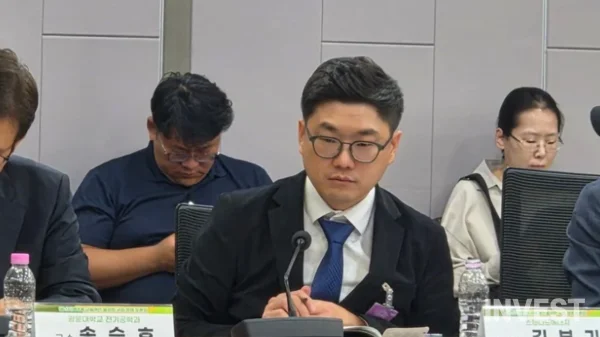
In the following panel discussion, the burden of the demonstration process experienced by companies and the legal supplementary measures needed for the implementation of the system were discussed.
Standard Energy, which develops next-generation ESS, used the Regulatory Sandbox to enter the market with new technology, but stated that requirements similar to commercial equipment were applied even to testing equipment.
Kim Bu-gi, CEO of Standard Energy, said, "Even though it was demonstration equipment, it received requirements almost identical to general commercial equipment. A significant amount of time and resources were invested in preparing what was needed in all fields of fire, environment, architecture, and electricity."
Kim continued, explaining, "It took a long time until the commencement of the demonstration as the procedures of related agencies were gone through one by one," and proposed, "An integrated inspection system that reviews fire, architecture, environment, and electricity fields simultaneously is necessary." He also requested support linking overseas demonstration sites with public institution procurement to help companies that have completed domestic demonstrations to expand overseas and secure initial markets.
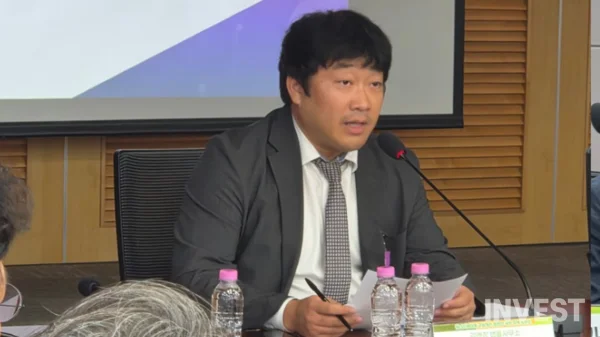
Lee Jin-seong, a lawyer at Kim & Chang, proposed a plan where an application is deemed approved if it exceeds the set processing deadline. This is based on the judgment that while responsibility for approval is concentrated on the person in charge, a structure where the costs due to decision delays are borne by companies and society can induce passive administration.
Along with this, she stated that a legal basis should also be established so that immunity can be applied to the person in charge who approves the demonstration according to pre-determined safety requirements. The intention is to pre-regulate the standards, period, target, and scope of immunity to be applied in the Demonstration Zone so that the person in charge can predict the scope of responsibility at the time of approval.
Kim Hyeong-dong, a member of the People Power Party and a co-host, stated, "The detail of legislation is needed at the point where safety is maintained while opening the path for demonstration. I will identify the difficulties confirmed in the field during the standing committee's review process and closely examine the processing deadlines and responsible departments until the end."
Comments 0
Comments are currently disabled.