
KakaoBank vice president warns Korean banks to adapt to dollar stablecoins
KakaoBank Vice President Song Ho-geun warned that South Korean banks must urgently adapt to the rise of dollar-based stablecoins being used for real-world payments. He emphasized that discussions must expand beyond issuance to include distribution, settlement, and taxation standards to remain competitive.
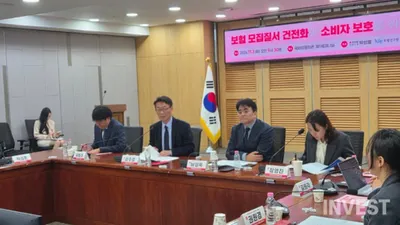
At a policy seminar held at the National Assembly on the 5th, KakaoBank Vice President Song Ho-geun warned that Korean banks must adapt to the real-world use of dollar-based stablecoins to survive. Song noted that foreign users may prefer dollar stablecoins over won-based assets for transactions in Korea, such as payments at plastic surgery clinics using USDT.
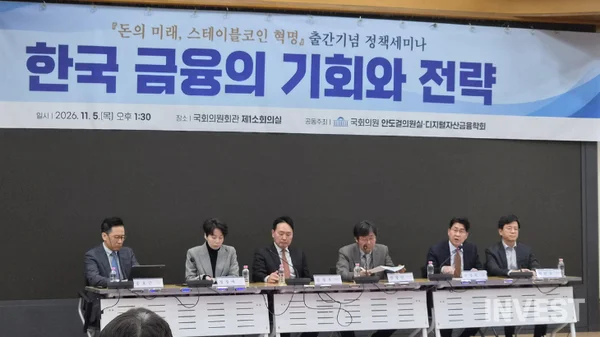
With dollar-based stablecoins already being utilized as payment methods in various aspects of daily life, warnings have emerged that domestic banks must accelerate their response to these changes. As discussions continue regarding the issuers and institutionalization of won-based stablecoins, there is an argument that standards for distribution, settlement, and taxation must be established, as foreign nationals and businesses may choose dollar stablecoins due to cost and convenience.
At the 'Opportunities and Strategies for Korean Finance' policy seminar held at the National Assembly Members' Office Building's first small conference room on the 5th, KakaoBank Vice President Song Ho-geun warned, "Dollar-based stablecoins are already being used in real life," adding, "If they fail to adapt to these changes, it will be difficult for Korean banks to survive in their current form."
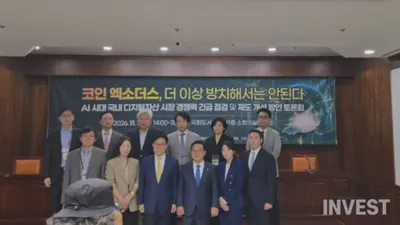
The event was hosted by the office of National Assembly member Ahn Do-geol and the Digital Asset Finance Association to commemorate the publication of 'The Future of Money, the Stablecoin Revolution,' a co-authored book by Ahn and Sungkyunkwan University Business School professor Moon Cheol-woo.
"We can just use dollar stablecoins"... Reality felt through overseas collaboration
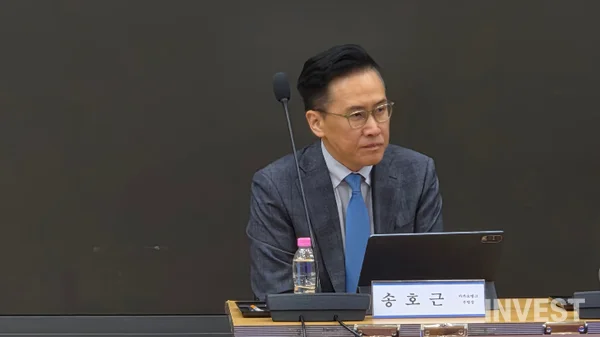
Vice President Song revealed that he discussed collaboration plans using stablecoins with the Brazilian internet bank Nubank at the end of last year. The intent was to allow South American users who prefer Korean content to make payments in Korea more conveniently.
However, Song reported that Nubank asked questions to the effect of, "Why try to create a won-based stablecoin when we can just use dollar stablecoins?" This suggests that even if the number of foreigners wishing to use Korean products and services increases, there is no guarantee they will choose the won as their payment method. If foreigners pay using dollar stablecoins, dollar-based digital assets may be used instead of the won even for transactions occurring in Korea.
Song introduced cases such as foreigners visiting plastic surgery clinics in Korea paying with USDT, or local money exchange offices in Vietnam providing digital wallet addresses to receive stablecoins. He explained that the possibility is growing that stablecoins will not be traded only within virtual asset exchanges but will be utilized for overseas remittances and the payment of goods and services.
He also noted that the payment of wages to foreign workers could change. If a worker from Vietnam prefers to receive USDT instead of won-denominated wages due to the convenience of remittances to their home country—even if it means receiving a slightly smaller amount—employers might consider this to reduce costs.
Song pointed out that if the domestic financial sector remains limited to discussions on institutionalization while the use of stablecoins expands, their response may be delayed. He identified talent and regulation as the essential elements for banks to respond to these changes. While securing talent to handle new technologies and utilizing artificial intelligence (AI) in operations is the role of private companies, establishing the institutional conditions to launch new financial services in the market is the responsibility of policy authorities and the National Assembly of the Republic of Korea.
Must establish distribution and settlement standards beyond issuance discussions
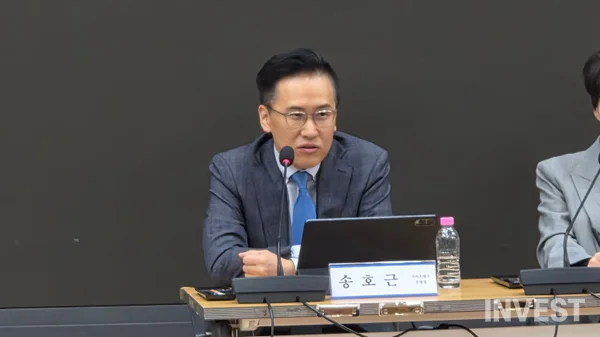
Vice President Song suggested that the focus of won-based stablecoin discussions should expand from issuance to distribution. Along with determining who can issue them and under what requirements, specific standards must be established for how consumers and businesses exchange, receive, and settle sales proceeds.
Key challenges include relevant laws such as the Act on Reporting and Using Specified Financial Transaction Information, the Electronic Financial Transactions Act, and the Foreign Exchange Transactions Act, as well as taxation issues. He explained that it must be determined how small business owners will process sales proceeds received via stablecoins for accounting and tax purposes, whether to tax individuals when they sell held stablecoins, and whether the issuance of cash receipts is possible.
"It is extremely important how easily the people providing services can offer these new types of services," Song said. This implies that even if issuance is permitted, it will be difficult for businesses to design and operate services if the standards for applying them to actual transactions are unclear.
To secure use cases, he believed attention should first be paid to the payment demand of foreigners visiting Korea. While inducing domestic consumers to use stablecoins instead of existing payment methods would require separate benefits and incentives to hold them, it is judged to be relatively easier to connect new payment methods in fields where foreign demand is already established, such as K-content and K-beauty. Song explained that KakaoBank is also considering use cases for stablecoins from this perspective.
Vice President Song: "In an era where AI makes payments, won-based stablecoins must also prepare"
Song stated that preparation must be made not only for current payment demands but also for transaction methods that will emerge in the future, citing 'transactions between AI agents' as a new use case for stablecoins. In an environment where AI selects and pays for goods and services on behalf of humans, the requirements for payment methods may change.
In particular, if AI agents purchase small-scale services whenever needed, payments may occur repeatedly. Song pointed out that in such transactions, the existing account-based payment method, which incurs processing costs for every transaction, could become a burden.
Song cited firm banking—moving money from a customer's account to a merchant's account with the customer's consent—as an example. In a structure where fees are generated for every transaction, the fee burden is relatively higher when using services in units of 1,000 or 100 won compared to paying for a 10,000 won product. He explained that this could create constraints in designing subscriptions or micro-services that charge fees in short time increments.
Song believed that to respond to transactions led by AI agents, payment methods are needed that can lower the cost burden and simplify procedures associated with micro-payments. He emphasized that plans for the utilization of won-based stablecoins must be prepared so they can support such transactions.
He diagnosed that the combination of AI agents and stablecoins could change the competitive landscape of the banking industry. He noted that while discussions between stability and innovation continue, the market is moving, and urged that instead of merely deciding issuance requirements, legal and tax standards that support actual distribution and use must be prepared quickly.
Covers National Assembly for INVEST NEWS GLOBAL, and also writes about Startup Is and News.
Comments 0
Comments are currently disabled.