
Growing influence of General Agencies calls for stronger accountability and consumer protection in insurance sales
Experts at a policy forum held at the National Assembly of the Republic of Korea argued that the rising influence of General Agencies (GAs) necessitates stronger responsibility for product recommendations and contract management to prevent consumer harm.
A policy forum held at the National Assembly on the 3rd highlighted the need to increase sanctions against General Agencies to prevent unfair sales practices, such as inducing consumers to cancel existing policies for higher commissions.
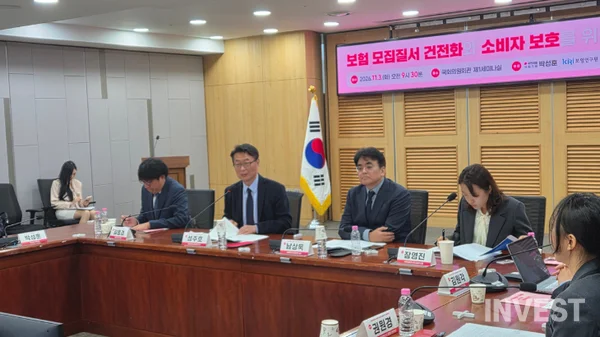
As the influence of General Agencies (GAs) grows in the insurance sales market, suggestions have been made to strengthen their responsibility regarding product recommendations and contract management. It was pointed out that sales practices prioritizing sales commissions over the coverage needs of consumers must be improved, and the system should be supplemented so that sanctions against unfair sales lead to actual recovery of damages. The Financial Supervisory Service stated that reinforcing the legal basis is necessary to hold GAs effectively accountable.
The office of People Power Party lawmaker Park Sung-hoon and the Korea Insurance Research Institute co-hosted the 'Policy Forum on Improving Insurance Sales Practices and Consumer Protection' on the 3rd at the first seminar room of the National Assembly Members' Office Building. The forum was organized to seek ways to improve the system to reduce consumer damage caused by excessive commission competition and unfair sales in a business environment where insurance companies' product development is separated from GA sales, and to strengthen the responsibility of sellers.
During the event, Nam Sang-uk, a professor of business administration at Seowon University, presented on 'Measures to Eradicate Unfair Insurance Sales Practices and Protect Consumer Interests,' and Kim Dong-gyeom, a research fellow at the Korea Insurance Research Institute, presented on 'Policy Tasks for Improving Recruitment Order.'
Repeated damage from switching insurance... Responsibility must match sales authority
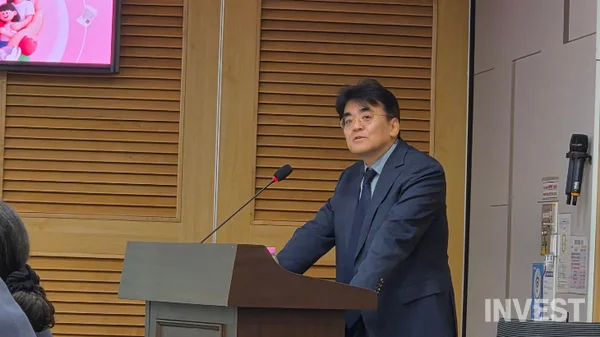
Professor Nam Sang-uk diagnosed that as the 'separation of manufacturing and sales'—where insurance companies create products and GAs sell them—expands, a gap is occurring between sales responsibility and control. He explained that while the sales market is shifting toward GAs, the responsibility and sanctions to suppress unfair business practices are not functioning sufficiently.
A representative problem cited was the act of sellers unfairly inducing consumers to cancel existing insurance and sign up for new products to receive commissions. Consumers experience losses in surrender values or gaps in coverage when switching insurance, and the burden of premiums may increase due to changes in age and enrollment conditions. However, if the differences between the existing contract and the new contract are not sufficiently explained, it is difficult to identify these disadvantages.
Professor Nam viewed that if the burden of sanctions is smaller than the profits gained from violations, the same practices may be repeated. Accordingly, he suggested that the effectiveness should be increased by considering strong sanctions such as business suspensions or registration cancellations, and that procedures to remedy damaged consumers should be strengthened alongside them.
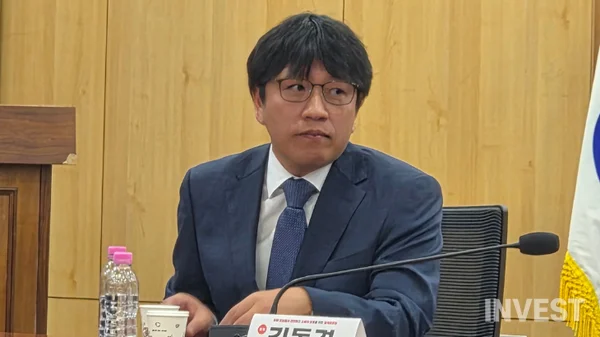
Research fellow Kim Dong-gyeom explained that the responsibility of sales organizations should extend from product recommendation to contract maintenance and management. Since it is difficult for consumers to judge the value of a product at the time of enrollment and they rely on the seller's explanation, the organization exercising the authority to recommend should also be responsible for the results.
To this end, he proposed that comparison and explanation should not be limited to formal signing of confirmation documents, and that it should be possible to verify after the fact whether specific products were compared, why a certain product was recommended, and whether the advantages and disadvantages compared to the existing contract were sufficiently explained.
He added that at the enrollment stage, it should be necessary to check not only the necessity of coverage but also the burden of premiums relative to income, whether there is overlap with existing coverage, and whether the consumer can afford the premiums after renewal. He also stated that GA internal controls should be evaluated based on actual complaint handling, prevention of repeated incomplete sales, and contract management performance, rather than just the existence of regulations.
"Why was this insurance recommended?"... Examining everything from grounds for recommendation to sales responsibility
In the subsequent discussion, opinions were raised that consumers should be able to understand the grounds for product recommendations and verify the sales process and responsibility when disputes arise. The intent is to change information disclosure and the duty to explain so that they actually assist in the selection of insurance products, and to link these to the remedy of damages following the detection of violations.
As a specific measure, a method was proposed to present the premiums, coverage, surrender value, and commission of recommended products in a single comparison table during the solicitation stage. Lee Beom-yong, a senior researcher at the Korea Financial Consumer Protection Foundation, explained that rather than having consumers search for commission disclosures on websites themselves, this information should be provided directly at the sales site. He suggested that if a product with high commissions is recommended, the specific additional coverage provided should also be clearly disclosed.
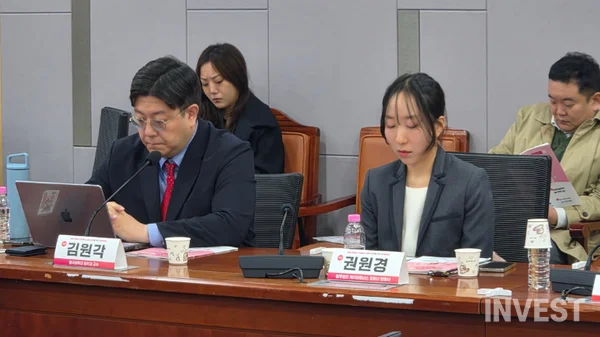
A proposal was also made to expand the scope of managing insurance switching. Kim Won-gak, a professor of law at Dongguk University, suggested a plan to disclose not only contract conversions occurring within the same insurance company but also contracts involving switching to different insurance companies and the status of policy churning by GAs of a certain scale. However, he explained that rather than questioning the contract changes themselves, priority should be given to managing transactions that contain risk factors, such as those lacking objective comparisons or where contracts of the same customer are concentrated in replacements over a short period.
The need to supplement records to prove the sales process and procedures for damage recovery was also identified as a task for improvement. Kwon Won-gyeong, a partner attorney at K Partners Law Firm, suggested that records should be preserved so that consultation details and solicitation activities can be objectively reconstructed, and that consumers should be able to utilize these during dispute processes. She stated that since sanctions such as fines do not immediately recover consumer losses, it is necessary to guide consumers on contractual rights and exercise periods and to induce voluntary damage relief from sales organizations.
FSS "Limitations with supervisory regulations alone... Must strengthen legal grounds"

Agreeing with these concerns, the Financial Supervisory Service emphasized that institutional means to hold sales organizations accountable must be strengthened.
Park Won-gyu, head of the Insurance System Team at the Financial Supervisory Service, stated that the institution has been pursuing system improvements based on the judgment that if commission competition becomes excessive, those costs are passed on to premiums and can lead to consumer damage. He explained that expanding the '1,200% Rule', which limits the first-year sales commission for designers belonging to GAs to within 12 times the monthly premium, and introducing commission comparison disclosures were part of this intent.
However, he pointed out that in the field, the comparison and explanation procedures intended to prevent unfair policy churning may end with merely signing a confirmation form. He noted that consumers might not fully realize the disadvantages resulting from the termination of existing contracts while filling out various subscription documents.
Park noted that there are limits to holding GAs effectively accountable for illegal acts through system improvements centered on supervisory regulations alone. He cited the large number of targets for inspection and the difficulty of supervision, such as the issue of sanctioned executives or designers moving to other organizations to conduct business.
Accordingly, he suggested the need to establish the basic principles for business expense execution and the basis for internal control and consumer protection systems applicable to insurance companies and GAs in the Insurance Business Act, and to reinforce means to strengthen sanction responsibilities. Regarding the discussion on specialized insurance sales companies, he stated that before GAs exercise expanded authority, they must first establish corresponding mechanisms to ensure accountability.
Covers National Assembly for INVEST NEWS GLOBAL, and also writes about Startup Is and News.



Comments 0
Comments are currently disabled.