
Young investors demand loss carryforward deductions for virtual asset taxation
Young investors at a forum held at the National Assembly of the Republic of Korea have called for the implementation of loss carryforward deductions and improved taxation standards for various transaction types before virtual asset taxation begins.
At a forum held at the National Assembly on the 30th, young investors called for a delay in virtual asset taxation and the introduction of loss carryforward deductions to prevent taxes being levied on profits while recovering previous investment losses.
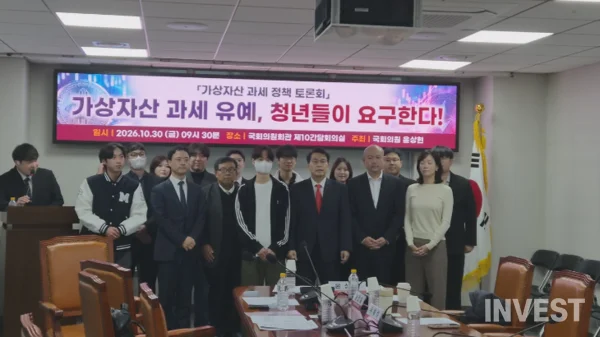
Ahead of the implementation of virtual asset taxation, young investors have demanded that the government supplement loss deductions and taxation standards for different types of transactions. They highlighted the difficulties of asset formation and investment losses, arguing that policy should reflect the need for taxation equity between domestic and overseas transactions and provide investors with sufficient preparation time. The government stated it would review reasonable measures by considering both taxation principles and market characteristics and would consult with the National Assembly of the Republic of Korea.
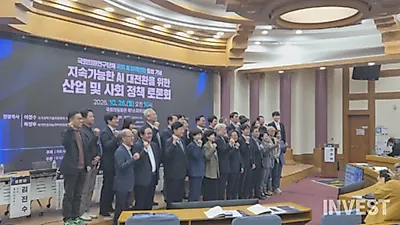
The forum, titled "Young People Call for a Delay in Virtual Asset Taxation," was hosted and organized by People Power Party lawmaker Yoon Sang-hyun at the National Assembly Members' Office Building's 10th Conference Room on the 30th. Lee Tae-ho, an adjunct professor at Yonsei University Graduate School of International Studies, served as the moderator and presenter, while young investors, industry representatives, and government officials discussed directions for improving the taxation system.
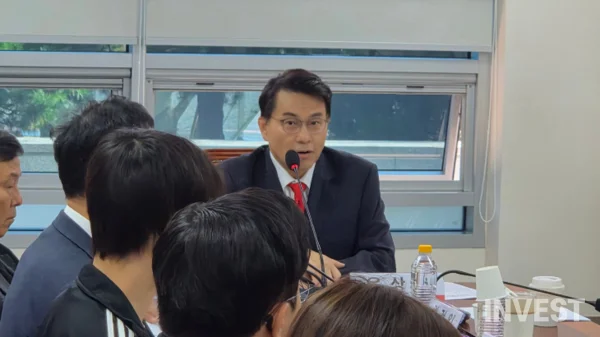
Lawmaker Yoon pointed out the issue of taxation equity between domestic and overseas transactions, explaining that the forum was organized to hear the difficulties young people face in actual trading processes and their demands for institutional improvement.
"Taxing profits despite cumulative losses"... Demand for loss carryforward deduction
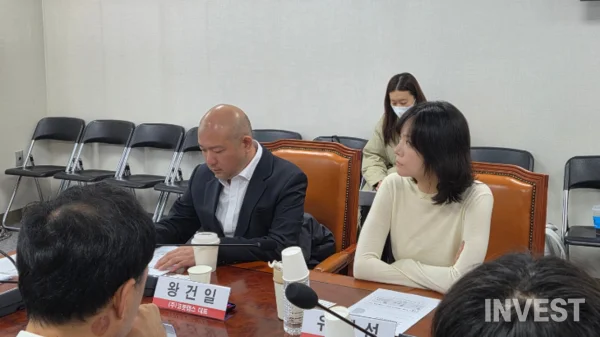
The introduction of a loss carryforward deduction—which allows losses to be carried over to the following year for deduction—was presented as a major issue during the forum. It was noted that in the highly volatile virtual asset market, taxes could be levied on profits generated while attempting to recover losses from the previous year, causing a mismatch between cumulative investment performance and the tax burden.
Virtual asset trader Yoo Hye-seong provided an example of investing 100 million won, resulting in a 40 million won loss, and then recovering that amount to 80 million won the following year. Under current conditions, even though the investor is still 20 million won short of the original principal, taxes could be levied on the profit generated in the second year. Professor Lee Tae-ho also proposed the need to introduce loss carryforward deductions and ensure taxation equity between domestic and overseas transactions.
Virtual asset investor Kim Tae-ho argued that detailed standards should be disclosed first to guarantee investors time to prepare. He stated that investors need to know which standards apply to complex transactions, such as staking (where assets are deposited to receive rewards) or decentralized finance (DeFi), to decide when to trade and recover assets.
"The government and the National Assembly of the Republic of Korea must not force investors to shoulder the uncertainty that they need to resolve," Kim said. "Fair taxation means announcing the core standards first and ensuring investors have time to act according to those standards before implementation."
Wang Geon-il, CEO of Kobot Labs, demanded clarity on how to calculate acquisition costs when moving virtual assets purchased at different prices between domestic and overseas exchanges. He also requested the establishment of standards tailored to actual transaction cases, noting that when domestic spot trading is linked with overseas futures trading, actual profits and losses must be appropriately reflected in taxation.
Moon Gyeong-ho, head of the Income Tax Division at the Ministry of Finance and Economy, said, "As technology advances, new transactions and services are rapidly emerging, and cross-border transactions are becoming more active. As such, virtual asset taxation is an issue of great interest not only to the relevant industry but also to the public." He added, "The taxation system needs to be meticulously designed and operated by sufficiently considering market changes and transaction characteristics alongside taxation principles."
Furthermore, Moon explained that the government has been collecting feedback from the field and reviewing the concerns and demands for institutional improvement that have been raised. He noted that at a field consultation held on the 20th, experts and industry officials expressed consensus on taxation principles. He added that there were requests to reflect the changed market environment since the legislation at the end of 2020 in the taxation system and to comprehensively consider the global policy environment, such as taxation equity with users of overseas exchanges.
"The government is contemplating reasonable measures that the public can accept and that can be implemented stably in the field," Moon said, adding that the government would communicate closely with relevant ministries and consult sufficiently with the National Assembly of the Republic of Korea to reach a conclusion.
Tax levied even when recovering losses... Young people urge institutional improvement before taxation

During the subsequent Q&A session, young participants shared their personal experiences, such as the burden of housing costs and investment losses, and continued to ask questions regarding the taxation system. Voices calling for consideration of the difficulties in asset formation for self-reliance were heard, along with demands for institutional refinement to foster the industry.
One young investor stated that despite working for six years, they still live in a semi-basement near their workplace. They explained that they started investing because it was difficult to achieve the dream of owning a home, but they have not yet recovered the losses incurred from virtual asset investments.
The investor pointed out that if taxation is implemented without a loss carryforward deduction, taxes could be generated even during the process of recovering losses for investors who have not yet broken even. "I believe that if there is income, there should be taxes," the investor said, but requested that taxation be implemented only after supplementing issues such as the loss carryforward deduction and taxation equity between domestic and overseas transactions.
Another young participant said that conditions are needed to allow individuals to prepare large sums of money and become self-reliant. Highlighting the reality that it is difficult to accumulate assets through labor income alone due to housing costs, they argued that the impact of taxation on the asset formation of young people must be considered. They also emphasized that virtual asset investment is an act of investment involving study and judgment.
Moon said, "We empathize with the difficult circumstances of young people and are closely considering ways to reduce the tax burden even slightly. As we have submitted a bill to the National Assembly this year containing measures to support young people, we will strive to ensure the bill passes by consulting with the National Assembly starting in November."
Finally, Lawmaker Yoon Sang-hyun requested Moon to closely review the issues raised by young people, such as taxation equity and loss carryforward deductions, and reflect them in the policy-making process.
Covers National Assembly for INVEST NEWS GLOBAL, and also writes about Startup Is and News.

Comments 0
Comments are currently disabled.