
To lead in Physical AI, South Korea must expand field demonstrations using manufacturing strengths
At a policy forum held at the National Assembly Members' Office Building, experts proposed that South Korea leverage its semiconductor and manufacturing strengths to secure competitiveness in physical AI by expanding field demonstrations and linking data centers with industrial sites.
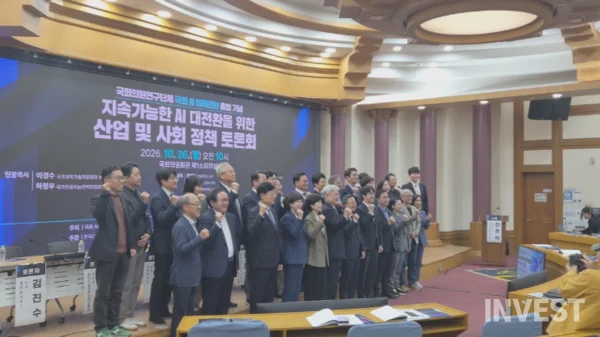
To connect South Korea's strengths in semiconductors and manufacturing to physical artificial intelligence (AI) competitiveness, it was suggested that the country expand demonstrations by linking data centers with industrial sites. The opinion was voiced that rather than just distributing robots and equipment, a structure is needed to accumulate field data and increase productivity. A plan to share profits generated from public AI investment with the citizens was also presented.
The 'Forum on Industrial and Social Policy for a Sustainable AI Transformation' was held on the 26th in the First Small Conference Room of the National Assembly Members' Office Building to discuss policy directions for enhancing AI industrial competitiveness and spreading growth achievements to society as a whole. Hosted by the parliamentary research group 'National Assembly AI Future Transformation' and Lim Mun-yeong of the Democratic Party of Korea, and organized by KIAT, NIA, and Mirae Jeonhwan, the forum was designed to explore industrial strategies and social policies together.
The presentations covered everything from strategies to secure South Korea's AI competitiveness to methods for sharing investment results. Jang Byung-tak, a professor at Seoul National University, addressed South Korea's response strategies within the global AI competition landscape, while Park Ji-yong, an Industrial AX PD at KIAT, suggested building internal AI data centers within companies and methods for the demonstration and expansion of domestic technology to implement this on manufacturing sites. Geum Min, the AI Technology Expert Committee Chair of the Basic Society Committee, proposed policies to share the economic achievements of AI investment with the public.
"Physical AI is just beginning"... Manufacturing site utilization is the key to competitiveness
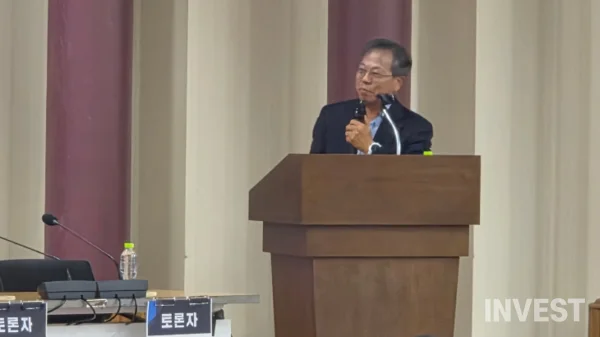
Professor Jang Byung-tak of Seoul National University noted that while the United States and China hold a significant advantage in the field of Large Language Models (LLM), South Korea has opportunities to utilize its manufacturing base in physical AI, where robots and other entities perform tasks in the real world.
Unlike language models that have advanced using data accumulated on the internet, physical AI requires a process of collecting and verifying the data necessary in actual work environments. Professor Jang explained that AI should be tested at the production sites of domestic manufacturing companies, using the data acquired during that process to improve the technology. "Physical AI is just beginning worldwide," Jang said. "Greater investment is needed to collect data quickly, demonstrate it quickly, and industrialize it."
What Professor Jang emphasized is the process of increasing performance by actually using AI at manufacturing sites. This involves using data obtained as robots work in factories to train AI, and then reapplying the improved AI back to the field. To repeat this cycle, data centers to process data and semiconductors to perform computations must support the process.
For these reasons, Professor Jang suggested linking three mega-projects: semiconductors, AI data centers, and physical AI. The intent is to invest so that the focus is not merely on securing individual facilities and technologies, but on leading to field application, data accumulation, and technological improvement.
He also believed that performance evaluation should be aligned with this process. Rather than just looking at data center capacity or the number of robots distributed, it is necessary to confirm whether actual production has increased and work efficiency has improved. "Because AI develops with data, it is important to create data quickly and undergo trial and error," Jang explained, adding that the need to reflect field utilization and improvement processes in government performance indicators is necessary.
Using manufacturing sites as stages for domestic AI demonstration... Proposal to build data centers within factories
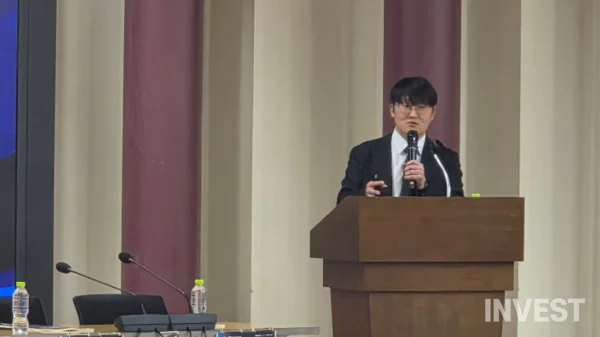
Park Ji-yong, an Industrial AX PD at KIAT, proposed a plan to build small-scale AI data centers inside factories to simultaneously promote AI utilization by manufacturing companies and the verification of domestic technology. The concept is to allow manufacturing companies, which find it difficult to send core process data externally, to analyze data and operate AI independently.
Park diagnosed that AI competition is expanding beyond model performance to include semiconductors, data centers, power/cooling facilities, and software. He argued that to respond to this, individual technologies held by domestic companies must be connected to function as a single system. "The starting point for a Korean-style full-stack AI is our manufacturing sites," Park explained. "Factories can be utilized as stages for the demonstration of domestic AI technology."
To this end, a plan was introduced to develop three types of standard models for small, medium, and large AI data centers with a power scale of 100 kW or less. Since the required tasks and data processing volumes differ for each factory, the scale and configuration will vary. Examples of applications included high-resolution video inspection for semiconductors, block welding in shipbuilding and marine industries, and surface inspection for steel and metals.
Half of AI investment profits to be reinvested... the remainder to be distributed 25% each to national dividends and welfare
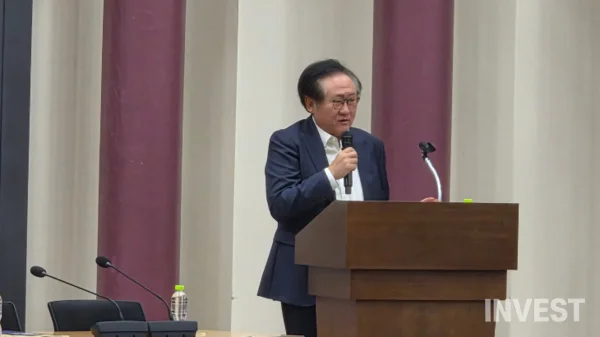
Geum Min, AI Technology Expert Committee Chair of the Basic Society Committee, argued that alongside industrial nurturing, a system is needed to return the economic achievements of the AI transformation back to society. The explanation is that while expanding AI accessibility and educational opportunities and securing public services and safety, the burden of the transformation process must also be shared equally.
He pointed out, "It must not be a situation where some people bear the cost of the transformation while others enjoy the benefits of the transformation."
Specifically, he proposed expanding equity investment in government AI support and reinvesting 50% of the investment profits. The intention is to allocate the remaining profits by 25% each to national dividends and social welfare expenditures to ease the burden of the transformation on the current generation and secure investment resources for future generations.
The need for field support to broaden the benefits of AI was also raised. Ha Jung-woo, Vice Chair of the National AI Strategy Committee, pointed out in a congratulatory speech that even if infrastructure is established, it will be difficult for the achievements of innovation to spread if small and medium-sized enterprises lack personnel to utilize it and if citizens are not given opportunities to learn new technologies.
Vice Chair Ha said, "Technical support for regional companies, education so that employees can utilize AI in their work, and public services that even the elderly can easily use must be prepared together."
Covers National Assembly for INVEST NEWS GLOBAL, and also writes about Startup Is and News.



Comments 0
Comments are currently disabled.