
Proposal Links Osong and Lanzhou to Support Korea-China Bioindustry Cooperation
A proposal at a National Assembly of the Republic of Korea forum called for linking bioindustry hubs in Osong and Lanzhou to help companies with facilities, research support, regulatory information and local partners. Speakers also urged phased cooperation, starting with focused projects such as technology transfer, regulatory information exchange and joint clinical trials in rare diseases and pediatrics.
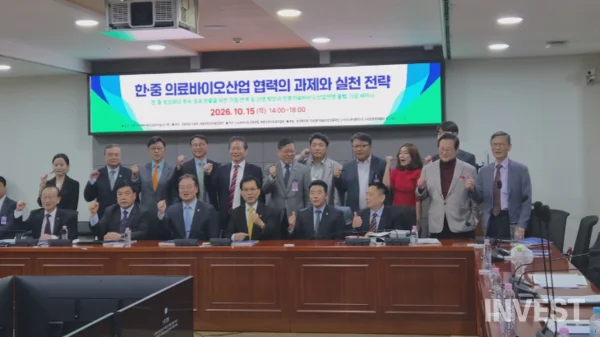
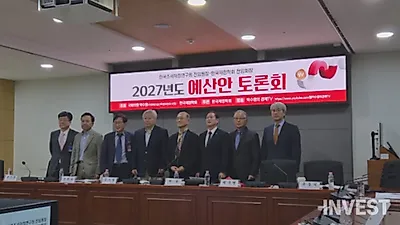
A proposal to link bioindustry hubs in Osong, South Korea, and Lanzhou, China, would help companies enter each other’s markets by connecting them with facilities, research support, regulatory information and local partners. The plan was presented at a forum titled “Challenges and Practical Strategies for Korea–China Medical and Bioindustry Cooperation,” held on the 15th at the National Assembly of the Republic of Korea Members’ Office Building.
Ha Jae-sang, head of the Management and Safety Headquarters at Osong Medical Innovation Foundation, said companies need local networks as well as good technology to expand overseas. He said the foundation’s role is to support gaps between research results and products, and called for linking Osong’s research and development, testing and evaluation, and regulatory support functions with support systems in China.
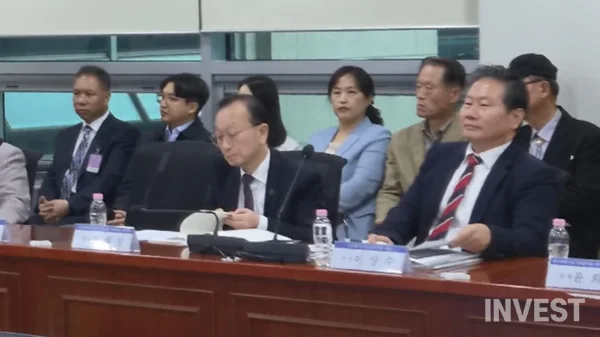
Ha said companies entering a new market can spend considerable time and money learning its regulations and administrative procedures, including which agencies to contact and what documents to prepare. He proposed reciprocal support for company occupancy: Korean companies entering Lanzhou could be connected with local space and partners, while Chinese companies entering South Korea could use startup space and research facilities in Osong. The two local governments could also consider occupancy incentives for companies from the other country.
“The approach would bundle technical support and partner identification with the space,” Ha said. The aim, he said, is to reduce the burden on companies of separately finding research facilities, testing and evaluation bodies, and business partners after establishing a local base.
On regulatory support, Ha said the goal was not to lower regulations, but to cut unnecessary time and costs caused by companies’ unfamiliarity with the other country’s rules and procedures. In South Korea, the proposal would connect companies to Osong’s regulatory science support and relevant organizations; in China, local governments and support agencies would provide information and consultations.
Ha also called for a permanent exchange platform to identify business needs and regularly connect companies for joint research, commercialization, investment and export consultations.
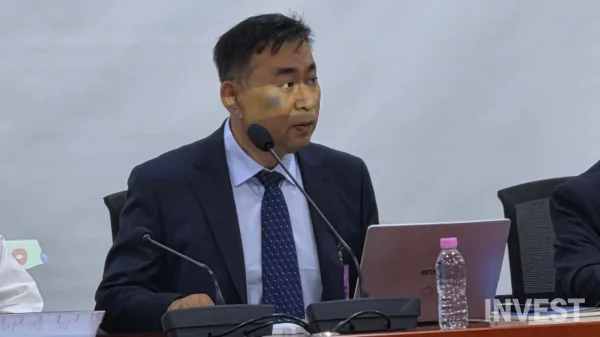
Chang Qing, head of Lanzhou Separation Science Research Institute, outlined a commercialization approach based on China’s local industrial base. He proposed using a Korea-China medical aesthetics industrial park as a cooperation platform to connect Korean technologies and products with Lanzhou’s production base and distribution network, and to support product registration and market entry.
Chang said cooperation should move beyond technology agreements to demonstration and industrialization. He proposed expanding from technology adoption and exchanges to joint research and development, then jointly pursuing the Chinese market and markets overseas.
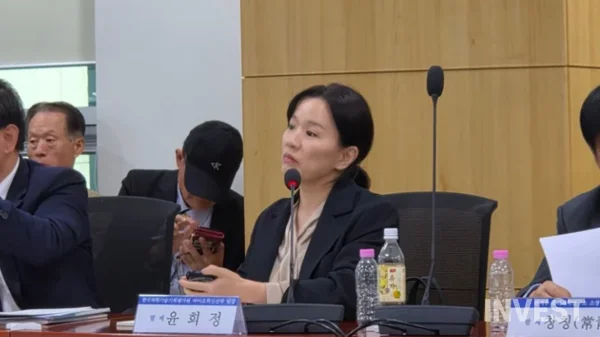
Yoon Hee-jung, head of the Bio Innovation Strategy Team at Korea Institute of S&T Evaluation and Planning, said cooperation should begin with projects whose results can be assessed rather than expanding its scope from the outset. She said China’s domestic market and clinical and production infrastructure could be combined with South Korea’s manufacturing quality management and global regulatory response capabilities.
Yoon said bioindustry cooperation carries technology, clinical and regulatory risks despite the countries’ distinct strengths, and advised a phased approach that assesses results along the way. She cited connecting technology transfer needs, exchanging regulatory information, and joint clinical trials in rare diseases and pediatrics as possible initial projects. The proposal is to start with areas where the need for cooperation is clear and results are easier to assess, then broaden work to research and development, production and commercialization.
“Given the international situation, we need to proceed sequentially and very cautiously,” Yoon said, adding that it was important to turn cooperation into concrete projects, starting in areas where the countries’ complementary strengths are clear.
Ko Tak-hee, president of the Federation of Korean Associations in China, said in welcoming remarks that Korea-China ties should develop beyond trade into joint projects. “If cooperation over the past 30-plus years was focused on what to buy and sell, this is now an era to consider and put into practice what we can do together,” Ko said. He added that diplomatic agreements between the leaders should become policy, policy should lead to cooperation on the ground, and that cooperation should produce results.
The forum was organized to discuss follow-up cooperation after the Korea-China summit held in January. At the summit, the two countries identified healthcare, bioindustry and pharmaceuticals as areas for future cooperation and agreed to strengthen cooperation between industrial complexes. Participants discussed connecting the Osong and Lanzhou bioindustry hubs and supporting joint research and development, product commercialization and market entry to translate the leaders’ agreement into results in the industrial sector.
Covers National Assembly for INVEST NEWS GLOBAL, and also writes about Startup Is and News.
![[Company Focus] CJ Targets North America by Adding Beauty to Food and Content... Strengthening…](/storage/investnews-global/2026/10/8f745bca-6ac4-4de9-b3e1-c2b42c805993-d3208fd0-thumb.webp)
![[Company Focus] From Card Recommendations to AI Financial Assistant... Banksalad Pursues KOSDAQ Listing](/storage/investnews-global/2026/10/753be33b-68c3-4e80-b622-1ba17c7f4047-f3bbf4cc-thumb.webp)
Comments 0
Comments are currently disabled.