
[LMR Battery] LG Energy Solution and GM Choose Lithium Manganese Rich (LMR) Battery, Could It Be an Alternative to LFP?
The electric vehicle battery industry is developing lithium manganese rich (LMR) batteries to secure both price competitiveness and energy density. LG Energy Solution and GM are planning to establish LMR prismatic cell production facilities in Tennessee to expand their battery options.
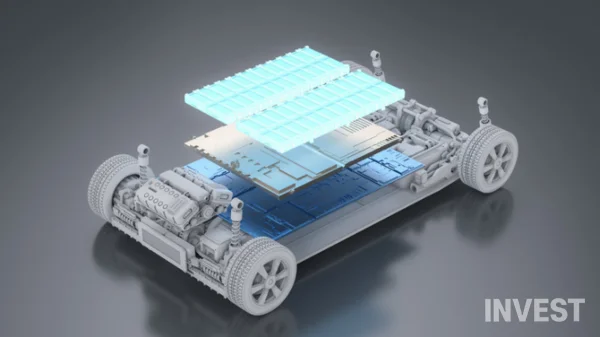
The electric vehicle battery industry is embarking on the development of lithium manganese rich (LMR) batteries as an alternative to secure both price competitiveness and energy density. LMR is a battery technology that increases the proportion of manganese used in the cathode material while reducing the use of nickel and cobalt. The development goal is to reduce the burden of raw material costs by lowering dependence on nickel and cobalt, while achieving a higher energy density than lithium iron phosphate (LFP) batteries.
As LG Energy Solution and GM recently announced plans to produce LMR prismatic batteries, market attention is focused on the commercialization potential of LMR. However, the market size is expected to remain limited for now. BloombergNEF predicted that LMR cathode materials will begin to be applied to passenger electric vehicle batteries after 2027, accounting for about 3% of the total cathode material demand for passenger electric vehicles by 2035. S&P Global Mobility also predicted that the mass distribution of high-manganese batteries will be possible after the 2030s.
LMR batteries emerging as a complement to LFP... The key to commercialization is gas control
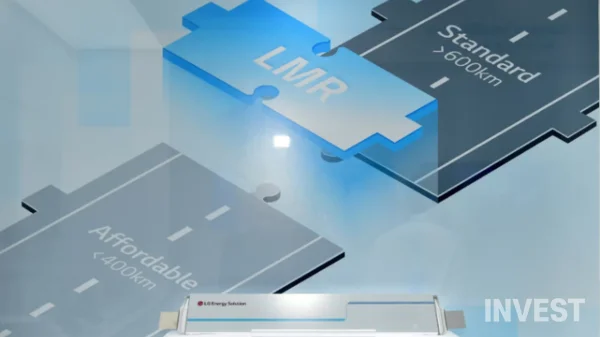
LMR batteries are lithium-ion batteries that use lithium-rich manganese-based cathode materials. Manganese is evaluated as an element that has a lower price burden and a relatively abundant supply compared to nickel and cobalt. LMR cathode materials aim for cost reduction by increasing the proportion of manganese while reducing or excluding the use of nickel and cobalt.
Furthermore, LMR is designed to store more electricity than existing cathode materials. In addition to metal components such as manganese, nickel, and cobalt, the method involves utilizing the oxygen reaction within the cathode material during charging and discharging to increase storage capacity. Mitsui & Co. Global Strategic Studies Institute analyzed that LMR cathode materials can achieve a capacity of over 250mAh/g. This is the amount of power that 1g of cathode material can store, which is approximately 47% higher than the 170mAh/g of LFP cathode materials. The institute also noted that the energy density of LMR batteries could theoretically reach over 500Wh/kg. The energy density of commercial lithium-ion battery cells currently used in electric vehicles is generally at the level of 160–290Wh/kg.
However, the issue of gas generation in LMR batteries remains a challenge for commercialization. As LMR cathode materials undergo repeated charging and discharging, the crystal structure may change, potentially lowering the operating voltage and lifespan. If the oxygen reaction inside the cathode material becomes unstable during the charging and discharging process, it leads to internal structural damage and gas generation. Especially in large cells for electric vehicles where internal space is limited, this gas increases internal pressure, leading to performance degradation.
Researchers from LG Energy Solution and Seoul National University suggested methods to reduce gas generation and lifespan degradation by adjusting the charge/discharge voltage range and lowering the temperature of the initial activation process. This method stabilizes the oxygen reaction inside the cathode material by adjusting the charge and discharge voltages and reduces initial gas generation through a low-temperature process. The researchers stated that when applied to a 40Ah-class large LMR cell, the battery maintained 92.2% of its initial energy even after 883 charge/discharge cycles.
An official from LG Energy Solution stated, "This research has solved one of the major challenges faced by LMR batteries. By effectively suppressing gas generation, we have demonstrated that stable battery life can be secured even in large cells, which provides an important foundation for the growth of the next-generation LMR battery market."
GM and LG Energy Solution to build LMR prismatic cell facilities at Tennessee plant... Aiming for completion in 2028
Currently, the most active parties in the commercialization of LMR batteries are LG Energy Solution and GM. The joint venture of the two companies, Ultium Cells, plans to additionally establish LMR prismatic cell production facilities at existing battery cell production sites.
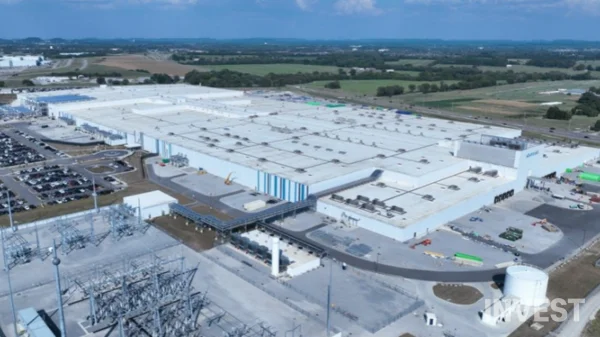
Ultium Cells announced on the 29th of last month that it will establish an LMR prismatic cell production system at the Spring Hill plant in Tennessee, United States. The company plans to build LMR production facilities in a manner that complements the existing production system, with a goal to start factory renovation and equipment upgrades at the end of this year and finish by 2028.
This announcement is a follow-up to the joint commercialization plan presented by the two companies in May last year. At that time, LG Energy Solution and GM presented a goal to begin pre-production of LMR prismatic cells at LG Energy Solution facilities by the end of 2027 and enter commercial production in the United States in 2028. GM plans to apply LMR prismatic cells to future electric pickup trucks and large Sport Utility Vehicles (SUVs).
The reason GM intends to introduce LMR is to broaden its battery options to respond to the price and driving range requirements of different vehicle types. GM is currently pursuing a plan to utilize high-nickel batteries for vehicles requiring long-distance driving and to apply LFP batteries to product lines with lower cost burdens. In addition, it plans to prepare an option with higher energy density and price competitiveness than LFP by adding LMR batteries.
The two companies aim to increase the energy density of LMR prismatic cells by 33% compared to LFP while keeping costs at a similar level. If such performance is realized, it will be possible to increase the driving range with the same size battery pack or reduce the amount of battery cells loaded while maintaining the same driving range.
Ford and POSCO Future M also developing LMR... Expanding to automakers, battery, and cathode material companies
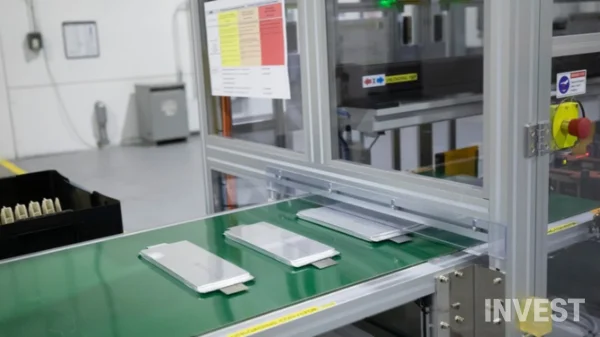
In addition to LG Energy Solution and GM, Ford is also pushing for the commercialization of LMR batteries. Ford announced last April that it is developing LMR cells at its battery R&D center, 'Ford Ion Park', and is currently producing second-generation cells on a pilot line. The company plans to apply LMR technology to its future electric vehicle lineup before 2030.
Ford explained that it is developing LMR cells with the goal of achieving a level of safety similar to LFP batteries, higher energy density than high-nickel batteries, and lower costs than current medium-nickel batteries. Through this, the company intends to increase the driving range of electric vehicles and lower selling prices.
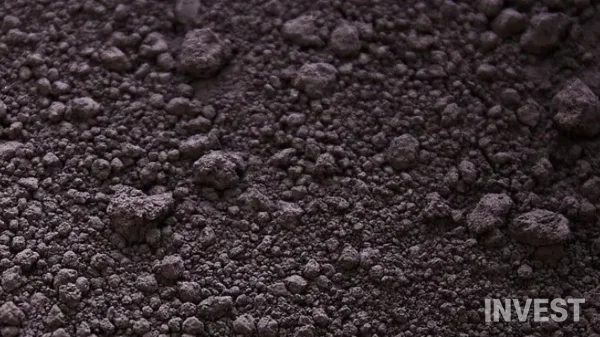
Cathode material companies are also simultaneously proceeding with product development and production preparation. POSCO Future M has been jointly developing LMR cathode material commercialization technology with global automakers and battery companies since 2023 and succeeded in pilot production in 2024. Last May, the company presented a plan to secure mass production technology within the year after improving energy density, charge/discharge performance, and stability, and then proceeding with large-scale orders. POSCO Future M explained that it can reduce the burden of new large-scale facility investment by establishing an LMR cathode material mass production system using existing nickel cobalt manganese (NCM) cathode material production lines.
European materials company Umicore has also been promoting the industrialization of manganese-based cathode materials. Umicore commenced the industrialization of high-lithium manganese (HLM) cathode active material technology in February 2023 and set a goal for commercial production and application for electric vehicles by 2026. At that time, the company stated that it is conducting HLM product development programs with automakers and battery cell manufacturers, and has the production preparation capabilities to supply large quantities of HLM required for customer testing.
Umicore evaluated that HLM is a material with room for cost reduction as it lowers nickel usage and does not use cobalt, and can provide a longer driving range than LFP with similar safety and high recyclability. In terms of production, it presented the advantage of being able to utilize existing NCM cathode material production facilities. Umicore mentioned its South Korea and Poland plants, which currently produce NCM cathode active materials, as candidates for HLM production.
Covers Post-IPO for INVEST NEWS GLOBAL.
![[Solar] Solar stocks surge ahead of US 'Section 232 of the Trade Expansion Act' minimum polysilicon price and tariffs](/storage/investnews-global/2026/09/499d5623-c987-4b70-b3c5-810e8a76dceb-c885109f-thumb.webp)
![[MLCC] Shortage of MLCC due to overlapping demand from ESS and AI servers... Prices double and…](/storage/investnews-global/2026/09/6da7c416-c516-4694-a264-c758e66ac6e4-14cf5e08-thumb.webp)
Comments 0
Comments are currently disabled.