
[Solar] Solar stocks surge ahead of US 'Section 232 of the Trade Expansion Act' minimum polysilicon price and tariffs
Solar-related stocks such as Hanwha Solutions and OCI Holdings closed strong on the 28th due to expectations of rising US module and polysilicon prices.
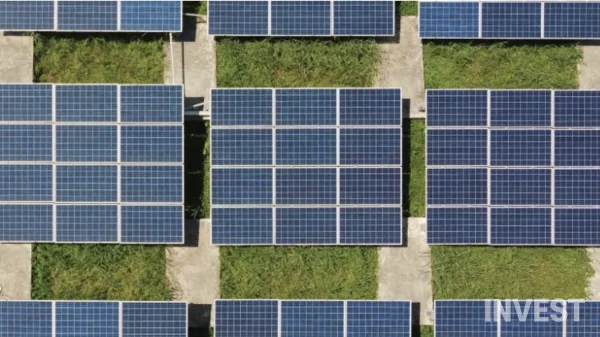
On the 28th, solar-related stocks, including Hanwha Solutions and OCI Holdings, closed strong on the Korea Exchange. On this day, the KOSPI fell by 2.70% from the previous trading day as large semiconductor stocks such as Samsung Electronics and SK hynix showed weakness, but solar stocks showed strength due to expectations of rising US module and polysilicon prices.
According to the Korea Exchange, Hanwha Solutions closed at 34,250 won, up 17.29% from the previous trading day, and OCI Holdings closed at 232,000 won, up 12.62%. Hansol Technics rose by 6.97%, and HD Hyundai Energy Solutions rose by 4.75%. The securities industry cited the background for the rise as the fact that the price negotiating power of domestic companies that have secured non-Chinese supply chains could increase ahead of the implementation of tariffs and the minimum import price system under Section 232 of the Trade Expansion Act in the US on December 4.
US to simultaneously impose minimum prices and additional tariffs on polysilicon and solar materials
The White House announced a proclamation on the 6th of last month (local time) to introduce a minimum import price (MIP) and additional tariffs on polysilicon and its derivatives based on Section 232 of the Trade Expansion Act. In the proclamation, President Trump presented the background for this measure as the fact that polysilicon is a key material supporting the semiconductor and solar power supply chain security, and that for years, foreign products have been allowed to weaken US manufacturers. The measure will take effect on December 4, 120 days after the announcement.
The proclamation consists of three measures. First, a minimum import price system for polysilicon and its derivatives will be introduced, with prices set per item at $21 per kg for polysilicon, $100 per kg for ingots and wafers, $0.22 per watt for solar cells, and $0.38 per watt for modules. In addition, a 15% additional tariff will be imposed on the import of polysilicon derivatives such as ingots, wafers, and cells. For South Korea, Japan, the EU, Taiwan, and Switzerland, which have signed trade agreements with the US, a total of 15% will be applied by combining the Section 232 tariff and the Most Favored Nation (MFN) tariff, while a separate 10% tariff has been set for British products. Finally, onshoring incentives will be granted to companies investing in the production of polysilicon and its derivatives within the US. The US Secretary of Commerce has the authority to consult with individual companies, and approved companies that commit to commencing construction by January 20, 2029, can import production facilities and products without Section 232 tariffs within a scope corresponding to the scale of investment and construction period.
As local prices in the US reacted first with about 70 days remaining until the effective date, related stocks in the domestic stock market also moved. Anza released a press release on the 22nd (local time), stating that US solar module prices are surging ahead of the implementation of Section 232. According to Anza, the median price of imported modules was $0.27 per watt as of August 7, the day before the proclamation announcement, but the median offer price presented by suppliers for shipments after December 4 was $0.38 per watt, an increase of approximately 40.7%. Anza interpreted this as a result of suppliers pre-reflecting the tariff burden in their offer prices ahead of the implementation of the minimum import price system.
Aaron Hall, President of Anza, said, "The industry has been preparing for the potential impact of Section 232 for months, and we have now entered the most important procurement period. Although December 4 is the effective date, developers should not consider it the deadline for procurement decisions."
He added, "Modules must be shipped before then and undergo US customs clearance procedures, and the opportunity to receive them at low prices before the deadline is already diminishing. Developers must identify what products can be obtained at what prices and conditions and promptly pursue the most suitable strategy for their projects."
Hana Securities: "Late September to late October is the last buying opportunity for solar"
![[Solar] Solar stocks surge ahead of US (Photo 1)](/storage/investnews-global/2026/09/body-9aa65e3ad63a.webp)
In a report published on the 28th, Hana Securities predicted that solar prices will rise even more steeply after the implementation of Section 232 of the US Trade Expansion Act on December 4. According to the report, the price of US polysilicon was $20.45 per kg, up $0.3 (1.5%) from the previous week, and the price of non-Chinese polysilicon was $16.92 per kg, up $0.09 (0.5%) from the previous week. Hana Securities evaluated that both prices are approaching the minimum import price of $21 to be implemented on December 4. Based on this, researcher Yoon Jae-sung stated, "From late September to late October will be the last opportunity to buy solar companies at the cheapest price before the major upward cycle that will continue from next year."
Yoon Jae-sung also gave a positive evaluation of the solar industry in a report released on the 23rd. In that report, he defined solar not merely as a decarbonization industry but as a national security strategic asset for the US. He explained that it has evolved into a core strategic asset in the US-China hegemony competition due to the increase in power demand from Artificial Intelligence (AI) and semiconductors, as well as the growth of the defense and space industries. Furthermore, citing that solar accounts for 51% of the 43.4 gigawatts (GW) of new utility-scale power sources planned in the US this year, he pointed out that the proportion of solar has increased in a situation where securing power has emerged as a key bottleneck in the AI and semiconductor competition.
Researcher Yoon also noted that the solar supply chain is closely linked to the semiconductor and defense industries. As some solar companies also operate in the semiconductor polysilicon and wafer businesses, he viewed that the US needs to maintain the production base of these companies to build a semiconductor upstream ecosystem. Polysilicon and wafers for semiconductors are also core materials for defense electronic components such as radar, missiles, drones, and communication equipment. Furthermore, as NASA prohibits cooperation with China and SpaceX is also building a supply chain that excludes China, he predicted that the strategic value will increase even when considering the space solar market.
Accordingly, Hana Securities maintained its 'Overweight' investment opinion on the solar sector and selected OCI Holdings and Hanwha Solutions as top picks within the industry. It assigned a 'Buy' opinion with a target price of 550,000 won to OCI Holdings, and a 'Buy' opinion with a target price of 60,000 won to Hanwha Solutions. The target price for Hanwha Solutions is an increase from the 46,000 won presented last April.
Samsung Securities also raised its target price for OCI Holdings in a report released last July. Cho Hyun-ryul, a researcher at Samsung Securities, raised the target price by 13% from the previous 310,000 won to 350,000 won, citing the signing of long-term supply contracts with new US customers and the subsequent decision to expand polysilicon production. Cho explained that this was the result of reflecting the outlook for improved supply and demand of non-Chinese polysilicon in the US in future estimates.
8 Chinese polysilicon companies pledge 'no sales below cost'... positive news for domestic solar
China's movement to suppress low-price competition in polysilicon is also affecting domestic solar companies. This is because if the Chinese government leads the reduction of low-priced supply by its domestic companies, the price negotiating power of companies handling non-Chinese polysilicon will increase. Given that domestic companies OCI Holdings and Hanwha Solutions possess non-Chinese supply chains, this movement by China to reduce production and regulate prices is being mentioned as a favorable factor for domestic solar companies along with the implementation of US Section 232 of the Trade Expansion Act.
Eight Chinese polysilicon producers signed a pledge on the 6th of last month stating they "will not sell below cost." The signing companies include four listed companies—Tongwei, GCL Technology, Daqo New Energy, and Xinte Energy—and four unlisted companies—Asia Silicon, Xinjiang East Hope New Energy, Qinghai Lihao, and Xinjiang Goins Energy. The combined production capacity of these eight companies exceeds 90% of the total polysilicon production capacity in China.
The core content of the pledge is that all selling prices, including bid prices, will not be lowered below cost. If sales below cost are confirmed, they will be corrected immediately, and they will be subject to government supervision and inspection, and companies have agreed to report violations to each other. Along with price self-regulation, a policy for facility reduction was also included. Participating companies promised to adhere to new energy consumption standards and to voluntarily phase out old facilities that consume high amounts of energy and have low efficiency. This also includes principles to control total production capacity, prioritize excellent facilities with advanced technology, and prevent low-level redundant investment and indiscriminate expansion.
These polysilicon energy consumption standards aim for implementation on January 1, 2027, and facilities that do not meet these standards will be subject to phased removal. The industry expects that once energy consumption restrictions are officially implemented, approximately 20–30% of polysilicon production capacity will be gradually reduced.
On the 7th of last month, the day after the announcement of the pledge, polysilicon-related stocks rose collectively in the Chinese stock market. On the Shanghai Stock Exchange, Tongwei rose 6.26% and Daqo New Energy rose 1.61%, while on the Hong Kong Exchanges and Clearing, GCL Technology and Xinte Energy rose 8.96% and 13.53%, respectively. On the same day, polysilicon futures contracts closed at 37,040 won per ton, up 2.95% (1,060 won) from the previous day. Looking at the cumulative weekly total (August 3–7), the futures price rose 12.11% from 33,600 won to 37,040 won.
Inter-ministerial cooperation for solar expansion... 100GW Renewable Energy TF launched
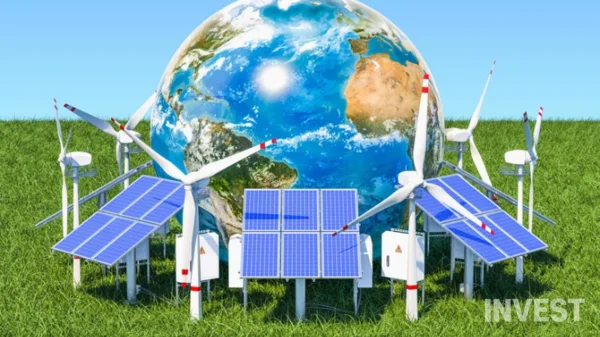
The government has activated an inter-ministerial organization to achieve 100GW of renewable energy by 2030. In response to the increase in power demand following the spread of AI data centers, the plan is to use solar power as a key means to simultaneously promote site discovery and institutional refinement.
On the 17th, the Ministry of Climate, Energy and Environment held the first meeting of the "TF" presided over by Minister Kim Sung-hwan. The meeting included 6 ministries—the Ministry of National Defense of South Korea, the Ministry of Land, Infrastructure and Transport, the Ministry of Agriculture, Food and Rural Affairs, the Ministry of Trade, Industry and Energy, the Ministry of Oceans and Fisheries, and the Ministry of the Interior and Safety—as well as 19 public institutions, including Korea Electric Power Corporation, five power generation companies, and Korea Hydro & Nuclear Power, and 16 metropolitan local governments. The Ministry of Climate, Energy and Environment explained that as the power demand outlook is expected to significantly exceed previous estimates due to the spread of AI data centers and investment in the semiconductor industry, it has put forward solar power, which can be completed in a short period, as a key means to expand clean power.
The TF decided to discover ultra-large new projects of 100 megawatts (MW) or more, centered on regions with spare power grid capacity, and to increase the speed of distribution by utilizing four major policy sites: industrial complexes/factory roofs, agrivoltaic/floating solar, roads/railways, and schools/parking lots. Large-scale state-owned and public lands, including reclaimed land and border areas, will be reviewed as candidate sites, and laws and systems that hinder projects will also be refined.
This target is significantly higher than the previously confirmed plan. The 11th Basic Plan for Long-Term Electricity Supply and Demand, confirmed last year, projected renewable energy facilities to reach 78GW by 2030, but the First Basic Plan for Renewable Energy established by the Ministry of Climate, Energy and Environment this May raised this to 100GW, presenting the task of securing an additional 22GW within four years. Kim Sung-hwan, Minister of Climate, Energy and Environment, stated, "100GW by 2030 is not a goal that a single responsible ministry can achieve alone," adding, "All ministries and local governments will work as one team to mobilize all available sites."
Prior to the demand expansion policy, the Ministry of Climate, Energy and Environment held a kickoff meeting for the 'Solar Industry Competitiveness Enhancement Committee' on the 10th and commenced discussions on rebuilding the supply chain. The government, public institutions, industry, academia, research circles, and civic groups participated, and domestic companies such as Hanwha Qcells, Shinsung E&G, and KENTECH also joined the committee.
The background for the launch of the committee is the sharp drop in the market share of domestic solar products. According to the Korea Energy Agency, the domestic market share of Korean modules fell from 66.0% in 2021 to 30.7% in 2025, and during the same period, the market share of Korean cells plummeted from 35.1% to 3.9%. Conversely, the market share of Chinese modules and cells rose from 34.0% to 69.3% and from 63.0% to 96.1%, respectively.
The committee will serve as a bridge to support the implementation of the 'First Basic Plan for Renewable Energy' and promote cooperation between companies. It plans to collect the difficulties faced by companies on the ground that may arise during the localization process, derive exemplary cases of connection and coexistence among domestic value chain companies, and concretize plans for industry-academia-research cooperation and the construction of large-scale demonstration complexes to accelerate the entry of next-generation super-gap technologies, such as tandem cells and inverters, into the global market.
Lee Ho-hyun, the 2nd Vice Minister of Climate, Energy and Environment, said, "The solar industry is at a critical turning point, shifting from the existing silicon-centered model to next-generation solar," and added, "Through the committee's discussions, we hope to create a solid industrial ecosystem based on industry-academia-research cooperation and hope our companies lead the global market through export industrialization and other means."
Covers Post-IPO for INVEST NEWS GLOBAL.
![[MLCC] Shortage of MLCC due to overlapping demand from ESS and AI servers... Prices double and…](/storage/investnews-global/2026/09/6da7c416-c516-4694-a264-c758e66ac6e4-14cf5e08-thumb.webp)
Comments 0
Comments are currently disabled.