
[Field Report] KOREA LIFE SCIENCE WEEK 2026: Checking Commercialization Strategies Amidst Displays of Automation Equipment and Public Infrastructure
KOREA LIFE SCIENCE WEEK 2026 was held at COEX in Samseong-dong, Seoul, showcasing bio-industry solutions ranging from drug discovery to manufacturing.
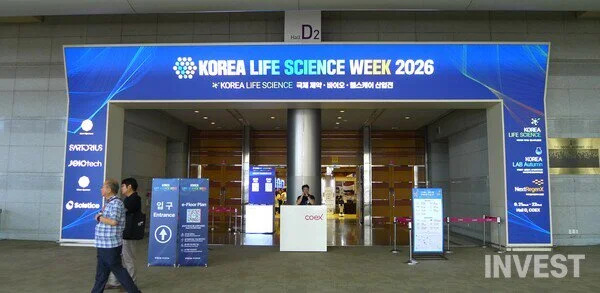
'KOREA LIFE SCIENCE WEEK 2026' was held from the 21st to the 22nd at COEX in Samseong-dong, Seoul. KOREA LIFE SCIENCE WEEK is a specialized B2B exhibition held annually in the second half of the year to examine R&D trends in the life science and pharmaceutical/bio industries and to support technology exchange and cooperation among industry, academia, research, and government.
The organizers, Kyeongyeon Exhibition, Advanced Regenerative Medicine Industry Association, and Science 21, planned the event with the aim of creating an ecosystem where basic research achievements are transferred to industrial sites and lead to commercialization, focusing on inducing business cooperation between companies beyond a mere visitor-oriented exhibition.
In this year's event, 246 domestic and international companies and institutions participated to introduce solutions across the entire bio-industry, such as new drug development platforms, bio-analysis/process equipment, Contract Development and Manufacturing Organization (CDMO), non-clinical efficacy evaluation, and digital healthcare. Participating companies also used 1:1 partnering meetings with global pharmaceutical companies and investment firms as opportunities to find touchpoints for technology transfer and joint development.
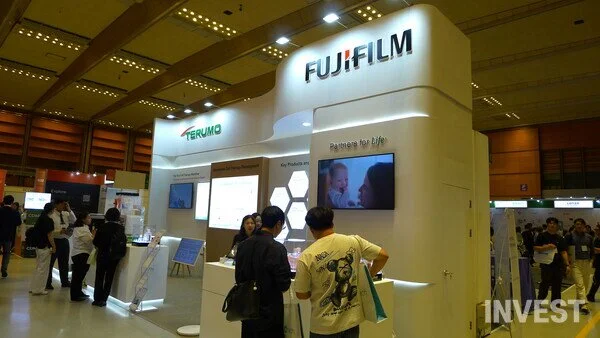
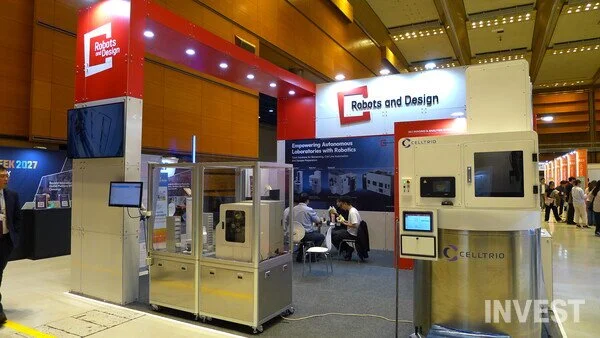
In the exhibition hall, bio technologies, equipment, and services could be observed according to the new drug development and production process. The value chain, from the discovery of original drug materials and efficacy verification to clinical trials and finished product production/packaging, was arranged by zone. Advanced research analysis equipment and automation systems that standardize laboratory processes and increase productivity also occupied a significant portion of the exhibition space.
Among the companies, Robots and Design exhibited the CELLTRIO automation platform, which unmanned the biobanking, cell line production, and sample preparation processes, presenting ways to reduce work errors that can occur during repetitive experiments. FUJIFILM and TERUMO showcased cell culture work procedures and process technologies tailored for cell and gene therapy (CGT) development.
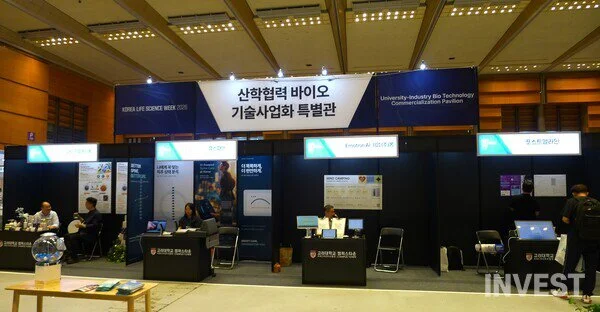
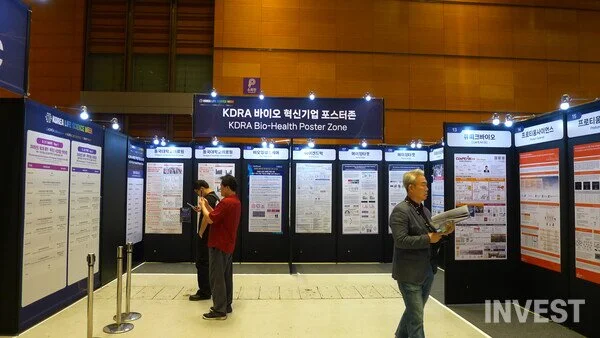
Along with exhibitions showing the commercialization potential of basic technologies, the challenges remaining for market entry were also noticeable. In the Industry-Academic Cooperation Bio Technology Commercialization Special Pavilion, startups belonging to universities and research institutes presented technologies integrating artificial intelligence (AI) and biosensors. Huspine, belonging to Korea University Campus Town, exhibited an AI-based spinal condition analysis and home-use traction solution. It was noteworthy that early-stage startups presented their research achievements in the form of products.
However, at several booths of university laboratories and early-stage startups, the core technologies remained at the stage of prototype-level algorithms or function verification data. Follow-up plans for actual market entry—such as obtaining permits from regulatory agencies like the Ministry of Food and Drug Safety, obtaining Good Manufacturing Practice (GMP) certification for medical devices, calculating mass production unit costs, and the possibility of applying for health insurance coverage—were still in a weak state. The gap where technology performance does not directly lead to immediate revenue generation or commercialization was fully exposed.
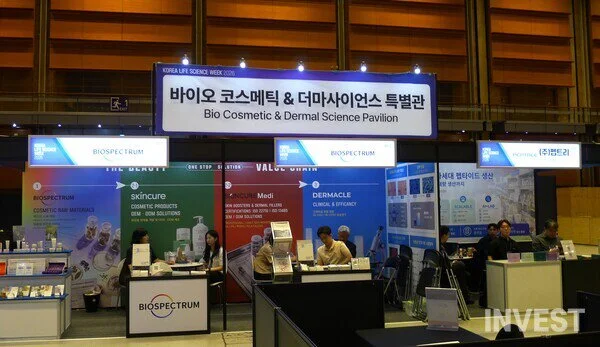
In the Bio Cosmetic & Derma Science Special Pavilion, business areas ranging from raw material development to OEM/ODM finished product manufacturing and human application testing were introduced. This pavilion was a space where one could observe the business models of early bio companies connecting research achievements to raw materials, products, and evaluation services.
Notably, BioSpectrum exhibited customized functional cosmetic raw material solutions based on natural products and bio-based materials, while Skincure and Dermacle presented skin booster/filler manufacturing processes and in-vivo/in-vitro efficacy evaluation systems based on ISO 22716 certification. Peptry introduced next-generation peptide raw material production technology combining AI and large-capacity synthesis platforms, emphasizing the supply of pharmaceutical raw materials and functional cosmetic peptides.
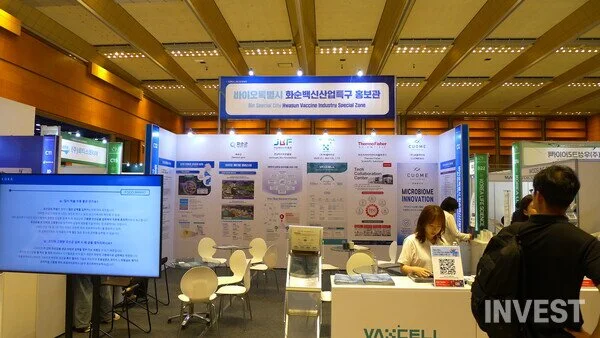
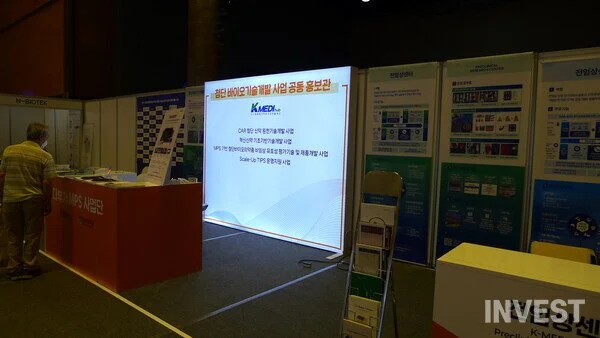
In the booths introducing public institutions and regional bio infrastructure (Public Support Pavilion), the testing, evaluation, and joint research support systems available for early-stage companies could be observed. The Public Support Pavilion served as a hub for partnering, where startups that find it difficult to establish their own expensive equipment and GLP (Good Laboratory Practice) facilities can utilize public testing infrastructure to increase data reliability and secure patents for overseas technology export.
KMEDIhub prepared a joint promotion pavilion for advanced biotechnology development projects to introduce the efficacy and safety evaluation infrastructure of its preclinical center. It also promoted projects such as the Chimeric Antigen Receptor (CAR)-based advanced new drug original technology development project, the innovative new drug basic technology development project, the Microphysiological System (MPS)-based advanced biopharmaceutical non-clinical efficacy evaluation technology, and the Scale-Up TIPS operation support project, while seeking joint research tasks with private companies.
The Hwasun Vaccine Industry Special Zone promotion pavilion presented full-cycle management infrastructure for vaccines, immunotherapies, and microbiome research in connection with the Jeonnam Bio Promotion Agency, Vaxcell Bio, Thermo Fisher Scientific, and Qombio.
[Field Diagnosis] Commercialization of research results: moving beyond technology verification to licensing and production plans
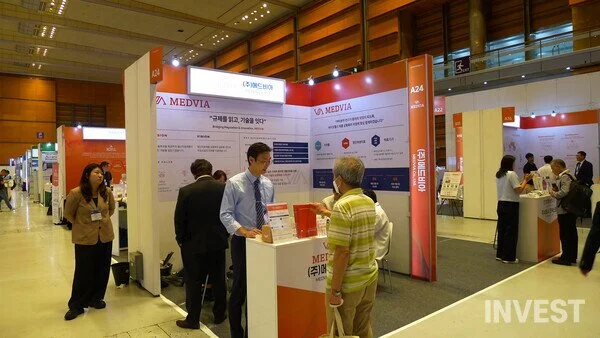
At this exhibition, technologies and services necessary for commercializing research results—such as automated research equipment, public testing infrastructure, and Contract Development and Manufacturing Organization (CDMO) systems—could be seen all in one place. On the other hand, many early-stage companies participating in the Industry-Academic Cooperation Pavilion introduced their technologies focusing on efficacy or functional verification data, suggesting a need to further concretize commercialization strategies that consider clinical/regulatory procedures and mass production costs.
From the perspective of early-stage startups, KOREA LIFE SCIENCE WEEK 2026 was an opportunity to compare technologies developed in the laboratory with the requirements of the industrial field. This is because bio and deep-tech companies may fail to sufficiently consider market demand or commercialization conditions during the process of focusing on technology development. Taking this exhibition as an opportunity, early-stage companies need to examine the process standards required by global CDMO companies and testing/evaluation institutions, and also check the scope of patent rights required for technology transfer and the validity of experimental data.
Furthermore, to effectively utilize this exhibition, companies should identify and collect information on what technologies large pharmaceutical companies or open innovation promoting institutions require through 1:1 partnering programs. Constraints regarding licensing requirements and mass production unit prices should be reflected in business plans, and if internal testing infrastructure is lacking, they should examine whether they can link with KMEDIhub or local government special zone support projects. In short, the diagnosis is that information obtained on-site must be connected to follow-up commercialization plans.
Covers Careers & Events for INVEST NEWS GLOBAL, and also writes about Education & Events.
![[Field Report] BATTERY KOREA 2026: Diagnosing Manufacturing Process Innovation and Circular Economy…](/storage/investnews-global/2026/09/c30f18ba-26e6-4129-94da-d7d32379f69f-0610efad-thumb.webp)
![[Field Report] EdTech Korea Fair 2026: AI Becomes the Standard in EdTech... Competitiveness Depends…](/storage/investnews-global/2026/09/b6ad5271-b528-4ecd-bf04-d282fd3e4aac-4b0f178f-thumb.webp)
![[Field Report] KOEFA 2026: A Void in 'Selection' Amid the Spread of Mass Sourcing and AI Automation](/storage/investnews-global/2026/09/baf89435-3f54-4db8-a621-609076b82076-b995379f-thumb.webp)
Comments 0
Comments are currently disabled.