
[Field Report] EdTech Korea Fair 2026: AI Becomes the Standard in EdTech... Competitiveness Depends on Differentiation and Verification
The EdTech Korea Fair 2026 was held at COEX in Seoul, showcasing how AI has become a fundamental component of educational technology.
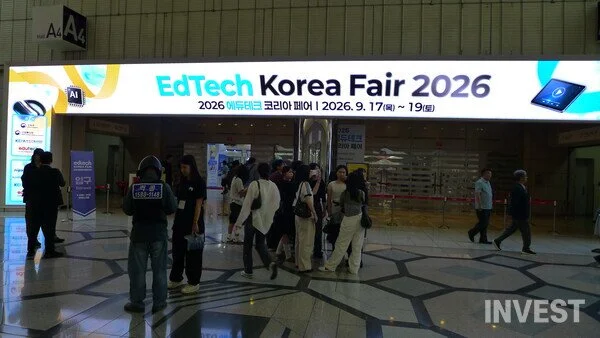
From the 17th to the 19th, the 'EdTech Korea Fair 2026', hosted by the Ministry of Education of the Republic of Korea, the Ministry of Trade, Industry and Energy, and others, was held at COEX in Gangnam-gu, Seoul. This event was organized to present policy directions for public education innovation and digital education infrastructure in the era of Artificial Intelligence Transformation (AX), and to share technological advancement cases of domestic and international edtech companies.
Now in its 19th year, the fair operated as a venue where educational authorities and public institutions share policy implementation results, and participating companies present evidence-based solutions to school field officials and buyers. Officials from metropolitan and provincial offices of education across the country, frontline teachers, and education company practitioners who visited the exhibition hall examined the displays with a focus on the possibility of introduction to educational sites and utility in classroom operation.
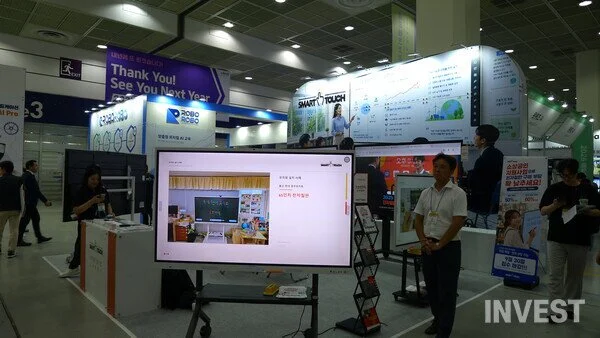
In the exhibition hall, smart equipment and software management tools were placed together with the goal of improving the classroom environment. Various equipment filled the exhibition space, such as eco-friendly smart farm showcase equipment, smart indoor physical education equipment that combines physical activity with digital technology, modular robots, and physical coding teaching tools. Administrative support tools to reduce the workload of teachers, class management platforms, and automatic descriptive/essay grading systems aligned with subject achievement standards were also demonstrated at each booth.
These products and services showed a trend of moving beyond the method where equipment and software are supplied separately, toward combining with software that collects data generated during the lesson process and manages lesson operations.
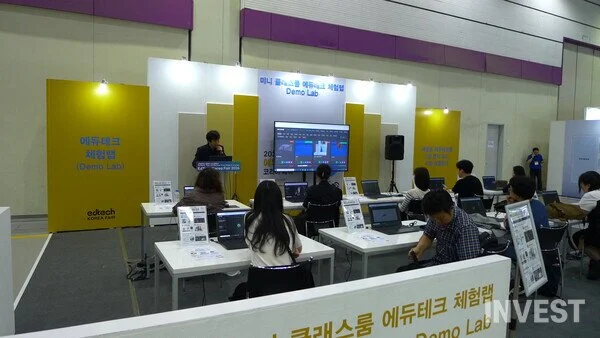
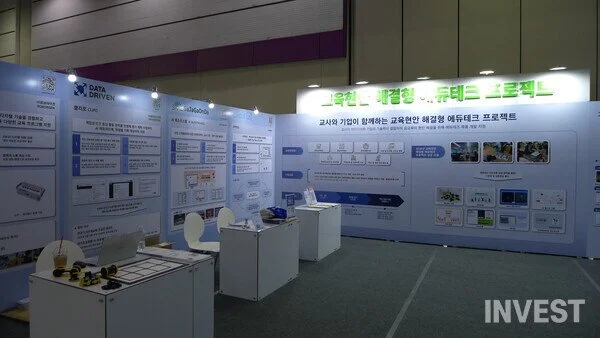
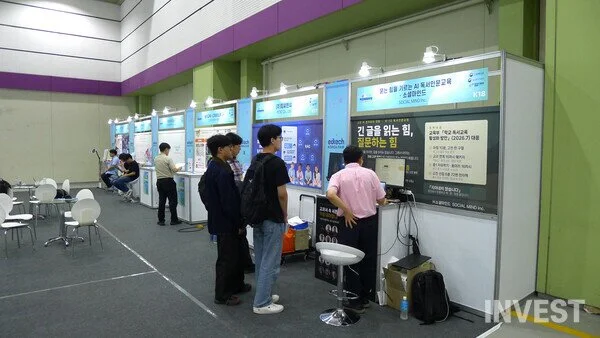
AI-based educational solutions expanded their scope to include coding, literacy diagnosis, and classroom learning history management. Writing correction tools linked with voice recognition and Large Language Models (LLM), interactive AI systems for strengthening literacy based on classics and original textbook sources, and AI robotics coding programs linked with physical computing were introduced.
Many systems were also exhibited that use Optical Character Recognition (OCR) technology to read descriptive answers written by students in handwriting and provide customized feedback and summary data for school records according to achievement standards. These companies promoted their solutions focusing on field application cases and verification results. Rather than simple knowledge-transfer type content, visitors' interest was focused on AI functions that reduce teachers' grading and counseling work time and diagnose/correct the basic academic ability of each student.
However, as the number of solutions promoting AI utilization increased, it was not easy to distinguish the functional differences between companies at a glance. Many participating booths presented AI diagnosis, customized learning recommendations, and dashboard-based report generation as their main functions, but there were many cases where the exhibition text and functional configurations were similar, making it difficult for visitors to judge technical differentiators or differences in User Experience (UX). Regardless of whether they were startups or mid-sized companies, booths that merely listed general-purpose AI functions rather than presenting functions that specifically solve particular problems in the educational field struggled to leave a distinct impression.
Gamification, which was once highlighted as a key solution for motivating learning, did not have a relatively large presence in this exhibition. While Gamification, designed with game-type learning interfaces and quest-based reward structures, can be helpful in inducing interest at an early stage, whether it leads to improved academic achievement or systematization of knowledge is a matter that requires separate verification. At this event, frontline educational officials showed that they prioritized alignment with the curriculum and the objectivity of subject achievement evaluation over graphics or entertainment elements. This event showed that Gamification is being redefined as a function that assists lessons rather than an independent core marketing element.
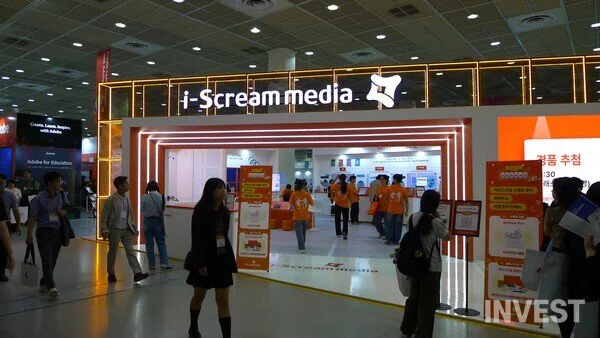
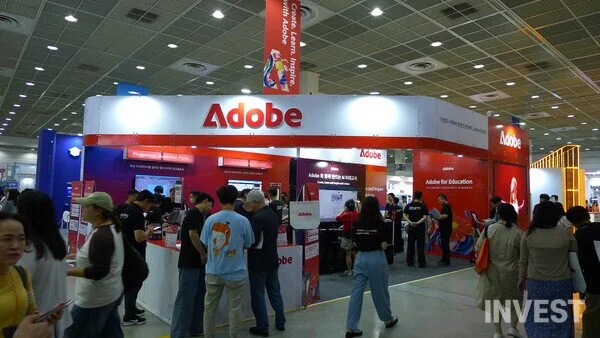
Companies that have secured strengths in existing domains showed efforts to expand their business scope by integrating AI. 'i-Scream Media', a traditional digital textbook and content company, presented an integrated digital classroom solution that combines a generative AI engine with its own platform. The global creative software company 'Adobe' introduced ways to apply generative AI for education and document workflows to school sites.
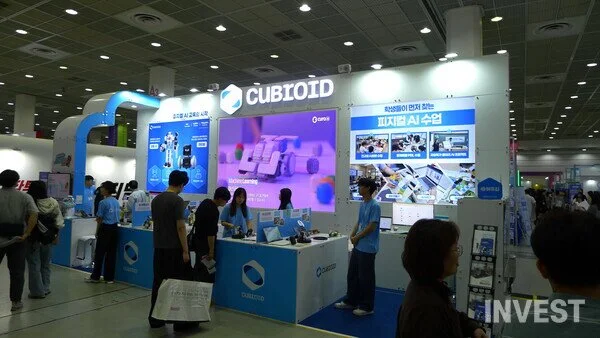
'CUBROID', a company in the physical robot teaching tool field, went beyond merely manufacturing teaching materials and presented an educational platform that combines dedicated machine learning training software with step-by-step AI curricula. While the starting points of each company—content, software, or hardware teaching tools—were different, a common trend emerged in the exhibition hall of expanding business areas into AI-based integrated EdTech platforms.
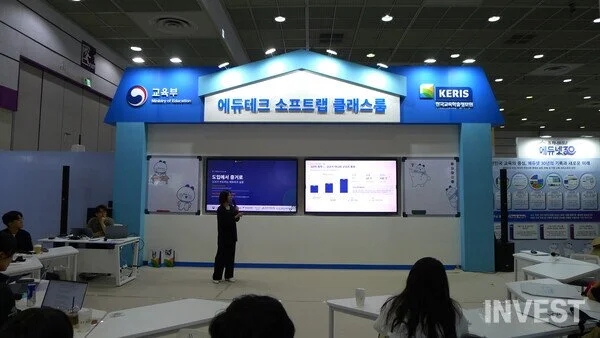
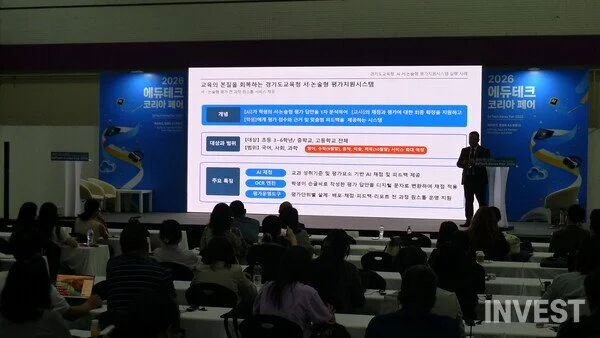
At the government promotion pavilion, a policy direction aimed at verifying the learning effectiveness of technology based on empirical data accumulated in actual public education classrooms was highlighted. At the 'EdTech Softlab Classroom' booth operated by the Ministry of Education of the Republic of Korea and KERIS, major results of EdTech empirical research conducted under teacher leadership for three years were revealed. It is evaluated that the policy focus has shifted toward objectively confirming the process of classroom application and learning effects rather than the mere introduction of technology itself.
Major offices of education, such as the Gyeonggi Provincial Office of Education, shared plans to introduce AI assessment support systems that support the entire process of descriptive and essay-type evaluations in elementary, middle, and high schools. Through this, it was confirmed that standardized verification procedures and the acquisition of empirical data serve as important criteria in the process of entering the public education market.
[Field Diagnosis] After AI becomes standard, the battle is decided by 'Field Verification' and 'Problem-Solving Ability'
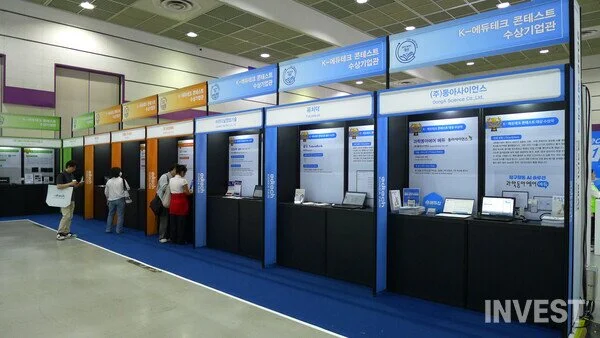
The EdTech Korea Fair 2026 showed that AI has established itself as a basic function applied across all educational software. AI-utilizing solutions were exhibited for various educational processes, such as writing correction, literacy diagnosis, descriptive and essay-type evaluation, and learning history management.
On the other hand, the exhibition hall also revealed situations where it is difficult to show differentiation between companies using only the name "AI." As similar diagnosis, recommendation, and analysis functions were introduced at multiple booths, future competitiveness is likely to be determined by the effectiveness verified in classroom and administrative sites, the reduction of teacher workload, and alignment with the curriculum, rather than whether specific functions are introduced.
Early EdTech startups need to focus on services that solve specific problems occurring in school sites, rather than presenting comprehensive general-purpose AI functions. Targeting clear pain points in the field—such as automation of assessment administration, correction of learning gaps in specific subjects, and assistive technology for students with disabilities—and using this to prove the effectiveness and field applicability of solutions can be a realistic alternative for market entry.
Furthermore, rather than consuming exhibition booths merely as display stands for product promotion, they should be utilized as touchpoints to listen to the opinions of teachers and education officials and to identify problems in the classroom operation process. Accumulating educational effectiveness data in connection with public empirical projects of offices of education and the EdTech Softlab is also expected to serve as a foundation for entering the public education market.
![[Field Report] KOEFA 2026: A Void in 'Selection' Amid the Spread of Mass Sourcing and AI Automation](/storage/investnews-global/2026/09/baf89435-3f54-4db8-a621-609076b82076-b995379f-thumb.webp)
![[Field Report] KOEFA 2026: A Void in 'Selection' Amid the Spread of Mass Sourcing and AI Automation](/storage/investnews-global/2026/09/a8452ee3-9396-4685-b5a7-8d06f4a3775b-b995379f-thumb.webp)
![[Field Report] 2026 Laplace × ETRI Deep Tech Investment Forum: 16 VCs and Asset Managers…](/storage/investnews-global/2026/09/edec66e6-250c-41a5-b9a3-aab2d0333ac6-e58ed7b7-thumb.webp)
Comments 0
Comments are currently disabled.