
[Field Report] 3rd Korea Social Value Festa: Large Corporations Combine Social Contribution with Business Capabilities... Woowa Brothers utilizes delivery networks, KT&G supports startups
The 3rd Korea Social Value Festa was held at COEX in Gangnam District, Seoul…
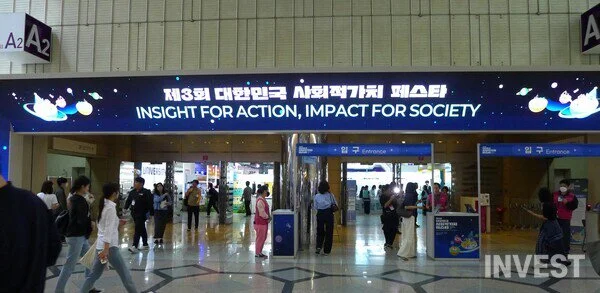
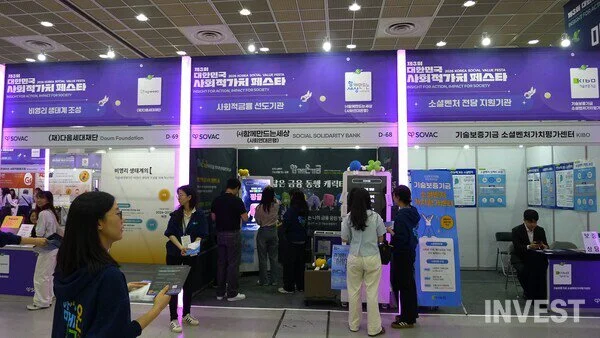
The '3rd Korea Social Value Festa' hosted by the Korea Chamber of Commerce and Industry was held for two days from September 21 to 22 at COEX in Gangnam District, Seoul. Marking its third year since its inaugural session in 2024, the event saw the participation of approximately 400 organizations, including the government, large corporations, startups, non-profit organizations, and academia, and was organized to seek solutions and cooperation methods for social issues such as climate change, regional extinction, and polarization.
Through forums, exhibitions, and markets, the organizers aimed to support capital attraction and network expansion for entities working to solve social problems. Participating companies sought opportunities to meet potential investors and customers while promoting their respective social goals and implementation models.
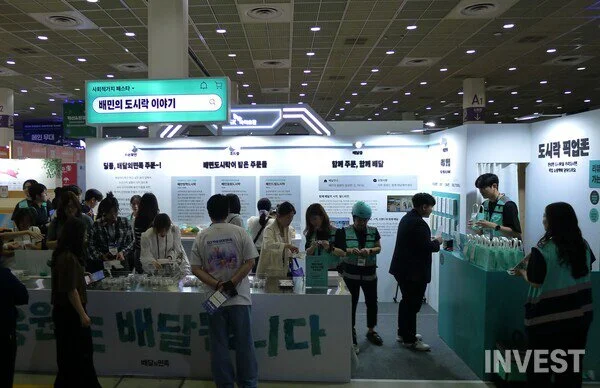
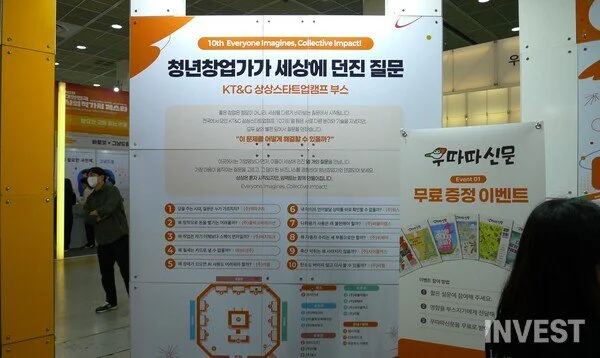
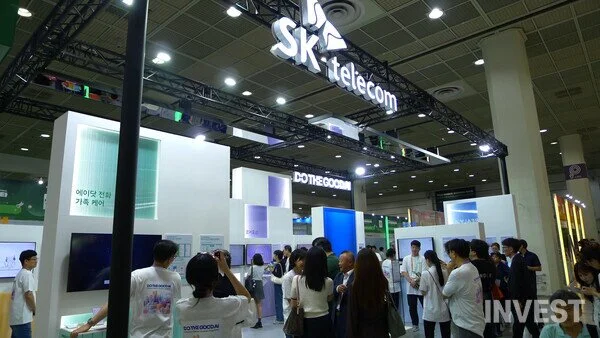
At the large corporation booths, a noticeable trend was the move beyond donation-centered social contribution toward utilizing their own business capabilities and infrastructure. This suggested a new trend where private companies rebuild social infrastructure based on their own business ecosystems, similar to how the state used to expand social overhead capital (SOC) in the past.
Cases addressing issues closely linked to business, such as platform labor, disposable delivery waste, and conflicts with local commercial districts, were also introduced at the exhibition hall. The 'Baemin's Lunchbox Story' booth by Woowa Brothers, the operator of Baemin, showcased ways to utilize logistics and delivery networks to support children at risk of hunger and food blind spots. The 'Sangsang Startup Camp' booth by KT&G introduced social projects from 10 teams of the 10th generation of young entrepreneurs, showing examples of nurturing startups that approach environmental, housing, and care issues.
Examining the exhibition cases from the perspective of business sustainability, the challenge remains that companies must secure the competitiveness of their products and services regardless of their social goals. This is based on the judgment that it is difficult for social ventures to sustain their business in the long term if they rely solely on government grants or external subsidies. It is difficult to expect repeated consumer choices based solely on the purpose of solving social problems. Price, convenience, and quality must also be evaluated against competing products. Patagonia, a name synonymous with eco-friendly outdoor gear, was able to have its eco-friendly philosophy act as a premium because its fundamental values of functionality and durability were already established.
As such, for startups, social value can become an additional factor for selection only when the product itself possesses competitiveness, rather than replacing deficient performance or usability. Furthermore, for startups to secure sustainability, they should not try to solve all social problems at once, but rather design a structure where even a very small part of the value chain has a clear role and revenue model.
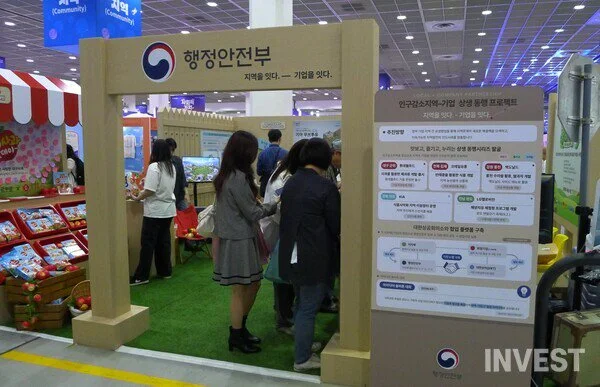
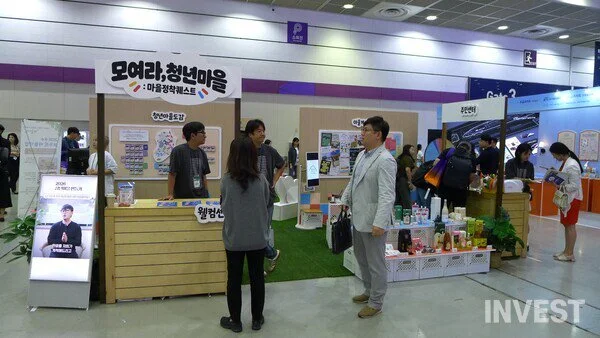
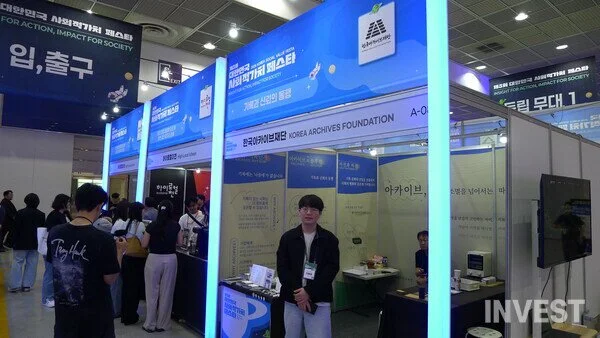
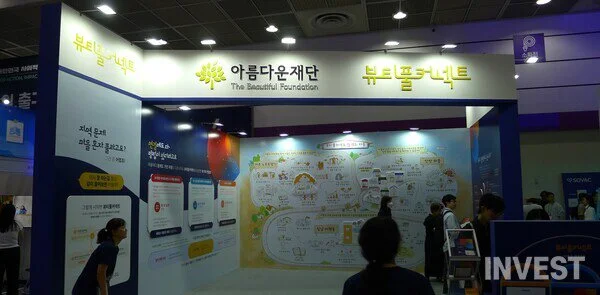
In the local and social solidarity sectors of the exhibition, cases focusing on specific areas such as distribution, processing, recording, and care stood out. The 'Population Decline Areas–Business Partnership Project,' involving the Ministry of the Interior and Safety, local governments, and corporations, and the Youth Village booths showed models that approach the utilization of idle local resources and the problem of sales channels for local specialties as separate implementation tasks. The Korea Archive Foundation booth addressed the issues of local areas and extinction through the field of turning records into assets under the theme 'Accompanying Records and Trust.' The Beautiful Connect by The Beautiful Foundation presented ways to connect village-level relationship networks and daily care resources. These cases showed that rather than grand social slogans, the combination of small business models that solve specific bottlenecks and clearly receive compensation is an effective growth strategy for social ventures.
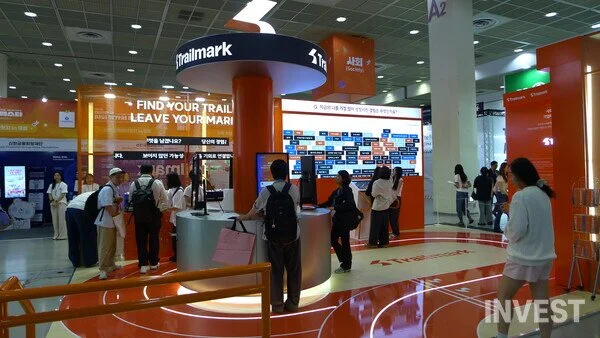
Among the experience booths, 'Trailmark', which is linked with the Shinhan Financial Hope Foundation, introduced a method of organizing and utilizing individual experiences as data. Starting from the question, "What experience has helped me grow the most right now?", the booth collected and visualized experiences such as studies, failures, overtime work, and projects accumulated by young people. This was interpreted as an attempt to not limit the issue of youth employment to psychological support alone, but to structure individual histories and capabilities to examine potential and connect them with opportunities.
The approach of organizing invisible experiences into data and connecting them to new paths for entering society presented a specific methodology for how impact startups can connect data assets to business models in the future.
[Field Diagnosis] To achieve results with limited resources... Startups must find opportunities for PoC and collaboration
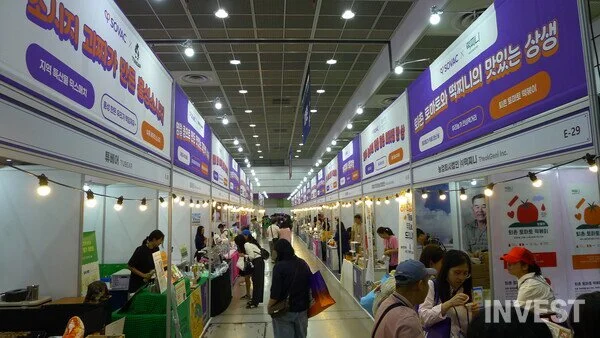
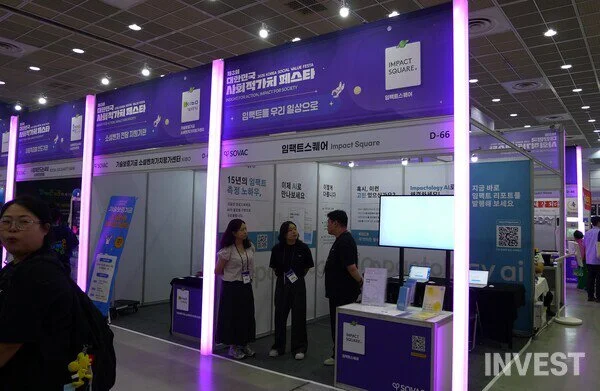
At this event, cases of approaching social problems by utilizing technology or cooperating with public institutions and private companies could be observed. Even at large corporation booths, attempts to present solutions by linking them to their own business areas, rather than stopping at one-time sponsorships, were notable. However, while some booths emphasized social necessity, they failed to concretely present actual purchase demand for products/services or revenue models. It leaves the task that the more a startup intends to sustain solving social problems, the more it must prepare ways to secure product competitiveness and financial soundness alongside social goals.
From the perspective of a mentor supporting early-stage startups and entrepreneurs, this event was a place to observe trends in the social sector while simultaneously checking what kind of results can be achieved compared to the resources invested. Since funds and time are limited in the early stages of entrepreneurship, it is necessary to review social goals in connection with the business commercialization schedule. Participating startups should not stop at merely announcing their social mission, but should discuss conditions that can lead to Proof of Concept (PoC) projects, Business-to-Business (B2B) collaboration, or entrusted operation contracts with the public institution and large corporation representatives they meet on-site. Furthermore, they must closely analyze the direction of large corporations' CSR budget execution and the policy benefit areas of local governments, and reflect in their business plans the points where their solutions can be combined with the infrastructure of large corporations and the government.
Covers Careers & Events for INVEST NEWS GLOBAL, and also writes about Education & Events.
![[Field Report] KOREA LIFE SCIENCE WEEK 2026: Checking Commercialization Strategies Amidst Displays…](/storage/investnews-global/2026/09/a70e3df8-7731-4f5a-b437-15055422c95d-88cae5c4-thumb.webp)
![[Field Report] BATTERY KOREA 2026: Diagnosing Manufacturing Process Innovation and Circular Economy…](/storage/investnews-global/2026/09/c30f18ba-26e6-4129-94da-d7d32379f69f-0610efad-thumb.webp)
![[Field Report] EdTech Korea Fair 2026: AI Becomes the Standard in EdTech... Competitiveness Depends…](/storage/investnews-global/2026/09/b6ad5271-b528-4ecd-bf04-d282fd3e4aac-4b0f178f-thumb.webp)
Comments 0
Comments are currently disabled.