
Seoul middle-aged job fair connects job seekers with technical training
The Seoul Middle-Aged Job Fair 2026, hosted by the Seoul Metropolitan Government and the Seoul 50 Plus Foundation, aims to re-employ middle-aged job seekers by connecting their skilled experience with private sector industries.
Approximately 70 companies and institutions participated in the Seoul Middle-Aged Job Fair 2026 at the aT Center on October 20. While the event provided technical training and recruitment for workers aged 40 to 64, it lacked programs specifically designed to support entrepreneurship strategies and startup establishment.
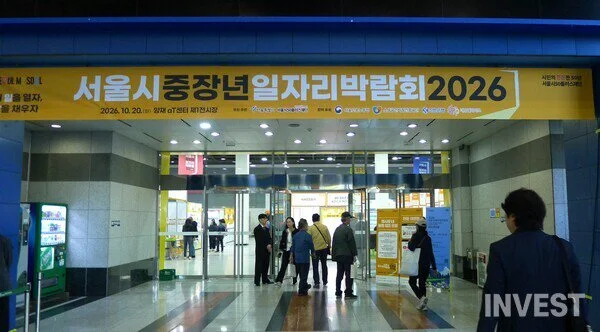
At the Seoul Middle-Aged Job Fair 2026 held on October 20 at the aT Center Exhibition Hall 1 in Yangjae, Seocho-gu, Seoul, middle-aged job seekers aged 40 to 64 gathered alongside companies looking to hire. Hosted by the Seoul Metropolitan Government and the Seoul 50 Plus Foundation, the event was organized to assist the re-employment of the middle-aged population—a core pillar of the working-age population amid an aging society—and to expand employment links with private companies. The event reflects the policy direction of the Seoul Metropolitan Government to move away from providing welfare-type jobs focused on simple labor and instead connect the skilled experience of middle-aged individuals to industrial sites.
The exhibition hall featured various recruitment booths in sectors such as service and education, including a special pavilion for excellent companies hiring middle-aged workers. Approximately 70 companies and institutions, including Anyrak, a senior-friendly industry certified company, participated to provide information on job qualifications and working conditions. Interviews were conducted at booths for companies such as the educational service provider KYOWON Kumon, the care service specialist Daekyo EduCamp Senior, the Seoul Metropolitan Government Childcare Metropolitan Support Center, and Be the First M, an operator of hospital accompaniment services. Job seekers sat with recruitment managers from various job categories to confirm available tasks and employment possibilities. Kiosk-style stage program guides and digital reservation systems using mobile QR codes were provided in front of each booth to assist visitors with waiting and movement.
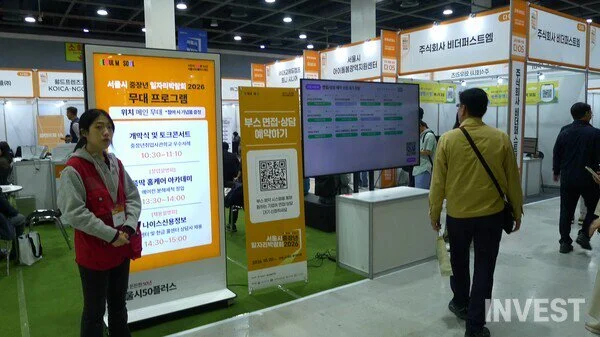
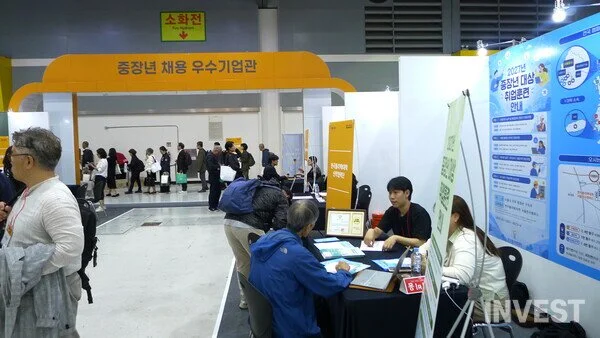
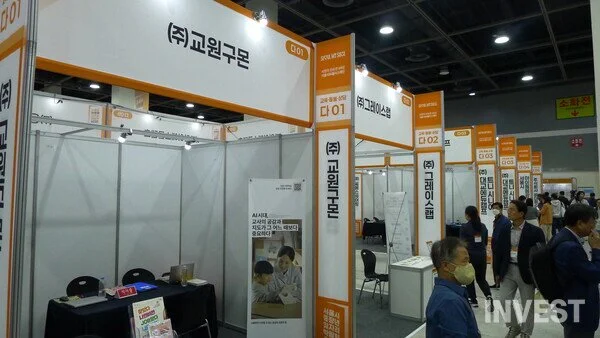
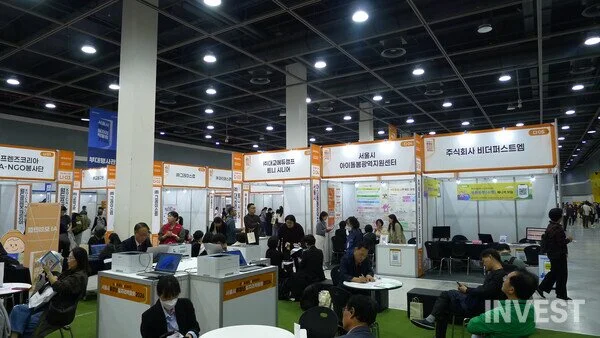
In addition to recruitment booths, spaces were provided for education, training, and employment counseling. The layout was designed to increase job-seeking utility by allowing participants to build a technical foundation through educational programs before moving through counseling to the on-site recruitment pavilion.
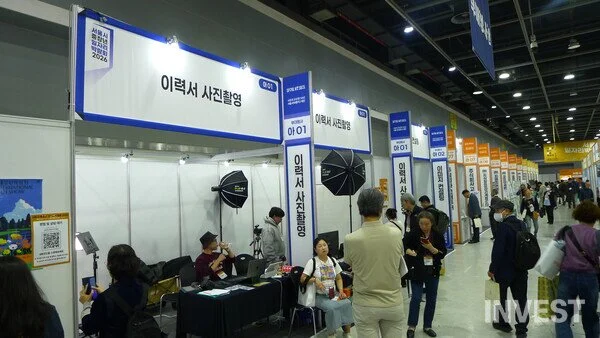
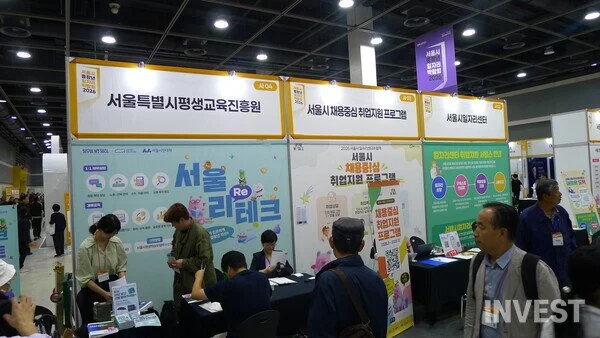
At the center and sides of the venue, the Seoul Institute for Lifelong Education's Seoul Citizen University course information booth and the Seoul Metropolitan Government's employment-centered job support program booth provided educational information necessary for building basic job competencies. At the Seoul Job Center and Tomorrow Design Hall counseling counters, professional consultants conducted one-on-one career counseling, including resume revisions and interview strategy development. A resume photo studio and image consulting corner in the side event hall helped job seekers who had experienced long gaps in employment prepare for interviews.
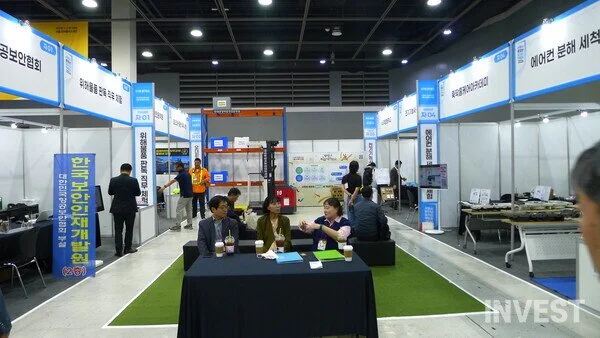
In the technical training area, interest from job seekers regarding roles requiring professional training or certifications was evident. This area included a prohibited item inspection job experience booth by the Security Talent Development Institute affiliated with the Korea Aviation Security Association, a forklift training booth equipped with order pickers and logistics equipment by the Hyundai Heavy Equipment Driving Academy, an air conditioner disassembly and cleaning demonstration booth by the Ttukttak Home Care Academy, and an electrician and refrigeration/air conditioning equipment training booth by the Korea Polytechnic University Industry-Academic Cooperation Foundation.
Long lines of middle-aged individuals formed around the booths, asking about work processes, the duration required to obtain certifications, and compensation levels for on-site work. Rather than seeking simple part-time or temporary jobs, many appeared to be looking for roles that allow for long-term employment through systematic technical training and the acquisition of certifications.
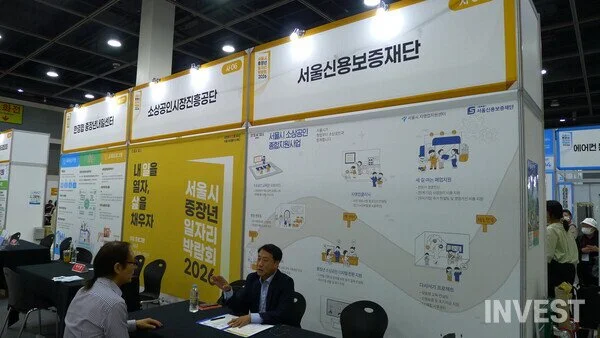
On the other hand, programs that directly support entrepreneurship were difficult to find within the fair's composition. On one side of the exhibition hall, booths for the Seoul Credit Guarantee Foundation, the Small Enterprise and Market Service, and the Federation of Korean Industries Middle-Aged Tomorrow Center were arranged to provide guidance on financial and business closure safety net projects, such as business liquidation support consulting and the "Stand Up Again" project. However, there were no programs professionally dealing with entrepreneurship strategies, such as establishing startups or discovering business models for franchises and technology-based entrepreneurship.
For middle-aged people around their 50s, who have accumulated professional knowledge in areas such as management administration, quality assurance, and overseas sales through long years of organizational life, establishing a new business or an in-house venture is an option that can utilize their careers in addition to re-employment. It remains regrettable that specialized entrepreneurship linkage programs to support such challenges were not prepared.
To compensate for this gap, future events need to prepare basic management education for early-stage entrepreneurs, including small business owners, as regular sessions. It is worth considering permanent lectures covering digital transformation, marketing, commercial district analysis, and tax/labor management to reduce the risk of entering subsistence-type self-employment without sufficient preparation after retirement. An approach could also be considered to organize seminars on market validation methods before starting a business and producing Minimum Viable Products (MVP) that can be verified with small capital, in connection with the comprehensive support project infrastructure of the Seoul Credit Guarantee Foundation. If education necessary for business preparation and stabilization is provided in addition to guidance on fund loans, the scope of support covered by the fair could be expanded to entrepreneurship.
This fair was also a place where startups and senior entrepreneurs could meet skilled personnel and check their business ideas based on their experience in industrial fields. Even early-stage startups with fast execution capabilities need the experience of skilled seniors in areas such as field task management, external sales, and regulatory response. If startup CEOs participate as hiring companies, it can be utilized as an opportunity to complement the capabilities required for business operation by combining the roles of young developers and middle-aged managers.
Covers Careers & Events for INVEST NEWS GLOBAL, and also writes about Education & Events.
Comments 0
Comments are currently disabled.