
Startups target niche markets at SEDEX 2026 in Seoul
The 28th SEDEX 2026, South Korea's largest specialized semiconductor exhibition, was held at COEX in Seoul, featuring everything from AI memory supply chains to regional industrial cluster plans.

Approximately 300 participants gathered at COEX in Seoul from the 14th to the 16th for the 28th SEDEX 2026. While major players like SK hynix showcased AI memory supply chains, early-stage startups sought market entry by presenting solutions designed to improve mass production productivity by 2–3%.
The 28th SEDEX 2026, the largest specialized semiconductor exhibition in South Korea, was held from the 14th to the 16th at COEX Halls C and D in Seoul. Hosted by the Korea Semiconductor Industry Association, the exhibition, which first launched in 1999, has established itself as a venue for business cooperation covering the entire semiconductor lifecycle, including memory, system semiconductors, equipment, materials, components, and design.
This year's event was organized to promote the independence of the domestic semiconductor supply chain and facilitate entry into global markets. Approximately 300 participants, ranging from large corporations and small-to-medium manufacturers to fabless startups, set up booths with the goals of technology verification, market development, and attracting new investment. The exhibition floor allowed visitors to observe both the semiconductor technologies of domestic companies and the industrial infrastructure development plans of various regions.
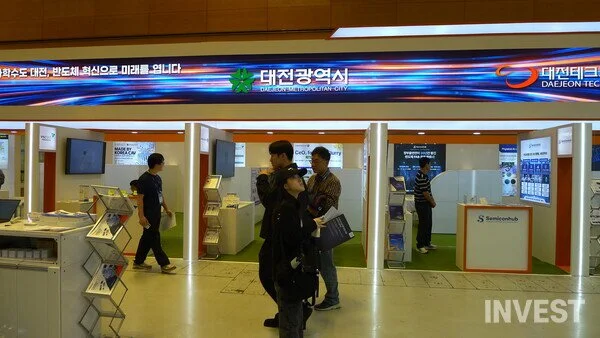
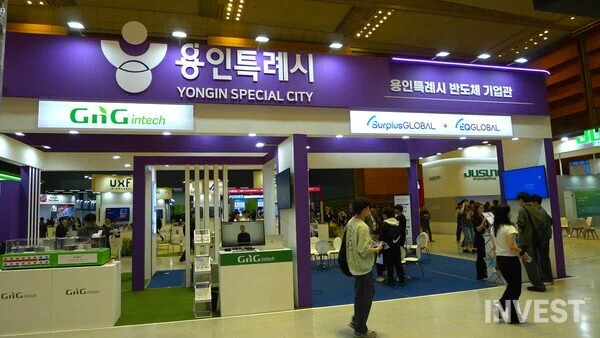
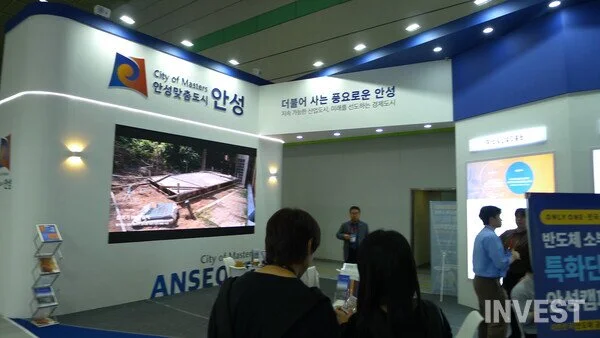
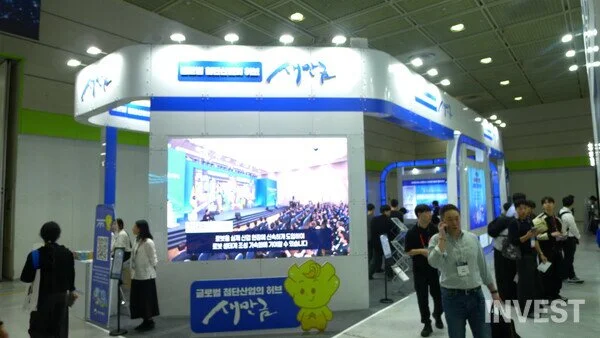
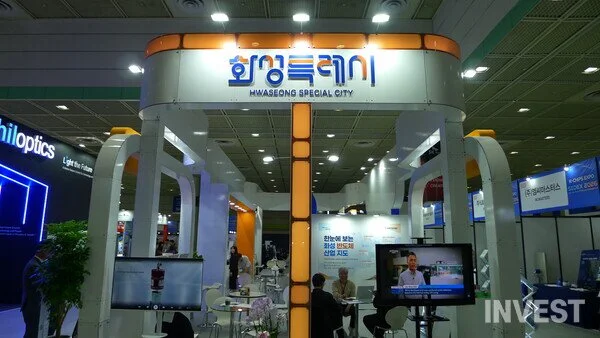
Upon entering the exhibition hall, the joint pavilions of local governments and corporate attraction promotion booths were immediately noticeable. Yongin Special City, Daejeon, Daegu Metropolitan City, Anseong, and the Saemangeum Development and Investment Agency introduced semiconductor company support programs and cluster development plans.
Yongin Special City operated a dedicated joint pavilion for its cooperating companies while promoting the creation of a national advanced system semiconductor complex. Daejeon emphasized a research and development-centered semiconductor ecosystem linked to the infrastructure of government-funded research institutes. Anseong announced support measures for manufacturing partners based on its plan to build a specialized materials, components, and equipment complex, while the Saemangeum Development and Investment Agency sought to attract companies by introducing site scalability and renewable energy infrastructure. Along with policy guidance, these agencies presented support measures for hardware manufacturers and materials, components, and equipment companies, such as tax reductions, research equipment support, and the provision of demonstration testbeds.
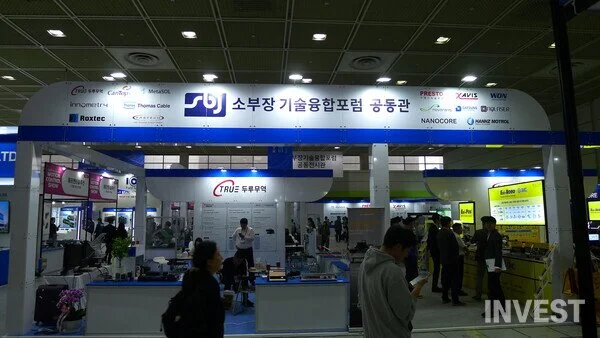
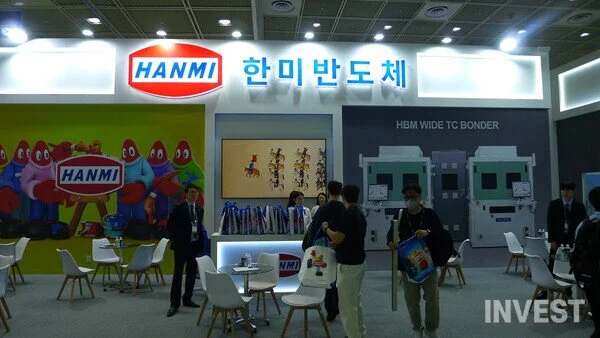
Hardware manufacturing facilities and process equipment accounted for a large portion of the corporate exhibits. Located at the center of the exhibition hall, SK hynix emphasized its AI memory full-stack supply chain, while Hanmi Semiconductor prominently featured high-precision bonding equipment used in core HBM (High Bandwidth Memory) processes. Other major exhibits included wafer processing, packaging equipment, and the localization of components. In response to increasing demand for AI computing, technologies that increase the precision and processing speed of process equipment were introduced, with exhibitions focusing on productivity improvements such as enhancing chip yield and reducing manufacturing costs. The Materials, Components, and Equipment Technology Convergence Forum joint pavilion brought together manufacturers of motion control, automation mechanisms, and precision measurement equipment.
Alongside AI-related exhibits, technologies to ensure the precision and reliability of semiconductor processes were also visible. Representative examples included analog processing of sensor signals, ultra-fine vibration control, chemical mechanical planarization (CMP) slurry formulation, and maintaining sealing reliability inside vacuum chambers.
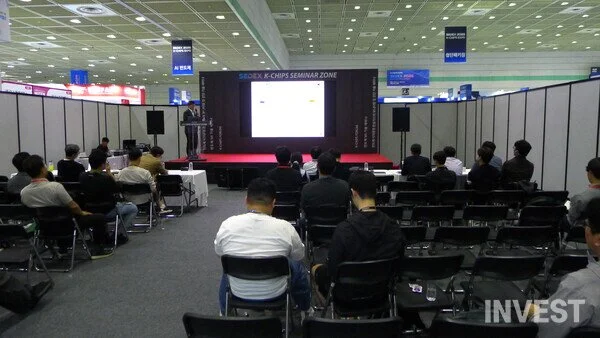
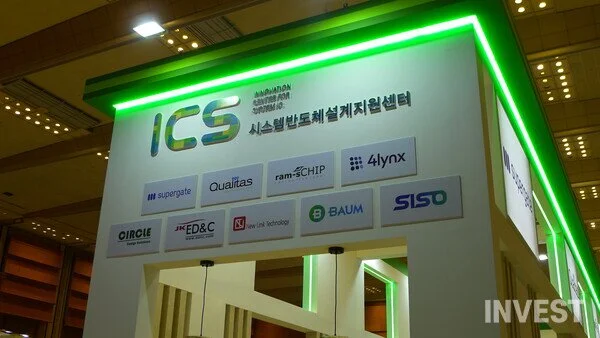
Early-stage startups were targeting technical demands in detailed processes and design stages amidst exhibitions related to large-scale equipment and supply chains. Startups participating in the Integrated Circuit Design Support Center (ICS) booth introduced interface standardization between chip design automation tools (EDA), low-latency interconnect bridge design between IP, and thermal analysis specialized tools for Chiplet structures. In the materials, components, and equipment sector, small-scale maintenance and diagnostic systems, such as sensors that detect gas leaks in equipment in real-time and micro-particle contamination monitoring modules to reduce downtime in mass production lines, stood out. Instead of developing main equipment that requires large-scale capital, these early-stage companies sought market entry by presenting solutions that improve the productivity of existing mass production lines by 2–3% or shorten design periods by several weeks.
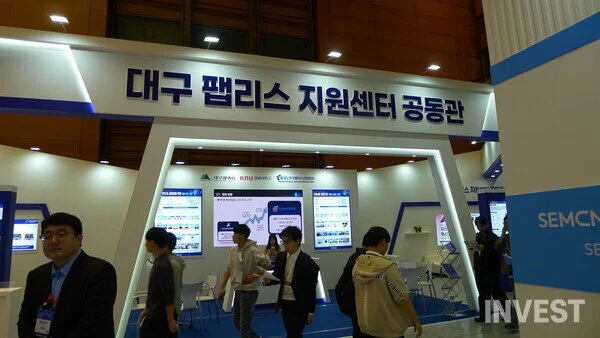
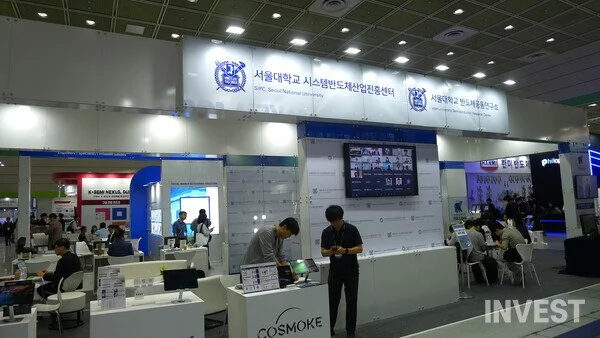
At booths introducing support projects from local governments and public institutions, plans to foster the fabless and AI semiconductor software ecosystem could be observed. The Daegu Fabless Support Center joint pavilion and the Seoul National University System Semiconductor Industry Promotion Center booth guided visitors through programs linking local governments and academia to reduce the burden of MPW (Multi-Project Wafer) prototype production costs and expensive EDA license fees for early-stage fabless companies. Fabless companies exhibited software stacks for on-device AI, which bundle NPU (Neural Processing Unit) hardware with compilers, drivers, and runtime frameworks. Having started based on infrastructure voucher support from local governments, these companies were pursuing customer acquisition by providing software development kits (SDK) along with individual chips.
This SEDEX 2026 clearly demonstrated the convergence of domestic hardware manufacturing capabilities centered on HBM and advanced packaging, but it also revealed the limitation that the fabless and software stack ecosystem still remains within the boundaries of public support pavilions. Furthermore, while local governments actively promoted plans to attract industrial sites and facilities, they must also strive to reduce the burden caused by chip development failures through demonstration support to back the commercialization of early-stage companies. Early-stage startups must differentiate themselves with convergence-type solutions that supplement the technical gaps of existing equipment and processes within the large-enterprise-centered hardware ecosystem, and the government and local governments must strengthen demand-centered support that links from demonstration to commercialization and securing sales channels, in addition to supplying infrastructure.
Covers Careers & Events for INVEST NEWS GLOBAL, and also writes about Education & Events.

Comments 0
Comments are currently disabled.