
[Field Report] AI Festa 26: Highlighting AI Technology Expanding into Industrial Sites
AI Festa 26 was held at COEX in Samseong-dong, Seoul, from the 6th to the 8th, showcasing the commercialization of AI technology and its integration with industrial infrastructure. The event featured specialized pavilions for security, quantum, and semiconductors, alongside startups demonstrating practical AI solutions for various sectors.
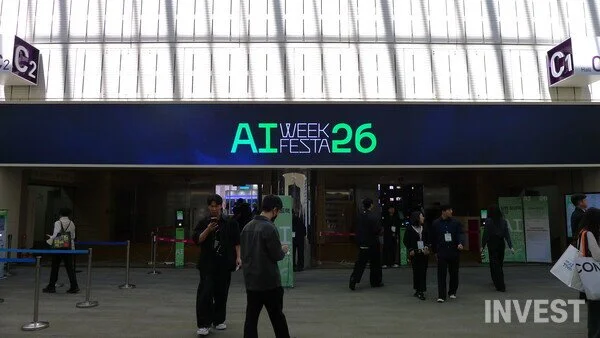
'AI Festa 26' was held from the 6th to the 8th at Hall C on the 3rd floor of COEX in Samseong-dong, Seoul.
This event is the central event of the national official 'AI Week' promoted by the Ministry of Science and ICT, and was co-hosted and organized by the Ministry of Science and ICT, KOSA, and the AI Festa Organizing Committee. It was planned with the purpose of inspecting the commercialization stage of domestic artificial intelligence technology and linking infrastructure and solutions across all industries. The organizers aimed to establish a comprehensive business platform that combines policy, academic, and commercialization programs, moving beyond simple observation-oriented exhibitions.
Approximately 350 participating companies took part in the exhibition, expecting to verify market responses to their technologies, discover large buyers, and secure collaboration references. At the site, one could observe the maturity of industrial technologies integrated with physical devices and actual services, going beyond the demonstration of single software models.
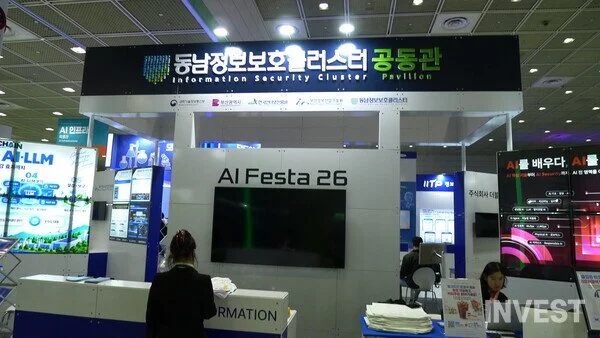
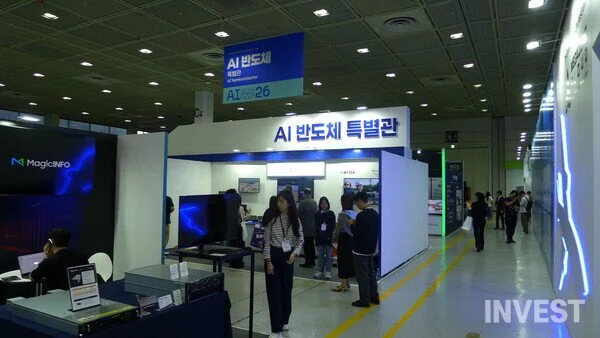
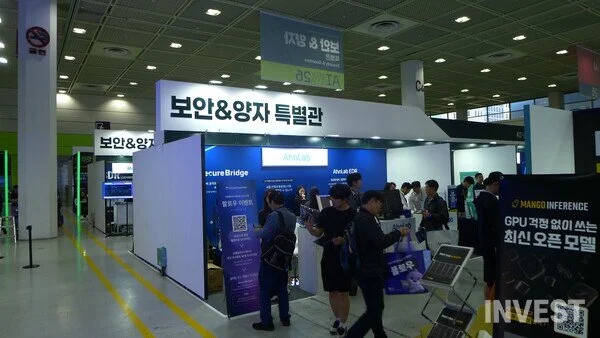
The exhibition hall was divided into specialized pavilions tailored to hardware and foundational technology systems such as security, quantum, and semiconductors, allowing visitors to multidimensionally understand the overall industrial technology landscape. In the Security·Quantum Special Pavilion, defense systems applied to cloud security environments and endpoint detection technologies were intensively introduced, and major companies, including the AhnLab booth, presented AI-based security architectures responding to intelligent attacks.
The AI Semiconductor Special Pavilion featured server accelerators and on-device inference hardware, allowing for a systematic view of the trend toward computational efficiency occurring at the chipset and infrastructure levels beyond simple model development. Additionally, the Southeast Information Security Cluster joint pavilion, which fosters regional hub security technology, was located nearby, showing the overall connectivity of the industrial ecosystem where software, hardware, and physical security infrastructure converge.
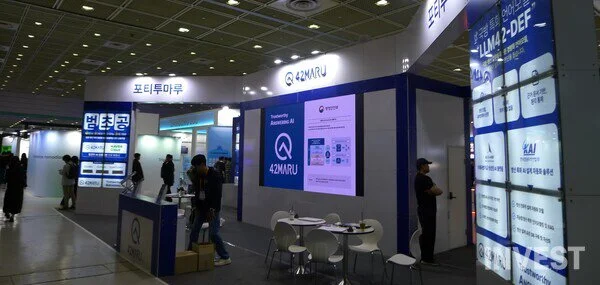
In the center of the venue and along major passages, startups with technological capabilities specialized in specific industrial areas gathered to demonstrate solutions currently in operation. 42Maru, which possesses natural language processing and machine reading technologies, demonstrated the competitiveness of AI technology combined with industry-specific expertise by exhibiting public administration solutions linked with the Ministry of the Interior and Safety, the specialized lightweight language model 'LLM42-DEF' for the defense sector, and solutions for the aerospace sector.
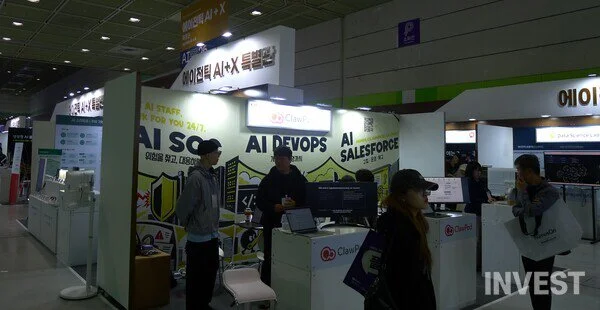
In the Agentic AI+X Special Pavilion, startups developing automated operating systems, such as ClawPod, set up booths and presented AI agent systems that autonomously perform tasks such as security monitoring, development/operations (DevOps), and customer relationship management (CRM). These startups showed practical commercialization potential by focusing on solving problems for specific demand sources, such as manufacturing, defense, administration, and cloud operations, rather than merely staying at the level of developing general-purpose foundation models.
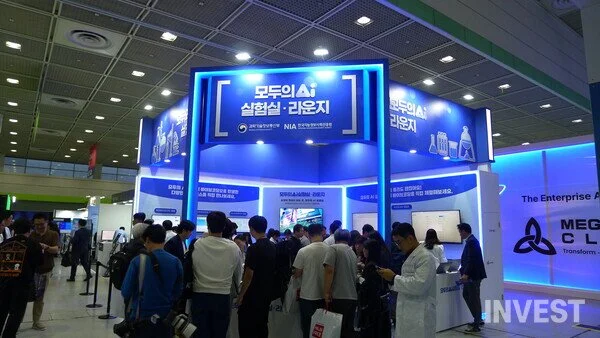
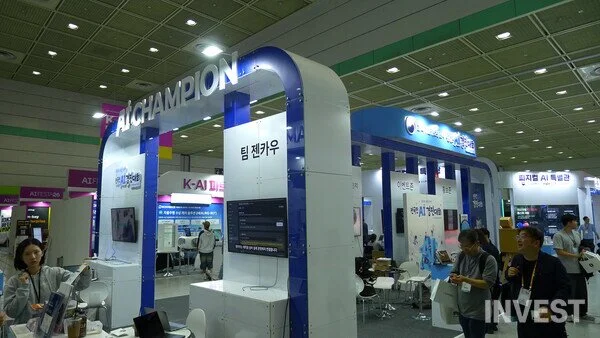
In the 'National AI Competition' and 'AI Lab and Lounge for Everyone' sections, which aim to expand the technological base and discover new developers, award-winning results nurtured by the public and private sectors were exhibited. At the competition booths, which involved related organizations such as NIPA, NIA, TTA, and the Korea Foundation for the Advancement of Science and Creativity, award-winning works from the Rookie track, consisting of students and prospective startup teams, and the Champion track, centered on companies and experts, were displayed side by side.
One of the winning teams, Jenkau, demonstrated a solution that connects electronic document processing to actual operational stages, while EcoPeace introduced an award-winning mobility-based environmental purification robot platform. These winning works showed the potential to evolve beyond simple competition ideas into business models seeking actual market entry.
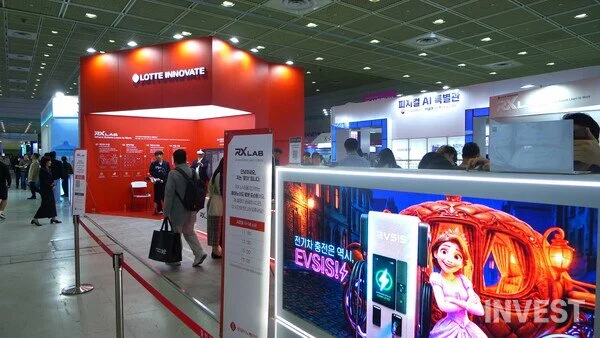
The participation of large corporations and mid-sized System Integration (SI) companies was also prominent, forming a cooperative structure within the ecosystem. LOTTE INNOVATE prepared a separate experience space called 'RX LAB' and placed the humanoid robot docent 'Roy' and the electric vehicle charging infrastructure system 'EVSIS' at the forefront, emphasizing physical computing technology integrated across mobility and overall space operations.
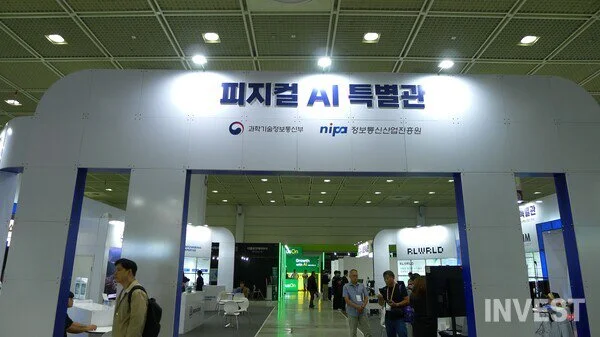
In the Physical AI special pavilion, under the support of the Ministry of Science and ICT and NIPA, many hardware-linked companies dealing with robotics foundation models and precision control systems participated, revealing driving technologies that can be applied to actual manufacturing and logistics processes. Contact points where large corporations with existing industrial bases and startups with specialized algorithms can discuss partnerships were also formed throughout the venue.
This event delivered a clear signal to early-stage startup teams that the direction of technology development must shift from product-centric to reducing customers' operating costs. Since the approach of developing Large Language Models themselves requires significant capital and data infrastructure, it can be a burden for early-stage companies; it was confirmed that an alternative could be building cost-effective lightweight models based on specialized data in specific industrial fields or combining them with existing hardware equipment.
Rather than merely observing, early-stage startups participating in the event need to focus on practical negotiation activities, such as identifying bottlenecks in the technology adoption process at the booths of large corporations and mid-sized demand providers, and defining the specific roles their own modules can perform within the technology supply chain. Visitors are also required to have a practical perspective, checking not only flashy video demonstrations but also real-time system resource occupancy, response speed, and ease of integration with existing business software.
[Field Diagnosis] Shifting beyond software algorithm competition to 'Demonstrated AI' applied to industrial sites
AI Festa 26 showed a trend where generative artificial intelligence moves beyond the Proof of Concept (PoC) stage and expands into various areas such as physical systems, on-device chipsets, and enterprise operating agents, being applied to industrial sites.
The competitiveness required for early-stage startups is not just the size of the model or the scale of parameters, but in meeting the specific security standards and lightweight requirements demanded by large corporations and the public sector, and proving the effects of cost reduction and operational efficiency improvement in actual business environments.
Covers Careers & Events for INVEST NEWS GLOBAL, and also writes about Education & Events.
![[Field Report] SLW 2026: Moving Beyond an Administrative Exhibition to a Venue for Technology Demonstration](/storage/investnews-global/2026/10/697d5abc-ea53-46f2-baec-55082a4a983d-5e94c9cd-thumb.webp)
![[Field Report] 3rd Korea Social Value Festa: Large Corporations Combine Social Contribution with…](/storage/investnews-global/2026/10/bcd7942b-a595-490f-ae35-acdb856974e7-32a24fb6-thumb.webp)
![[Field Report] KOREA LIFE SCIENCE WEEK 2026: Checking Commercialization Strategies Amidst Displays…](/storage/investnews-global/2026/10/a70e3df8-7731-4f5a-b437-15055422c95d-7a738e60-thumb.webp)
Comments 0
Comments are currently disabled.