
[Field Report] SLW 2026: Moving Beyond an Administrative Exhibition to a Venue for Technology Demonstration
The global ICT exhibition 'SLW 2026' was held at COEX in Seoul from the 6th to the 8th. While the event showcased Seoul's smart city policies and AI-driven public services, it faced criticism for focusing more on administrative achievements than on individual corporate technology competitiveness, though the '2026 Seoul AI Robot Show' provided a meaningful look at practical robotic technologies.
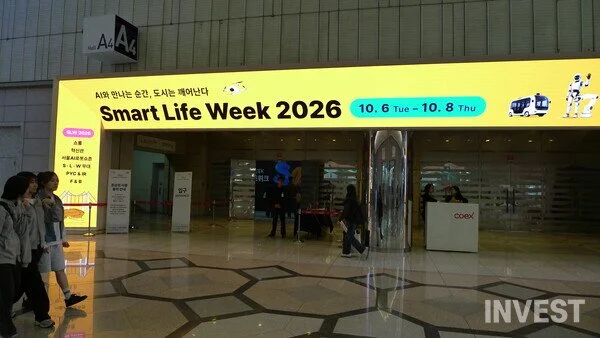
The global comprehensive information and communications technology (ICT) exhibition 'SLW 2026' was held at COEX Halls A and B in Seoul from the 6th to the 8th.
This event was co-hosted by Seoul and WeGO and organized by the Seoul AI Foundation. Smart Life Week is an international exhibition event designed to share Seoul's smart city policies and advanced ICT, and to promote technological exchange for solving urban problems. The organizers aimed to externally promote Seoul's digital competitiveness and AI-based public service models.
Participating companies sought opportunities for technology demonstration, overseas expansion, and investment attraction through cooperation with local governments and global networks, while visitors observed how advanced technologies could be applied to daily life and urban environments.
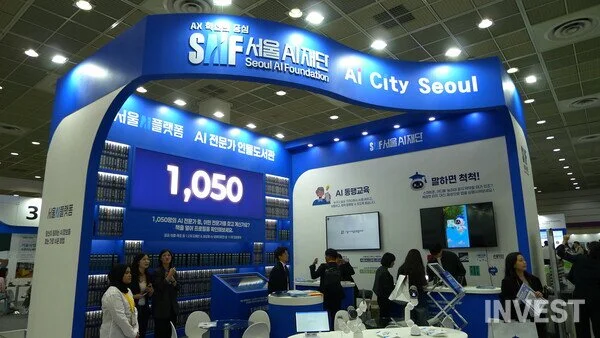
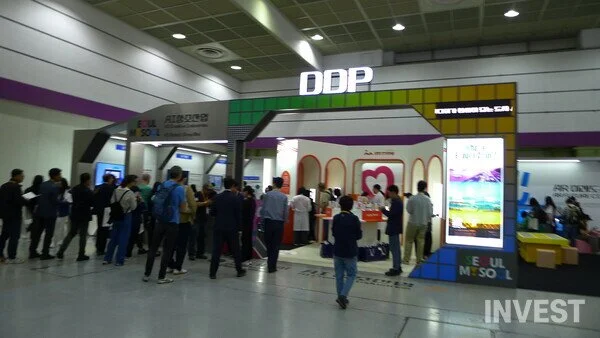
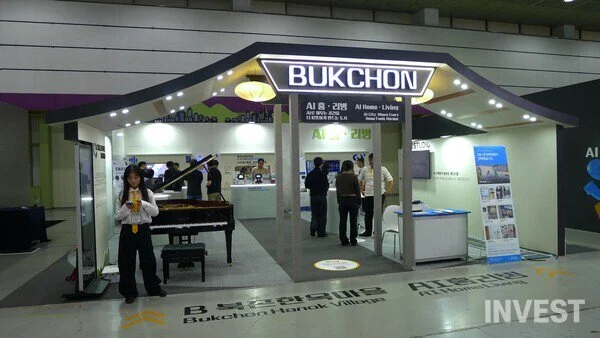
A large number of Seoul's AI-related institutions, corporate nurturing programs, and supported companies participated in the exhibition hall. At the Seoul AI Foundation booth, an AI expert person library database of 1,050 people, AI companion education, and platform businesses for improving public administration efficiency were introduced. Exhibition areas utilizing Seoul's urban spaces were also prepared, such as an AI convergence industry space themed around DDP, a residential/living space inspired by Bukchon Hanok Village, and an autonomous driving mobility zone.
However, compared to the scale of the exhibition hall, the content of individual booths was somewhat limited, and it was regrettable that exhibitions with similar themes were dispersed and placed across multiple areas. While focusing on dividing the exhibition space by theme, it appeared that the connectivity between technologies and the overall viewing flow were not sufficiently utilized.
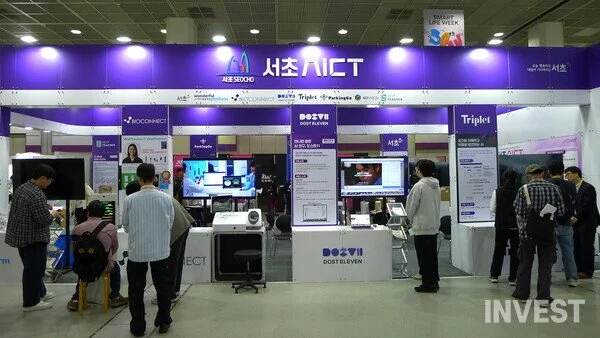
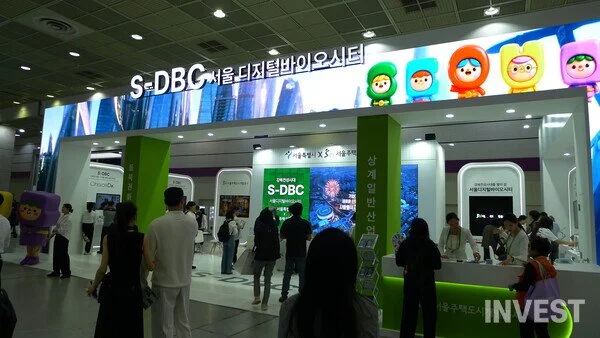
In this exhibition configuration, the policy and business achievements of local governments and public institutions were relatively highlighted over the technological competitiveness of individual companies. The booth configuration, divided by autonomous districts and public institutions—including the Seocho AI·ICT booth, Seoul Metro, and SH—posed some constraints in viewing the exhibition with a focus on companies and technology.
As the technologies of startups receiving support from autonomous districts and public institutions were placed in the promotional halls of individual institutions, there was a tendency to emphasize the implementation results of public demonstration projects rather than the innovation and technological competitiveness of the companies themselves. The limitations of an administration-led exhibition were revealed as the weight was placed on introducing the support projects and achievements of each institution rather than highlighting the scalability of private technology.
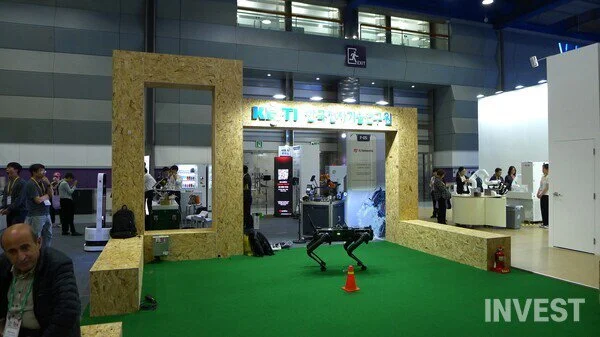
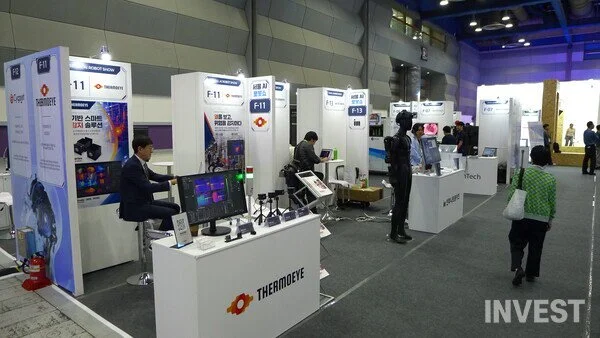
On the other hand, in the '2026 Seoul AI Robot Show' exhibition area held concurrently, visitors could directly observe actual operating robots and related technologies. Humanoid and collaborative robots from the Sungkyunkwan University Bio-Robotics Laboratory, Rainbow Robotics, and Neuromeka were exhibited on-site. A wide range of technologies, from core components required for robot operation to completed robot platforms, were presented.
Actuators (driving devices), ThermoEye's AI-based infrared thermal imaging sensors, and Neubility's autonomous driving robots were also introduced. It was meaningful in that various technologies, from core robot components to application systems, could be observed in one place. In particular, it was possible to gauge the development direction of physical AI technology that can be applied to actual industrial sites such as manufacturing, logistics, and disaster detection.
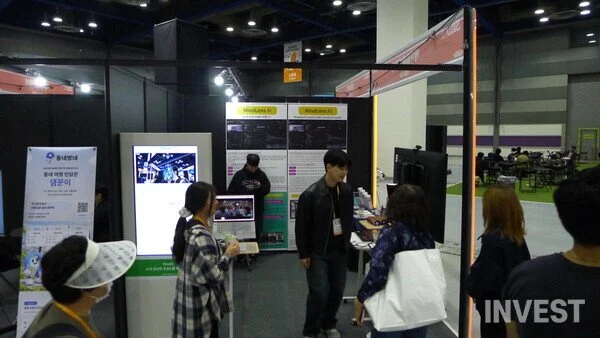
In the software field, multimodal AI technology, which utilizes multiple types of data such as video and voice to analyze a person's emotional state, was introduced.
Able AI, which set up a booth at the scene, demonstrated the 'MindLens AI / EmoAI' system, which estimates emotional states by analyzing facial expressions and voices in real time. The method involves analyzing changes in facial feature points via camera and combining that with information such as voice volume, intonation, and tremors to visualize emotional changes.
This technology is noteworthy in that its scope of application can be expanded beyond simple entertainment uses to various fields such as psychological counseling assistance, non-contact healthcare for seniors, customer response analysis, and education. It was a representative example of applied AI capable of solving field problems by combining precise modeling with highly reliable data.
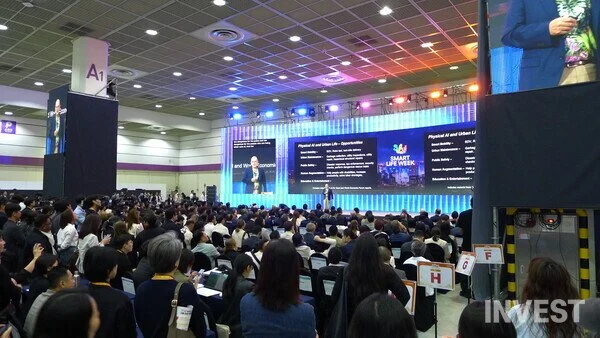
This exhibition also left implications for the exhibition strategies of startups participating in public-led expos. Participating companies need to go beyond merely announcing the support achievements of institutions and instead highlight their own technological competitiveness and business models.
It is important to convey business models (BM) and the scalability of technology to private buyers and investors based on achievements secured through public demonstration projects. Analysis suggests that rather than using the expo simply as a venue for technology promotion, it should be utilized as an opportunity to confirm customer demand and secure demonstration cases that lead to business-to-business (B2B) and business-to-government (B2G) transactions.
An official from a company participating in this exhibition stated, "While participating as a member of a local government promotion pavilion has the advantage of announcing public references, there are structural constraints in connecting to independent investment consultations or actual business. In the future, we hope that instead of administrative-centered category classification, booth placement centered on matching by technical domain and practical technology verification will be strengthened."
[Field Diagnosis] Beyond exhibitions focused on administrative achievements, links between private technology demonstration and commercialization must be strengthened
While SLW 2026 was a venue to introduce the digital policy direction of Seoul and various advanced technologies, it left a sense of regret as it failed to sufficiently demonstrate connectivity between technologies due to an exhibition composition focused on the achievements of each institution and the scattered placement of similar content.
On the other hand, in exhibitions such as the 2026 Seoul AI Robot Show and Able AI, one could observe the level of technology implementation and usability, ranging from core components to application solutions.
For public-led ICT expos to increase their industrial impact, they need to evolve beyond merely introducing policy achievements into demonstration and exchange platforms where innovative companies can meet potential customers and investors to verify their technology and secure commercialization opportunities.
Covers Careers & Events for INVEST NEWS GLOBAL, and also writes about Education & Events.
![[Field Report] 3rd Korea Social Value Festa: Large Corporations Combine Social Contribution with…](/storage/investnews-global/2026/10/bcd7942b-a595-490f-ae35-acdb856974e7-32a24fb6-thumb.webp)
Comments 0
Comments are currently disabled.