
Concerns raised over 162 trillion won Future Response Fund regarding National Assembly oversight and local autonomy
During a forum at the National Assembly of the Republic of Korea, experts and lawmakers raised concerns that the government's proposed 162.3 trillion won Future Response Fund could overlap with existing systems and weaken the National Assembly's budget review powers and local governments' fiscal autonomy.
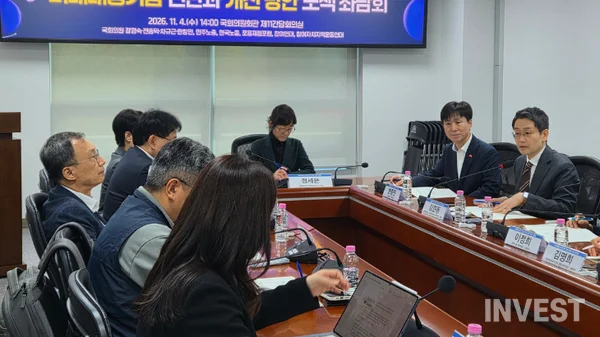
Forum on Assessing the Future Response Fund and Exploring Improvements held at the National Assembly on the 4th (Photo = Hwang Hwan-yeol)

Critics have pointed out that the necessity of the 162 trillion won Future Response Fund being promoted by the government must be examined against potential overlaps with existing fiscal systems. There are concerns that the reasons for moving projects currently handled by existing budgets to a new fund are unclear, and that as the government's discretionary power in management increases, the budget review rights of the National Assembly of the Republic of Korea and the fiscal autonomy of local governments could be weakened.
At the 'Forum on Assessing the Future Response Fund and Exploring Improvements' held at the National Assembly Members' Office Building on the 4th, Professor Kim Hyeon-dong of Pai Chai University argued that the necessity of establishing the fund and the authority to change expenditures should be re-examined. The forum was co-hosted by lawmakers Han Chang-min, Jeon Jong-deok, Cha Gyu-geun, and Kang Gyeong-suk, along with two major labor unions, the Poyong Jaejeong Forum, People's Solidarity for Participatory Democracy, and Chamyeo Jachi Jiyeok Undong Yeondae.
The discussion began with the government's plan to collect increased tax revenue into a separate fund for management. The government's 2027 budget proposal includes the creation of a 162.3 trillion won Future Response Fund to invest in youth, growth engines, local regions, and education/talent sectors. Professor Kim pointed out that the reasons for performing these investments through a new fund rather than using existing budgets are not clear.
"Existing funds exist"... effectiveness of transferring projects must be weighed
The first issue raised by Professor Kim was the overlap of roles with existing systems. While the government plans to accumulate increased tax revenue in the Future Response Fund to respond to future fiscal needs, the Public Capital Management Fund already manages surplus funds from various other funds.
Professor Kim stated that reasons for not being able to utilize existing funds should be presented first. He argued that since establishing a new fund creates an additional framework for managing resources, the resulting effects and costs must be weighed.
The same applies to the projects to be promoted by the fund. As a significant number of projects currently carried out through the general account and other means are to be transferred, he noted that it must be examined whether this is simply changing the framework that holds the resources.
He explained that if resources are divided into the fund and special accounts, it becomes difficult to use surplus funds from one side to cover shortages in another. He maintained that if a separate fund is to be established, its purpose and role must be clear enough to justify such constraints.
Government changes plans after National Assembly review... can real control be exercised?
A key issue following the establishment of the fund is the scope to which the government can change expenditure plans. Professor Kim pointed out that although the fund undergoes review by the National Assembly through an operational plan, the mere existence of a review process does not mean sufficient control is exercised.
In particular, he highlighted that the government intends to allow the scope of changing the Future Response Fund's expenditure plans without a National Assembly resolution to be as much as 30%. He expressed concern that if the government can broadly change plans decided by the National Assembly, the results of the review may not be sufficiently reflected in actual execution.
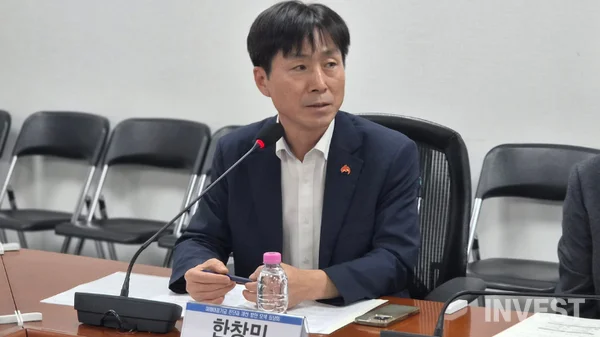
Lawmaker Cha Gyu-geun of the Rebuilding Korea Party agreed with the purpose of creating the fund but stated that mechanisms to guarantee the authority of the National Assembly are necessary. "It is said that exception clauses will be created in the amendment of the National Finance Act, and I question whether such parts might infringe upon the budget review rights of the National Assembly," Cha stated.
SPD lawmaker Han Chang-min also raised questions regarding the continuity of projects included in the expenditure plans. He argued that if youth policies are promoted based on temporarily increased tax revenue, it must be examined whether support can continue after tax revenue decreases. He also mentioned the need to check whether projects in the growth engine sector overlap with existing support, such as for Artificial Intelligence (AI).
Even if more money is given to 'local regions', autonomy is limited if 'central' government decides usage
In local finance, the issue raised was not just the amount of distribution, but who decides the use of the money. This is because if the tax revenue accumulated in the Future Response Fund is excluded from the basis for calculating local allocation taxes, the increased tax revenue will not return to local regions through existing methods.
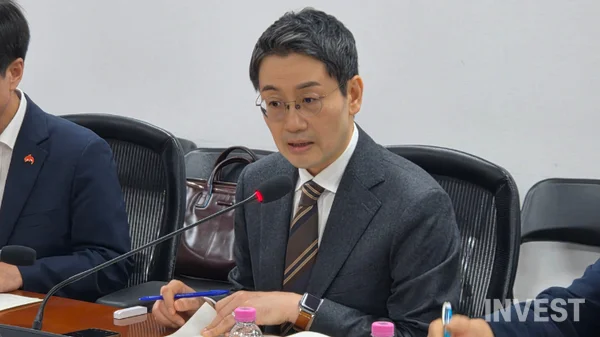
While the government can provide support through the local accounts of the fund, Professor Kim viewed this as different from the allocation taxes that local governments use autonomously. If the central government decides the projects and uses and even demands a local government's contribution, local governments may have to prioritize central government projects over urgent projects in their own regions.
Professor Kim pointed out that even if the total amount going to local regions increases, the problem of decreasing decision-making power over expenditures remains. He suggested that if there is a need to adjust the expansion of expenditures due to a surge in tax revenue, alternatives to guarantee local autonomy, such as applying allocation ratios flexibly, could be considered.
He also argued that the appropriate scale of surplus resources to be accumulated in the fund must be determined. He explained that if large-scale funds are being accumulated while deficit bonds are being issued, borrowing costs, operating profits, and the amount needed in emergencies must be reviewed together.
He proposed leaving some resources to prepare for tax revenue shortfalls and using the rest for insufficient welfare expenditures. He stated that discussions on securing resources through tax increases should be conducted in parallel to ensure that necessary support can continue even after the temporary increase in tax revenue is spent.
Covers National Assembly for INVEST NEWS GLOBAL, and also writes about Startup Is and News.
Comments 0
Comments are currently disabled.