
Security Token Offerings (STO) to be Implemented Next Year… Standards for Expanding Existing Securities Public Offerings Must Be Set First
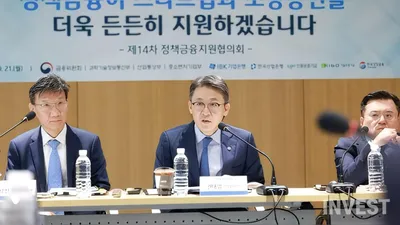
At a seminar held at the National Assembly of the Republic of Korea…
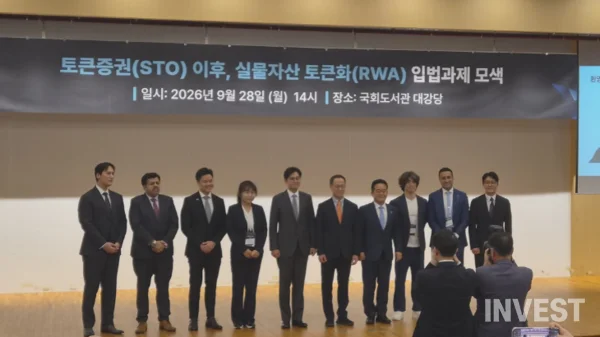
The security token offering (STO) system is scheduled to be implemented starting in February next year, but it has not yet been specifically determined when the transition to the stage of issuing and publicly offering existing financial products such as stocks, bonds, and funds in token form will occur. It was argued at a National Assembly seminar that even if the decision to expand is made after reviewing the operational results of the first stage, judgment criteria must be presented in advance so that the market can prepare.
Kim Tae-rim, representative attorney of Axis Law Office, said at the 'Exploring Legislative Tasks for Real-World Asset Tokenization (RWA) After Security Token Offerings (STO)' seminar held at the National Assembly Library's main auditorium on the 28th, "While a date of February 2027 was set for the first stage, there is no date on the door of the public offering that opens the second stage."
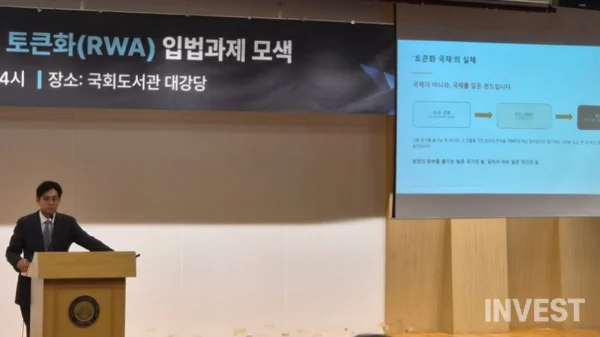
According to the policy direction announced by the Financial Services Commission this month, the first stage starting next February includes the tokenization of private equity funds/bonds for institutional investors, unlisted stocks via trust methods, and public fractional investment securities. The public offering of fractional investment securities will be pursued from the first stage. The timing that has not been determined is the second stage, which expands beyond fractional investment to the tokenization of public offerings of existing securities. The Financial Services Commission plans to move to the next stage after examining the stability and efficiency of the initial operation and market demand.
Kim evaluated that there is progress in the fact that the government presented a step-by-step direction. However, she pointed out that it is difficult for companies to establish business schedules with only the explanation that the timing of the public offering expansion depends on the stability of the initial market and the level of technology. She argued that the indicators to be checked when moving to the next stage must be disclosed in advance so that securities firms and issuing companies can prepare for system investment and personnel recruitment.
The method she proposed is not to fix the date for opening public offerings immediately. Instead, she suggested using indicators such as whether the market for institutional investors has operated without incidents for a certain period and whether the quantity of issued securities matches the ledger records, and deciding on the expansion based on whether these are met. She explained that if the criteria are disclosed in advance, companies can prepare their businesses according to the goals, and authorities can objectively judge the next stage based on the operational results.
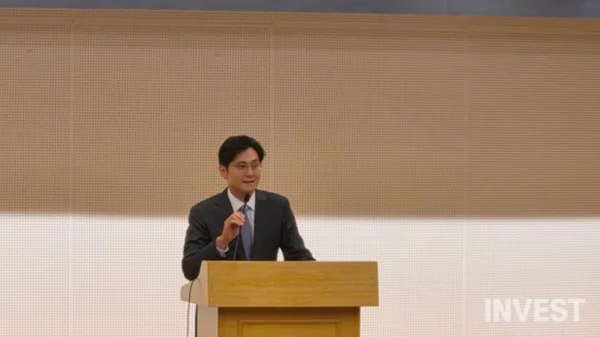
Kim also viewed that the scope of discussions on domestic real-world asset tokenization should be expanded. While fractional investment, where real estate or artworks are divided for investment, is mainly discussed in Korea, there are cases overseas where existing financial products, such as shares in funds containing government bonds, are made into tokens and traded. She explained that the tokenization of government bonds does not necessarily mean moving the government-managed government bond ledger itself to a blockchain. This is because the necessary systems vary depending on what rights are made into tokens for trading.
She argued that after expanding the target of public offerings, it must also be decided whether issued security token offerings (STO) can be moved to other transaction ledgers. In her presentation, Kim pointed out that there are restrictions on moving a single security token offering (STO) from the ledger where it was issued to another ledger. While this is a choice to prevent the risk of the same security being recorded redundantly on multiple ledgers, it means that transactions could be divided by ledger.
Kim said, "If things proceed in this manner, liquidity will become a puddle trapped in each ledger," and "If a principle of prohibition of movement has been established, discussions should begin on how to set exception conditions and when to release them." It is a proposal to set safe conditions and timing for movement between ledgers.
She also emphasized the need for means to pay the amount when buying and selling security token offerings (STO). She stated that if the process of transferring securities and the payment of funds are to be processed together on the blockchain, a legal basis for the tokens to be used for settlement must be established. Kim stated that her proposals regarding the expansion of public offerings, movement between ledgers, and settlement are "not the answer, but ideas," and suggested continuing discussions on detailed systems.
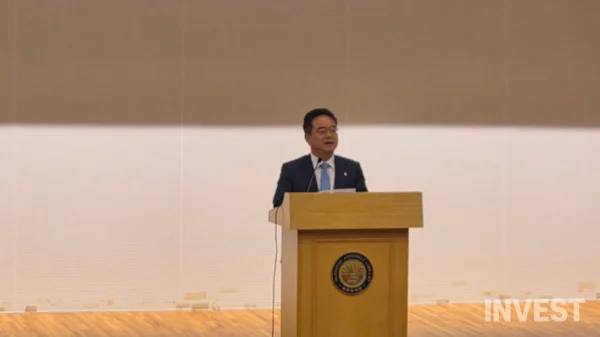
Member of the National Assembly Min Byung-dug said, "We must move from a system that makes it possible to issue to a system that makes it actually usable," and "If tokens are only issued and do not move, a market will not be created."
Covers National Assembly for INVEST NEWS GLOBAL, and also writes about Startup Is and News.

Comments 0
Comments are currently disabled.