
Korean clean energy stocks could benefit from potential Democratic Blue Wave
As the US midterm elections approach, South Korean investors are eyeing clean energy and energy storage system (ESS) stocks, anticipating a potential "Blue Wave" where the Democratic Party could control both chambers of Congress.
Korean clean energy and energy storage system stocks may benefit if the Democratic Party secures a majority in both chambers during the US midterm elections on November 3. While the Democratic Party holds a 90% probability of winning the House according to Kalshi, the Senate remains a close contest.
With the US midterm elections less than 10 days away, clean energy and energy storage system (ESS) related stocks in the Korean stock market are being identified as potential beneficiaries amid discussions of a "Blue Wave," where the Democratic Party could take control of both the House and the Senate. Expectations are rising that if the Democratic Party dominates Congress, clean energy support policies could be revitalized, and the industry could improve given the party's pledge to expand ESS investment. However, a scenario of a divided Congress remains possible, with the Republican Party potentially holding the Senate while the Democratic Party takes the House.
US Midterm Elections
The midterm elections are federal congressional elections held during the second year of a president's four-year term. This year, they will be held on November 3 local time. All 435 seats in the House, which has a two-year term, are up for election, along with 35 of the 100 seats in the Senate, which has a six-year term. Since the president does not run as a candidate, the election serves as a strong assessment of the administration's performance during its second year.
Currently, the Republican Party holds a majority in the presidency, the Senate with 53 seats (compared to 47 for the Democratic Party), and the House with 218 seats (compared to 214 for the Democratic Party). If the majority in Congress changes, the Trump administration will have to negotiate legislation and budget processing with the opposition party for the remaining two years.
House leans Democratic, Senate is a toss-up... Low presidential approval pushes Democrats forward
Ahead of the US midterm elections, the momentum has tilted toward the Democratic Party in the House, while the Senate remains a close contest. As of the 16th, the prediction market platform Kalshi calculated the probability of the Democratic Party securing a House majority at 90% and a Senate majority at 63%. The probability of a Senate victory rose from 44% in March to around 57% last month, and increased to 63% on this day. In national polls collected by NYT, the Democratic Party led in the House by as much as 11 percentage points, and also showed dominance in the Senate.
The background behind the Democratic Party's lead is the low presidential approval rating. According to a survey of 2,545 adults conducted by The Washington Post, ABC News, and Ipsos from the 9th to the 13th, President Trump's approval rating for his administration's performance was 33%, while disapproval was 66%. This is the lowest figure across his two terms. In data compiled by The Economist, President Trump's net approval rating (34% approval, 61% disapproval) also hit a record low of minus 27%.
The burden of inflation is cited as a factor pulling down approval ratings. In the same survey, more than half of the participants responded that all household purchase items were "difficult to afford." By category, the response that gasoline prices were difficult to afford increased from 28% on February 28, before the Iran war, to 71%. Medical expenses rose from 56% to 65%, residential energy and utilities from 45% to 57%, and rent and mortgages from 37% to 50%.
According to the BLS, consumer prices in September rose 3.7% compared to a year ago, a larger increase than the 3.4% seen in August. The impact of energy prices rising 20.4% was significant. Gasoline rose 34.2%, fuel oil rose 74.2%, and airfares rose 22.4%. Gasoline alone rose 9.1% in the month of September, accounting for more than half of the total monthly inflation increase. Conversely, real hourly wages in the private sector, adjusted for inflation, decreased by 0.7% compared to a year ago.
Unlike the House, the Senate seat structure is unfavorable to the Democratic Party. Currently, the Republican Party holds 53 seats and the Democratic Party holds 47. The targets for this election are 35 seats, including 33 seats whose regular terms are ending and 2 special election seats in Ohio and Florida (22 Republican seats and 13 Democratic seats). For the Democratic Party to secure a majority, it must defend all its current seats and gain 4 additional seats. If the Senate results in a 50-50 split, Vice President JD Vance, who belongs to the Republican Party, can cast the deciding vote, allowing the Republican Party to maintain its majority even if it loses 3 seats. Due to this structure, a result where the House and Senate are split is possible.
The Bank of Korea expects the Democratic Party to reclaim the majority in the House, even if the Republican Party takes all 15 contested districts, as the Democratic Party is dominant in 220 districts compared to the Republican Party's 200. In the Senate, the Democratic Party is slightly ahead, but the Bank of Korea assessed that the majority could be maintained or changed depending on the results in contested regions.
[Scenario 1: Divided Congress (Republican Senate · Democratic House)] Minimal impact on interest rates and exchange rates due to reduced policy uncertainty... Trump beneficiary stocks remain valid
The Bank of Korea predicts that in this scenario, the impact on interest rates and exchange rates will be minimal as the likelihood of current policies changing is low. It assessed that the resolution of election uncertainty would be helpful to stock prices. NH Investment & Securities supported this judgment with historical statistics. During the 17 years since 1930 when a divided Congress occurred, the S&P500 average annual return was 9.4%, with a median of 14.6%, which was higher than other configurations. During the 36 years when the Democratic Party held both chambers, the average was 9.1% and the median was 12.4%, while during the 11 years when the Republican Party held both chambers, the average was 4.0% and the median was 9.0%. NH Investment & Securities interpreted this as a result of the policy risk premium decreasing due to the low possibility of sudden policy changes.
Furthermore, the Bank of Korea noted that most bills could be placed in a deadlock due to institutional constraints such as the presidential veto and Senate filibusters. The explanation is that if an agreement regarding the government budget is delayed, Congress will rely on temporary budgets, in which case the risk of a 'shutdown' where government operations are temporarily suspended increases. Currently, the temporary budget is valid only until December 11.
The debt ceiling was cited as an even larger variable. Citing Citigroup's estimates, the Bank of Korea reported that the federal government debt, which was 40.1 trillion dollars as of October 1, will reach the limit (41.1 trillion dollars) next April. In this case, if negotiation deadlocks persist, volatility in the money market could increase due to the Treasury's special measures and the exhaustion of the Treasury General Account (TGA) balance. The timing when both the special measures and the TGA balance are depleted was presented as late October to early November of next year.
In the stock market, evaluations suggest that sectors benefiting from existing Trump policies are advantageous. NH Investment & Securities identified materials (steel, aluminum), shipbuilding, traditional energy, nuclear power/SMR, large banks, cryptocurrency, big tech, and space/defense as beneficiary sectors. As hit sectors, it presented clean energy/solar, pharmaceuticals, and insurers related to health insurance. Clean energy/solar will be affected by the reduction and early termination of tax credits under the 2025 tax law (OBBBA). For pharmaceuticals, pressure to lower drug prices was cited, and for insurers, the expiration of health insurance (ACA) subsidies was noted as a burden.
Samsung Securities also predicted that in a divided Congress, the stock market will be split according to the sectors supported by each party. This is because conflicts between the ruling and opposition parties could continue for each issue, such as budget bills and debt ceiling negotiations. However, it classified AI and the power sector as fields where benefits are expected regardless of the election results, as both parties support them. In the sub-category of data centers, it noted that because the positions of the two parties differ, the cost burden on large cloud operators could increase, in which case companies related to nuclear power and self-generation facilities (gas turbines, fuel cells, engines, and generators) could receive attention.
[Scenario ②: Blue Wave (Democratic control of both House and Senate)] Short-term shock if Democrats control both chambers... Warnings of a 10% drop in the US stock market
Citing major investment bank (IB) outlooks, the Bank of Korea reported that if the Democratic Party of Korea controls both chambers, long-term interest rates, stock prices, and the value of the dollar may show weakness in the short term. As factors for growth slowdown, it cited the contraction of investment sentiment due to pressure for strengthened AI regulation and uncertainty due to the change in administration. It added that if a more overwhelming victory than expected occurs, it could affect the 2028 presidential election, potentially increasing volatility.
Hyundai Motor Securities analyzed that a Blue Wave (simultaneous control of the House and Senate by the Democratic Party of Korea) would act more toward reducing the possibility of a situation requiring additional interest rate hikes, rather than accelerating the Federal Reserve's rate cuts. The explanation is that if the Democratic Party of Korea takes control of Congress, political constraints will be placed on the scope and scale of fiscal expansion rather than fiscal austerity. As the possibility of large-scale stimulus such as tax cuts or cash support decreases, and combined with the easing of consumer goods tariffs and stabilization of oil prices, the risk of demand pressure overlapping with cost shocks from tariffs and energy decreases. It noted that this does not directly pull down inflation, but if fiscal demand and inflationary pressure decrease significantly after the midterm elections, the policy question could shift from 'how much more should we raise [rates]' to 'how long will we maintain high interest rates.'
Regarding the dollar, the analysis suggested that while a Blue Wave does not automatically make it weak, it limits additional strength momentum. This is because the possibility of the US's growth and interest rate advantage becoming larger than it is now decreases. It saw that as the necessity for additional hikes by the Federal Reserve decreases and fiscal stimulus is limited, the possibility of the interest rate gap between the US and major countries widening further in 2027–2028 also decreases. However, for the time being, upward pressure remains due to surging oil prices following the worsening Middle East situation and expectations of Federal Reserve interest rate hikes. It diagnosed that if risk-aversion shocks occur outside the US, such as an expansion of the Iran conflict or instability in global financial markets, the dollar could become strong again.
The US stock market is projected to see stocks that rose during Trump's election in 2024 fall temporarily immediately after the election. This is because expectations for additional tax cuts and deregulation will weaken if the Democratic Party of Korea takes control of Congress. At the time of Trump's election (as of November 6, 2024), the financial sector rose 6.16% in a single day, the banking index rose 10.68%, and Tesla rose 15%, while renewable energy and electric vehicle-related stocks showed weakness.
The Hyundai Motor Securities Research Center stated, "If a Blue Wave becomes a reality in the 2026 midterm elections, there is a possibility of a temporary reversal of the 2024 Trump trade immediately after the election results are announced." It added, "While Trump's policies will not change due to the limits of Congressional authority, concerns that the momentum of policies led by President Trump will deteriorate over the next two years will negatively affect the investment sentiment of Trump trade-related stocks in the short term." Policies led by President Trump include additional tax cuts, deregulation, legislation related to virtual assets, and additional budgets related to immigration.
There are even more pessimistic outlooks. Michael Hartnett, chief equity strategist at Bank of America, predicted that if the Democratic Party of Korea takes both the House and Senate, taxes and regulations could both be strengthened, potentially causing the US stock market to fall by more than 10%.
[Impact of Blue Wave on the domestic stock market] Benefits for clean energy and ESS; burdens for banks, virtual assets, and fossil fuels
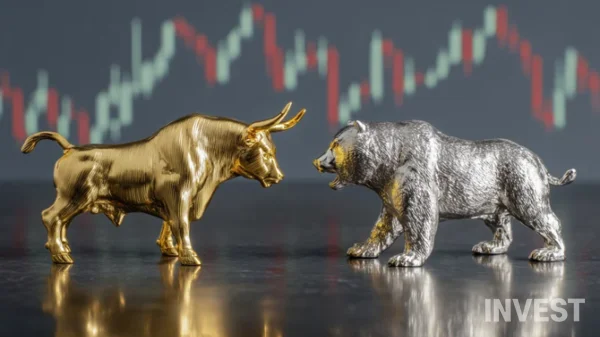
Hyundai Motor Securities predicted that even if the Democratic Party of Korea takes both the House and the Senate, Trump's policies will not change entirely due to the limits of congressional authority, but the fortunes of different industries will diverge in areas where congressional authority shifts to the Democratic Party of Korea. Clean energy and ESS are themes with high expectations for a rebound, while banks, virtual assets, and fossil fuels were classified as burdened sectors. Nuclear power and the power grid were seen as sectors where structural demand will continue regardless of a Blue Wave.
The industries expected to see the greatest benefit are solar power, wind power, and ESS. This is due to expectations that support reduced by Trump could be restored. In fact, the Democratic Party of Korea leadership stated in its energy agenda last May that if they become the majority party, they will restore the clean energy tax credits of the Inflation Reduction Act (IRA) that the Trump administration reduced, simplify permits, and increase investment in transmission grids and ESS. However, since President Trump's veto power remains, tax credits will not be restored immediately, so Hyundai Motor Securities predicted that the effect on improving investment sentiment will be greater than actual earnings.
Banks were cited as a sector with high burdens. This is because if the Democratic Party of Korea takes both chambers, expectations for additional deregulation will decrease, which could weaken investment sentiment. Although the United States fiscal deficit continues, the fact that the speed of additional expansion may be limited, potentially stabilizing long-term interest rates, is also negative for financial stocks. However, practical regulation on banks is determined by financial regulatory agencies such as the Federal Reserve, the OCC, the FDIC, and the SEC. As President Trump's influence is expected to be maintained during his term, it is anticipated that a Blue Wave itself will not strengthen regulations.
Virtual asset-related stocks are also observed to react sensitively. Previously, in September, the Market Structure Bill promoted by President Trump was rejected in a cloture vote to proceed with deliberation, receiving 49 votes in favor and 50 votes against, failing to reach the required 60 votes. Since this was a vote to begin discussions in the plenary session rather than a final vote to decide on passage, it was not discarded, and discussions are expected to begin after the new Congress is formed early next year. In this process, if the Democratic Party of Korea takes both chambers, expectations for the passage of pro-virtual asset legislation after 2027 may decrease further.
Fossil fuels such as oil and gas were diagnosed to undergo short-term corrections. This is because if the Democratic Party of Korea dominates Congress, it is predicted that pressure to end the war in the Middle East will increase through the budget, and in this case, oil prices may fall, which is negative for energy stocks.
Defense, shipbuilding, and semiconductors were evaluated as having little impact or maintaining long-term trends. Defense is predicted to continue receiving long-term benefits as Trump's strong foreign policy is expected to continue. In shipbuilding, if the Democratic Party of Korea wins, expectations for Trump's policies regarding Korea's shipbuilding cooperation project (MASGA) may temporarily weaken, but since countering the Chinese shipbuilding industry and rebuilding the US shipbuilding industry are issues supported by both parties, there will be no major changes for companies investing directly in the United States. In the semiconductor and materials, parts, and equipment sectors, it is predicted that the impact will not be large because even if data center construction in the United States is delayed, Big Tech will continue global diversified investment, and domestic AI investment in Europe and Asia will also continue.
Hyundai Motor Securities advised approaching this structure from a short-term perspective. Even during the 2024 election, the strength of beneficiary stocks did not last for more than a month, and long-term stock prices varied according to actual policies, global macroeconomics, and corporate earnings. The opinion is that beneficiary and burdened stocks of this year's midterm election should be approached in the short term.
Covers Post-IPO for INVEST NEWS GLOBAL.


Comments 0
Comments are currently disabled.