
Tech giants race to commercialize quantum computing through error-reduction breakthroughs
Global companies including Google, IBM, and Intel are intensifying efforts to commercialize quantum computing, with IBM pledging over $10 billion in investment and Google reporting significant progress in reducing quantum errors.
IBM plans to invest more than $10 billion over the next five years to accelerate quantum computing development. Meanwhile, Quantinuum has achieved a world record logical fidelity of 99.9995% on its Helios computer, while Google Quantum AI reported reducing errors by approximately 40 times using a new filtering method.

Efforts to accelerate the commercialization of quantum computers are gaining momentum. Global companies such as Google and Quantinuum are competing in technology to reduce errors, while IBM has decided to invest more than $10 billion in quantum computing over the next five years. Intel has moved to build a business structure spanning from hardware to software by acquiring a quantum software company. In South Korea, LG CNS has partnered with D-Wave to move quantum applications from the proof-of-concept (PoC) stage to the operational stage, and the government is pursuing an amendment to enforcement decrees to include the quantum industry as a target for the National Growth Fund.
Google and Quantinuum compete to reduce quantum errors; IBM to invest $10 billion
A quantum computer is a device that calculates complex problems using the properties of quantum mechanics. While conventional computers perform operations using bits that store either a 0 or a 1, quantum computers use qubits, which can exist in a "superposition" state—a mixture of 0 and 1 at certain ratios. The number of expressible states increases exponentially as the number of qubits grows. However, according to AWS, no current quantum computer is able to process useful tasks faster or more cheaply than a classical computer.
The biggest obstacle to practical application is error. Qubits are sensitive to the external environment and easily lose their quantum state, a phenomenon known as "decoherence." To prevent errors, error correction is required, which involves spreading a single piece of information across multiple qubits. Consequently, global companies are focusing their efforts on developing related technologies, such as error suppression.
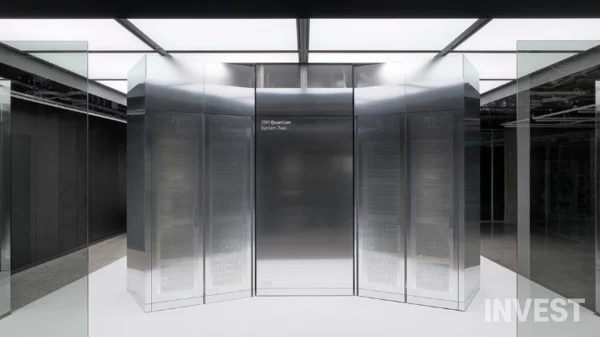
Google Quantum AI, the research and development organization for Google's quantum computers, announced on the 15th (local time) that it has successfully addressed one of the bottlenecks in quantum computing. For a universal quantum computer to run useful programs, it requires "magic states" used for computations that are difficult to implement on classical computers. Because these states must be corrected to high quality and cannot be reused once used, the resources required for their generation are immense. Some estimates suggest that up to 95% of a quantum computer's total capacity could be consumed by creating magic states, leaving almost no room for actual computation.
The method Google applied to this problem is "magic state cultivation," a theory proposed by its researchers in 2024. This filtering method involves placing noisy states into small areas of a quantum chip and using a series of measurements to check for errors and filter out flawed attempts. According to Google, this technique reduced errors by approximately 40 times compared to existing methods, reaching a level where the error-corrected T state (a type of magic state) matches the ideal state by 99.99%.
Quantinuum announced on the 19th that it has set a world record by achieving a logical fidelity of 99.9995% using its error correction architecture on its commercial Helios computer. This level results in only 5 errors in 1 million operations. According to Quantinuum, this error rate is 10 times lower than the record the company set last month and 100 times lower than the best result reported by Google Quantum AI across all hardware methods using superconducting systems. In September, Quantinuum also demonstrated logical memory and computational performance on the same Helios hardware by applying the same error correction architecture to "Helix" code. This time, they achieved a lower logical error rate by switching the code to "color code" on the same hardware.
Furthermore, Quantinuum confirmed in this research that every time the code distance is increased, the remaining logical error decreases by 12 times, meaning the error suppression effect grows larger as the code becomes larger. Quantinuum stated that this performance is approaching the target range for Apollo, a universal fault-tolerant quantum computer aimed for release in 2029.
In June, IBM announced it would invest more than $10 billion in quantum computing over the next five years. The investment will be used for research and development, capital expenditure, expanding manufacturing, ecosystem cooperation, and mergers and acquisitions. The core of the roadmap is to introduce the error-tolerant quantum computer Starling by 2029. According to IBM, Starling aims to perform 20,000 times more operations than current systems. IBM has supplied more than 90 quantum systems worldwide, including to Yonsei University and The University of Tokyo, and customer contracts signed through quantum programs since 2017 exceed $1.1 billion. With support from the U.S. Department of Commerce, IBM also established Anderon, the world's first specialized foundry company for quantum wafers.
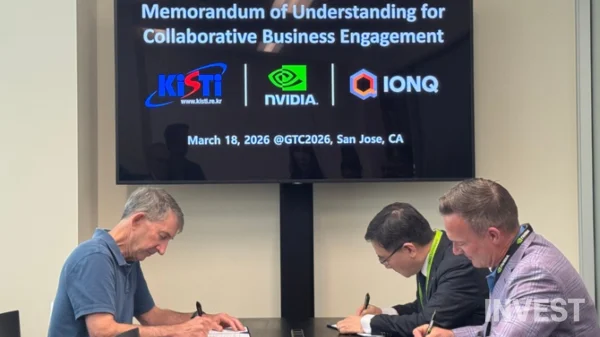
IonQ signed a tripartite memorandum of understanding (MOU) with the Korea Institute of Science and Technology Information (KISTI) and NVIDIA in San Jose, USA, this March for technical cooperation in quantum-High Performance Computing (HPC) hybrid technology. As part of a project to establish a quantum computing service and utilization system supported by the Ministry of Science and ICT, IonQ will supply 'Tempo', a next-generation ion-trap quantum computer, to KISTI. Tempo, which is at the 100-qubit level, implements high fidelity and long coherence times (the time a qubit maintains its quantum state without being lost) using barium ion technology, and is designed to target a performance of 64 Algorithmic Qubits (#AQ 64), an indicator of how accurately algorithms are executed. IonQ and KISTI plan to build a quantum-HPC hybrid computing environment by physically connecting Tempo with 'Hangang', the 6th national supercomputer scheduled to begin operation in the second half of this year.
Intel to Build Full-Stack Quantum Computing Platform through Acquisition of Quantum Software Company 'Classiq'
Intel has signed a final agreement to acquire the quantum computing software company Classiq and will embark on building a full-stack quantum computing platform. On the 26th, Intel announced that it would create a user-friendly full-stack platform by combining its spin qubit manufacturing technology and existing software with Classiq's synthesis platform. The goal is to lay the foundation for quantum technology to grow into a mainstream computing business.
What Intel seeks to secure from Classiq is a software platform for designing quantum algorithms (a quantum algorithm synthesis platform). According to Intel, about 40 years ago, Electronic Design Automation (EDA) and Computer-Aided Design (CAD) software changed existing computing methods by separating chip design functions from hardware complexity, and Classiq's quantum algorithm synthesis platform plays a similar role in quantum computing. It can be used regardless of the qubit method or hardware, and Intel believes that such high-level abstraction is necessary for quantum computing to establish itself as a mainstream computing platform beyond user-defined circuits and individual applications.
Through this combination, Intel will be able to add a Quantum Processing Unit (QPU) to its computing product lineup consisting of CPUs, GPUs, and ASICs. Even after the transaction, the company plans to continue supporting Classiq's existing multi-platform integration and build a quantum software ecosystem by providing software that is not tied to specific qubit methods or hardware. The deal is subject to regulatory approval and customary closing conditions and is expected to be completed in the first half of 2027.
Nir Minerbi, co-founder and CEO of Classiq, stated, "We have focused on making quantum computing practical and accessible by supporting developers and companies without specialized expertise in quantum circuit design. Through cooperation with Intel, Classiq will be able to maximize the benefits of quantum computing and accelerate its adoption."
Immediately following Intel's announcement, quantum computing-related stocks rose collectively on the New York stock market on the 27th. XNDU saw the largest increase, rising 14.84%, followed by INFQ at 12.86%, ARQQ at approximately 10.71%, RGTI at 8.74%, BTQ at 8.21%, LAES at 7.24%, and QUBT at 7.18%. In the domestic stock market, quantum cryptography and computing-related stocks rose for two consecutive days on the 27th and 28th. According to the Korea Exchange, ICTK recorded an increase of 24.23%, XGATE 20.38%, Korea Advanced Materials 13.46%, and Dream Security 12.99%.
LG CNS Joins Hands with D-Wave to Apply Quantum Computing to Enterprise Optimization
In South Korea, an IT service and AI company and a quantum computer manufacturer have joined forces. On the 28th, LG CNS and D-Wave signed a memorandum of understanding (MOU) at D-Wave's Qubits Asia Conference held in Seoul to utilize quantum computing for solving enterprise optimization problems.
The focus of the cooperation is to move quantum applications, which currently remain in the proof-of-concept stage, into actual operational stages. The plan is to combine D-Wave's annealing quantum computing technology with LG CNS's mathematical optimization capabilities and system integration experience to develop applications for manufacturing, telecommunications, finance, and retail customers, and to seek joint market entry opportunities.
The role undertaken by LG CNS is to transform customer problems into forms that can be solved with quantum technology. The company has accumulated experience in mathematical optimization across various industries, including manufacturing and the public sector, and possesses the capability to perform the entire process from problem definition and mathematical modeling to algorithm verification and actual implementation. They are also conducting research on applying mathematical optimization and quantum computing to real industrial problems, such as image reconstruction/inspection and underground anomaly detection. LG CNS stated that through this cooperation, it intends to link quantum computing to solving customer problems and creating new business opportunities, and to accelerate the commercialization of related services.
D-Wave is the provider of quantum technology. Optimization problems such as factory production schedules, delivery routes, and resource allocation become difficult to solve with good solutions within operating time as the number of variables and constraints increases; D-Wave's annealing technology is designed to solve these problems. Through this cooperation, D-Wave aims to provide cost reduction, efficiency improvement, and rapid response to environmental changes to LG CNS customers.
Alan Baratz, CEO of D-Wave, stated, "D-Wave's commercial-grade annealing quantum computing technology is already providing practical business results to customers." He added, "Based on a deep understanding of both the optimization problems that companies must solve and the systems in which these solutions must operate, LG CNS plans to combine its technological prowess and expertise to support companies in Korea and around the world to move beyond the stage of considering quantum computing adoption and toward building applications that create practical business value."
Push to add quantum to National Growth Fund support targets... Legislative notice until December 1
As private-sector quantum computing alliances and acquisitions continue, the government is also establishing a basis to inject policy finance into the quantum industry. On the 22nd, the Financial Services Commission announced a legislative notice for the proposed amendment to the Enforcement Decree of the Korea Development Bank Act, which adds the aerospace and quantum industries to the support targets of the National Growth Fund. The legislative notice period runs from today until December 1.
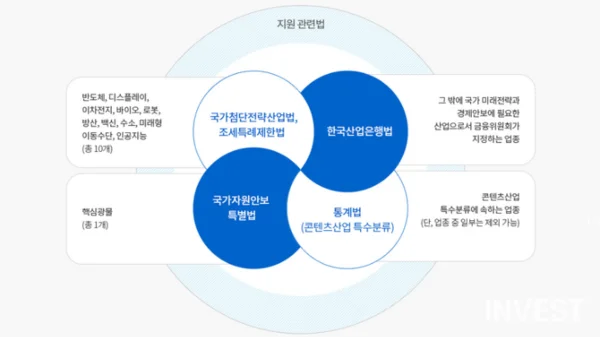
The amendment modifies Article 28-6, Paragraph 2 of the Enforcement Decree to expand the scope of industries covered by the Advanced Strategic Industry Fund. In its second-half business report on July 15, the Financial Services Commission announced that it would expand the support targets of the National Growth Fund from the existing 12 advanced strategic industries to include aerospace and other sectors, and following the first round of opinion collection from relevant ministries, it prepared this amendment. The existing supported industries include semiconductors, secondary batteries, displays, bio, robots, artificial intelligence, vaccines, future transportation, hydrogen, content, and critical minerals.
The Financial Services Commission explained that the additional targets are industries with high national strategic importance that require large-scale and long-term investment. The aerospace field includes satellites, the lunar economy, launch vehicles, and civil aircraft, while the quantum field includes quantum computing, quantum cryptography communications, and quantum sensing. The National Growth Fund is a system where the private sector and the government jointly create investment funds for advanced strategic industries, with a fund size of 150 trillion won.
Covers Post-IPO for INVEST NEWS GLOBAL.


Comments 0
Comments are currently disabled.