
[Series] Cooling Solution Startup Sinseongo Secures Pre-A Investment... Aiming for 2030 IPO with AI Data Center Growth
Sinseongo, a modular cooling solution company, has secured Pre-A investment from MYSC and others to advance its technologies and expand into AI edge data centers. The company plans to pursue an IPO by 2030 as it scales its business from cold chain products to modular storage and data center solutions.
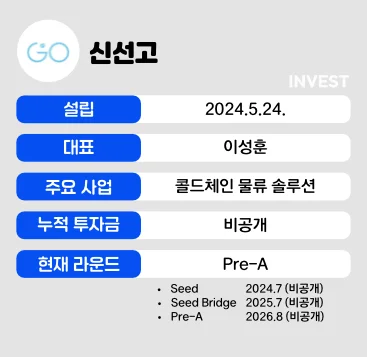
Sinseongo, a modular cooling solution company, has secured Pre-A investment from MYSC and others. The investment amount has not been disclosed. MYSC invested through the 'A More Beautiful Challenge Fund II' fund, which was contributed by Amorepacific Corporation. Sinseongo plans to invest the secured funds into advancing cooling and insulation technologies, mass-producing products, and expanding new businesses.
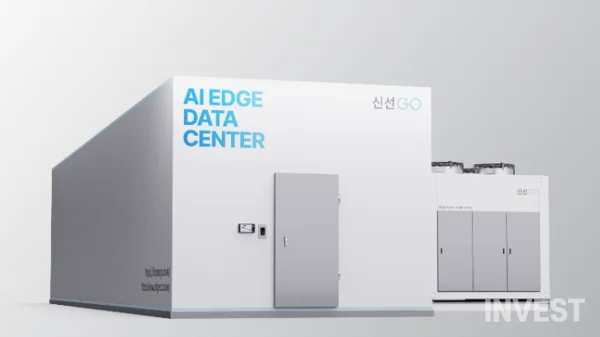
Founded in 2024, Sinseongo is a cooling and insulation technology company that originated from an LG Electronics in-house venture program. The company operates a business that applies technologies previously used in home appliances to delivery boxes, storage facilities, and server equipment.
The core technology is 'individual cooling,' which regulates the temperature of only the necessary targets and areas rather than the entire space. Instead of cooling a vehicle cargo hold or an entire facility, this method manages the boxes containing goods, agricultural storage spaces, and server racks individually. The focus is on reducing energy consumption and maintenance cost burdens by dividing the cooling range and configuring equipment to suit specific uses.
The business consists of cold chain products, modular storage facilities/smart farms, and AI edge data centers. In the cold chain field, they supply individual cooling delivery boxes and thermal insulation packs for courier, medical, and food use. Cold chain is a distribution system that maintains products requiring temperature management at appropriate temperatures from storage to delivery. Representative products include 'T.Box', which miniaturizes the cold air circulation principle of refrigerators to supply cold air when needed; insulation boxes applying foldable vacuum insulation material 'FVI'; and Ice Guard PCM Ice Pack.
In the storage facility business, they provide refrigerated and frozen warehouses that assemble modules based on insulation construction. The company applied the same method to smart farms and has delivered two buildings in Incheon and Paju. In particular, Sinseongo's smart farm for mushroom cultivation can be installed within two weeks without separate floor work, and it reduced the burden of management time by focusing on daily inspections rather than constant presence. Additionally, it is designed so that temperature, humidity, and ventilation status can be easily checked and adjusted, allowing users to balance their main business with cultivation.
The AI edge data center is a modular platform that combines high-performance insulation materials and cooling solutions. Sinseongo suppressed heat diffusion by designing a structure using vacuum insulation material with server racks and cooling devices integrated into a single unit. They have established a cooperative system with 23 partners in the construction, cooling, manufacturing, and operation sectors, linking everything from equipment production to construction and operation.
In the data center business, they are also pursuing joint development and demonstration with partners. They signed a memorandum of understanding with Zeta Cube for the construction of ultra-small high-density data centers and joint business, and decided to pursue the joint development of AI-based cooling control modules. They also signed an agreement with Korea IDC for the construction and demonstration of modular edge data centers. Sinseongo is responsible for hardware design and module production using insulation and individual cooling technology, while Korea IDC handles system construction, network integration, and performance verification in actual operating environments.
They commercialized the technology and know-how secured from the LG Electronics in-house venture program through licensing, and attracted follow-on investment based on demonstration results and market verification achievements. After securing trust from large corporations and accelerators at the seed stage, they adopted a stepwise financing strategy that led to Pre-A through additional contributions from bridge investors.
In particular, they confirmed the marketability of vacuum insulation technology through domestic and international crowdfunding and expanded this into business-to-business (B2B) products. They are also discussing business targeting government and public institutions (B2G), allowing investors to verify the feasibility of the technology and the commercialization process.
The investment funds will be used for operations and research and development. They plan to advance products based on vacuum insulation technology and expand B2B supply items. Additionally, while continuing discussions for B2G business, the funds will be invested in the demonstration of new fields such as AI edge data centers.
The three founders, while developing refrigerator and freezer technologies at LG Electronics for decades, noticed the proportion that cooling accounts for in global energy consumption. They also confirmed that high maintenance costs, demand fluctuations, and the difficulty of maintaining constant temperatures are recurring problems in refrigerated and frozen logistics sites.
They determined that these problems could be solved by a method that cools only the necessary targets rather than the entire space. To commercialize this, they founded the company through the LG Electronics in-house venture program.
In 2026–2027, they plan to establish a mass production system for the thin vacuum insulation material FVI and intensify the sales and rental business of cold chain products. The 2026 revenue target is 2 billion won, and they will pursue local demonstration (PoC) and exports to Indonesia. In 2027, the goal is to supply the integrated cooling solution 'T-Solution' and conduct AI edge data center demonstrations to achieve 24.2 billion won in revenue.
From 2028, they plan to gradually commercialize AI edge data centers to foster them as a growth axis following the cold chain. They plan to commercialize an energy circulation model that utilizes waste heat from data centers for smart farm heating and expand into overseas markets such as Japan and Southeast Asia.
In 2030, the goal is to intensify the sale of integrated solutions combining cold chain and AI data centers to achieve 67 billion won in revenue, with overseas revenue accounting for more than 20%, and to pursue an initial public offering (IPO). Ultimately, they aim to grow into a global modular cooling solution company by expanding the scope of application for the individual cooling method.
Starting a business is an opportunity to directly experience the process where ideas and technology are recognized as value in the market. However, since one must handle not only technology development but also investment attraction, certification, customer acquisition, and organizational management, thorough preparation and a sense of responsibility are required.
It may take longer than expected and involve repetitive trial and error before a product establishes itself in the market. Prior to starting a business, one must sufficiently verify market and customer demand and deeply understand the problem being solved. Rather than taking on all tasks alone, it is also important to respond together with reliable colleagues, investors, and partner companies. The experience gained in the process of enduring difficulties and continuing the business becomes an important asset.
※ This article states that it was written after verifying the facts through reporting.
Covers Startups for INVEST NEWS GLOBAL.
![[Series] Non-invasive CGM Startup Apollon Secures 5 billion won... To be Invested in US Clinical Trials and FDA Approval](/storage/investnews-global/2026/10/cd5b75ee-1d3f-42d5-ad3f-7ff5dcb198d9-e07e62ae-thumb.webp)
Comments 0
Comments are currently disabled.